
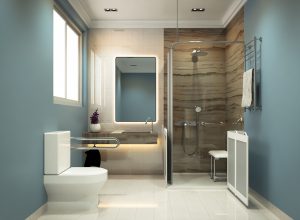
There was a time when the words “accessible” and “stylish” rarely appeared in the same sentence, at least where bathrooms were concerned. Adapted bathrooms were functional, and safe but not beautiful. That was considered a luxury beyond the brief.
Those days are well behind us. The accessible bathroom market in the UK has changed fundamentally, driven by better products, smarter design thinking, and a growing refusal among homeowners to accept clinical-looking spaces simply because they need a grab rail or a level-access shower. Around 16.8 million people in the UK had a disability in 2023/24, roughly a quarter of the population, yet just one in eight homes in England have even the four basic accessibility features that make them readily visitable. The gap between what people need and what their homes provide is enormous, and it is closing far too slowly.
At Aquadapt, we see this every day. Our clients want bathrooms that work for their needs and reflect their personal taste. The good news is that with the right approach, you can have both. Here are our best tips for designing an accessible bathroom that feels every bit as considered and inviting as any high-end renovation.
Jump straight to…
-
- Start With the Layout, Not the Products
- Choose a Wetroom – And Make It a Feature
- Rethink the Grab Rail
- Invest in Smart Toileting
- Use Colour and Texture with Confidence
- Think Long-Term: Design for Tomorrow
- Funding Your Project: What You Should Know
- Work With Specialists Who Understand Both Sides
- Your Bathroom, Your Style
- Frequently Asked Questions
Start With the Layout, Not the Products
The single most important decision in any accessible bathroom is the layout. No amount of beautiful tiling or premium brassware will compensate for a space that doesn’t function properly. Under Building Regulations Part M, adapted bathrooms require specific clearances: at least 750mm of clear space in front of the toilet, adequate turning circles for wheelchair users, and properly graded level-access shower areas with effective drainage.
But compliance is not the same as good design. The best accessible bathrooms go beyond the regulatory minimum to create layouts that feel spacious and intuitive. Think about how you will actually move through the room. Consider the sequence of tasks, entering, undressing, showering, drying, using the toilet, washing hands, and arrange the space to support that flow naturally. A layout that works with your body is a layout that frees you to fully enjoy the room and all its benefits.
If you are working with a smaller room, or converting an existing space, clever positioning of sanitaryware can open up sightlines and make the space feel significantly larger than it is. Wall-hung WCs and basins are particularly effective here, keeping the floor clear and creating a sense of visual calm.
Choose a Wetroom – And Make It a Feature
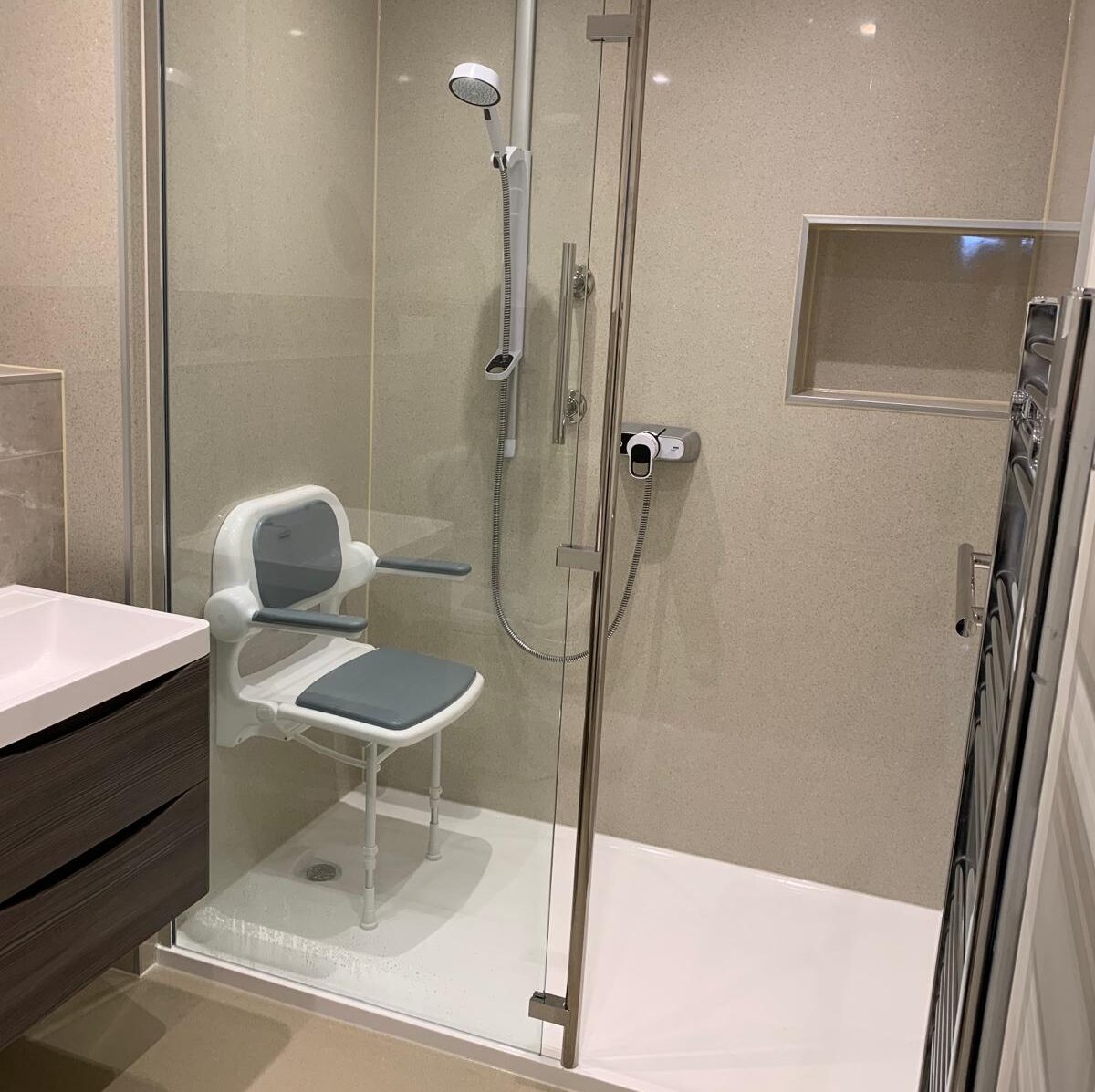
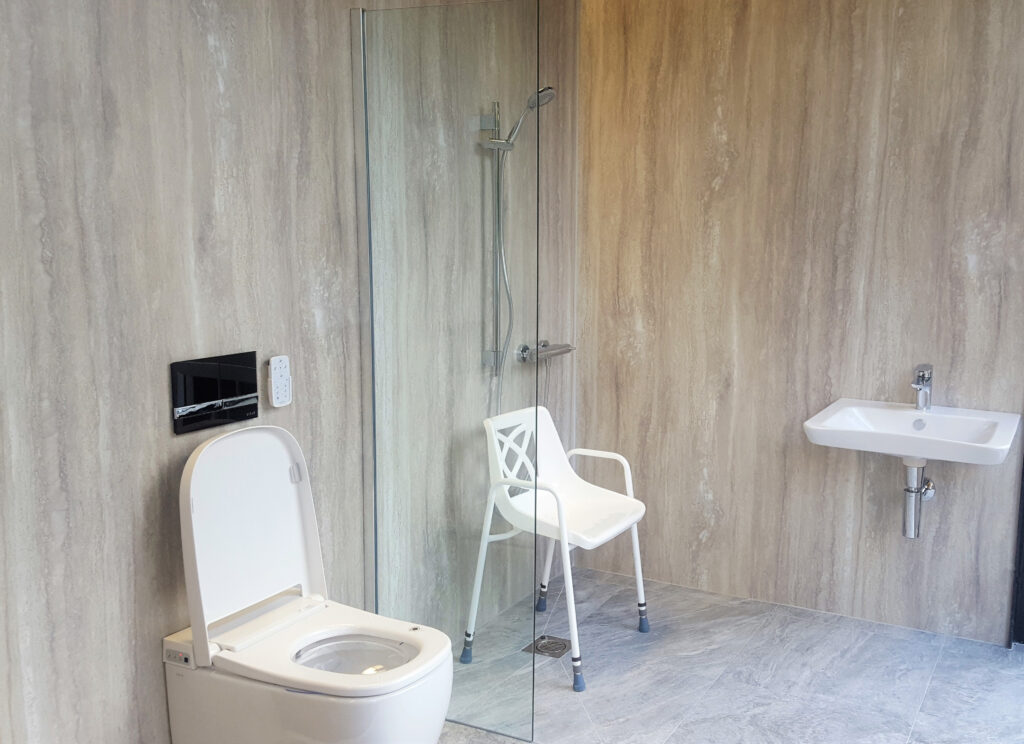
Wetrooms and walk-in showers have dominated bathroom trends across the UK for several years, and for very good reason. They eliminate the step-over barrier of a traditional shower tray, making them inherently more accessible, but they also happen to be one of the most desirable design choices in mainstream bathroom renovation. An advantageous overlap.
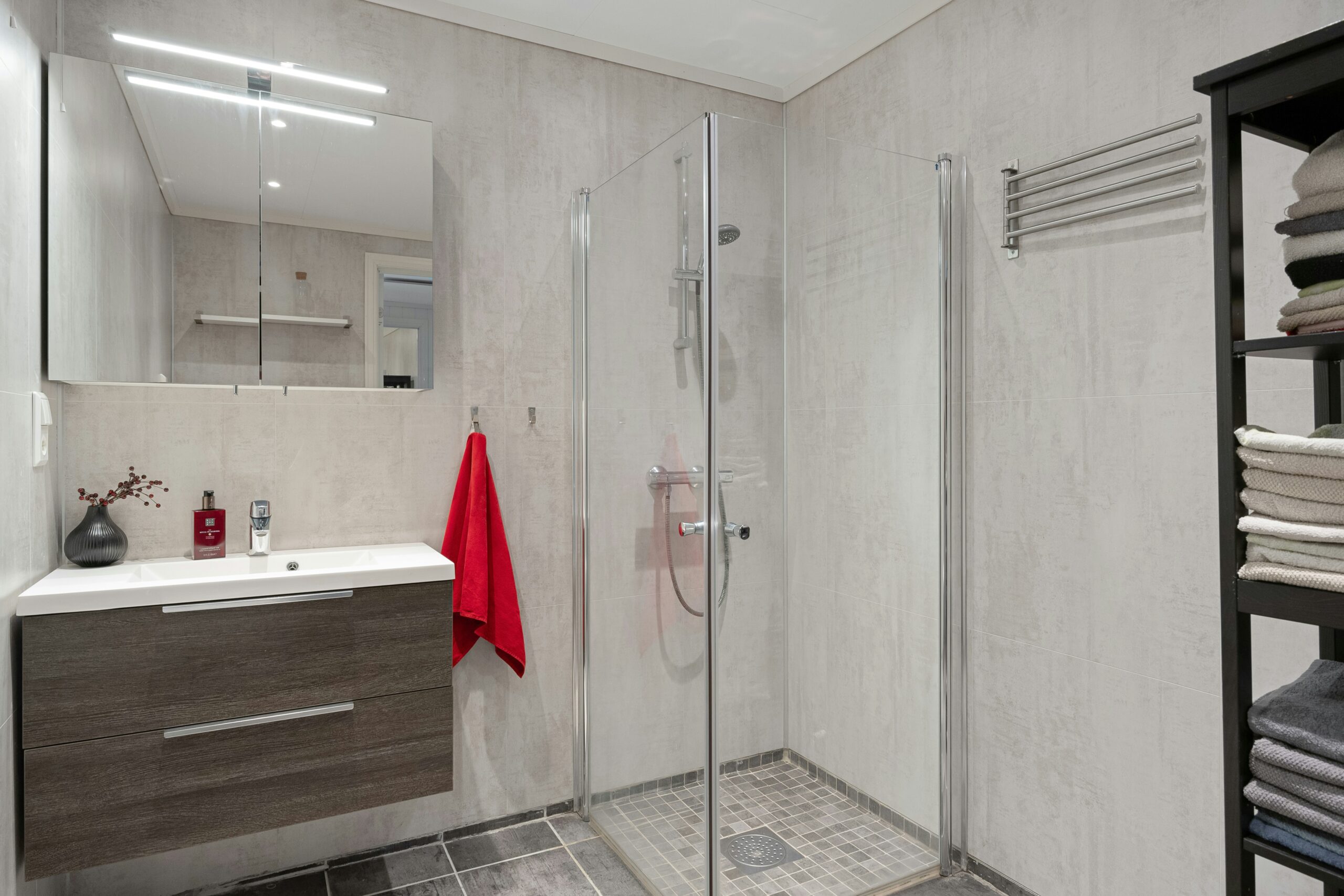
A properly tanked wetroom with a linear drain, large-format tiles and frameless glass screening looks effortlessly modern. The fact that it also provides step-free access is simply a bonus. Non-slip flooring has come a long way, too. Today’s specialist anti-slip finishes are available in a wide range of colours and textures, pale pink, warm grey, natural stone-effect, that sit comfortably alongside high-end porcelain or ceramic wall tiles.
The key to a stylish wetroom is consistency. Match your wall and floor finishes so the eye moves through the space without interruption. Avoid sharp contrasts between the “wet” and “dry” zones unless you are making a deliberate design statement.
Rethink the Grab Rail
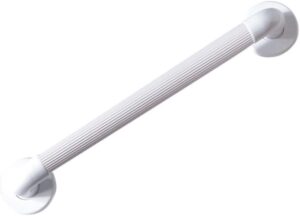
If there is one element that most people associate with “institutional” bathrooms, it is the grab rail. The white plastic hospital-style rail bolted to a tiled wall has done more damage to the reputation of accessible bathrooms than anything else. But the industry has moved on dramatically.
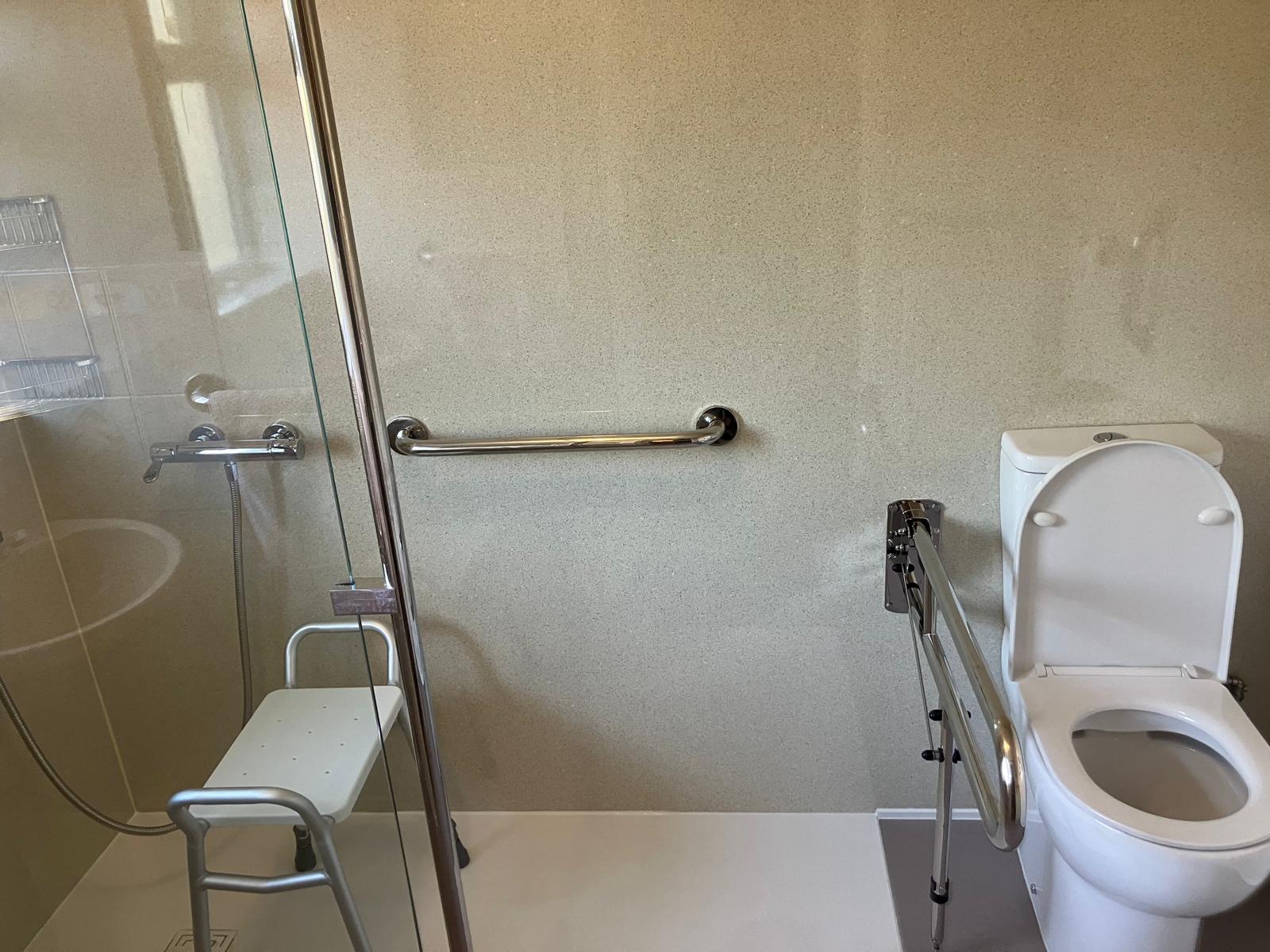
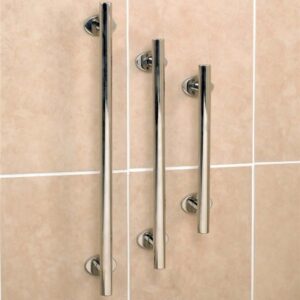
Today’s grab rails and support handles are available in brushed brass, matte black, brushed nickel and chrome finishes that coordinate directly with your taps, shower fittings and towel rails. Some manufacturers now produce grab rails that double as towel holders or shelf supports, so they serve a visible purpose in the room beyond pure safety. The principle is simple: choose your brassware finish first, then match your support rails to the same family.
Brushed nickel is emerging as one of the most popular finishes for 2026, offering the neutrality of chrome without its visual coldness. Used consistently across taps, shower controls, towel rails and grab bars, it creates a cohesive, refined aesthetic that works in both contemporary and more traditional settings.
Invest in Smart Toileting
For many people with reduced mobility or dexterity, the toilet is the most challenging area of the bathroom. This is where specialist products can make an enormous difference, not only to independence and dignity, but to the overall look of the room.
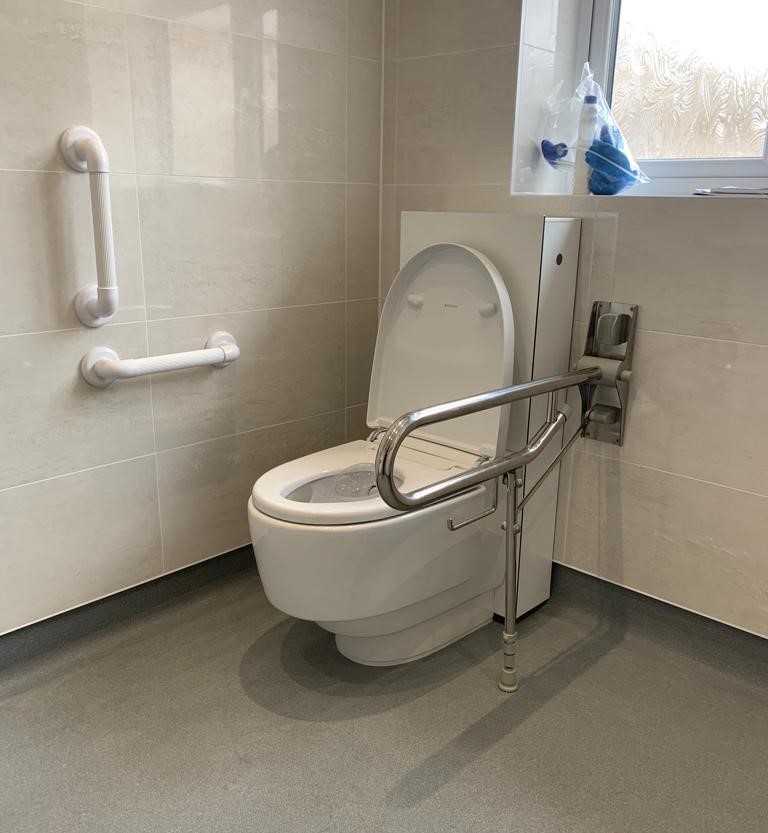
The Geberit AquaClean Mera, which we supply and install at Aquadapt, is a prime example. It is a wash-and-dry shower toilet that combines bidet functionality, a warm air dryer, odour extraction and automatic flush in a single, wall-hung ceramic unit. From the outside, it looks like any premium wall-hung WC, sleek, minimal, and very much at home in a high-spec bathroom. But it provides a level of hands-free personal hygiene that can be life-changing for people with conditions ranging from arthritis and reduced grip strength to MND or spinal injuries.
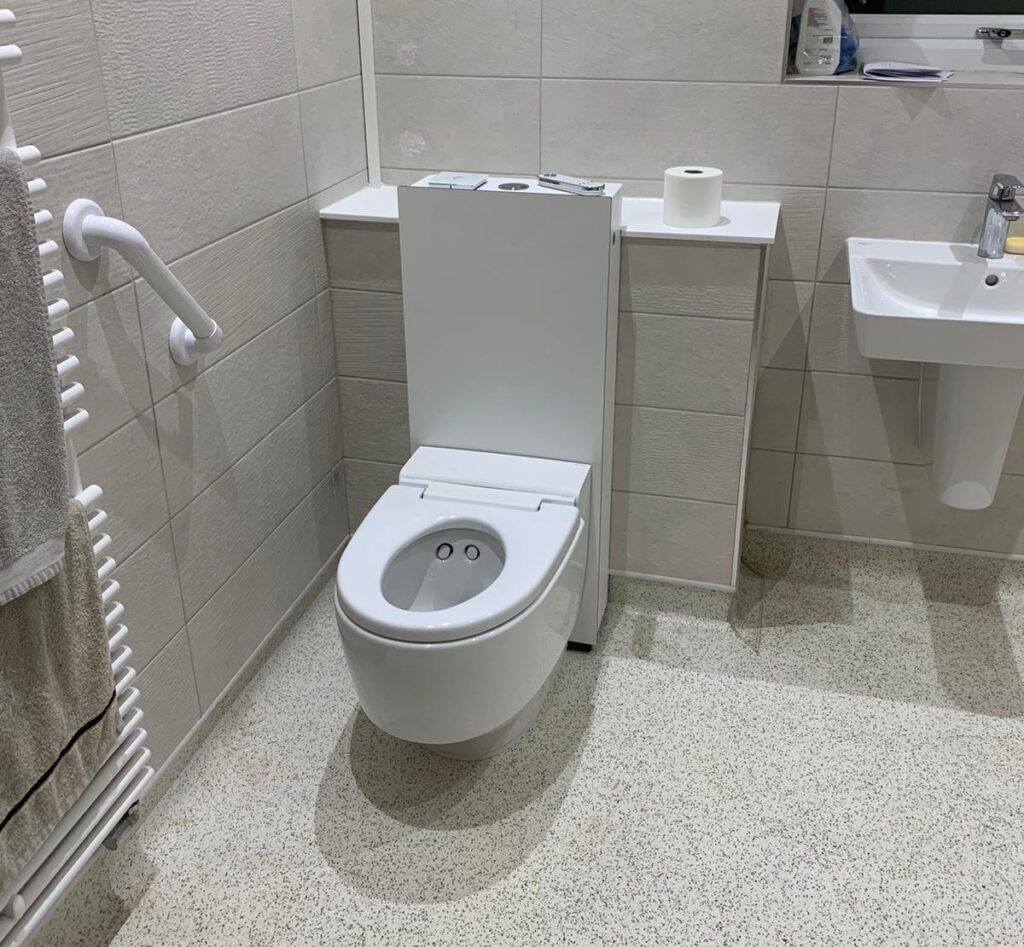
The Mera Care variant is specifically designed for the care sector, with height adjustability from 440mm to 560mm, compatibility with paediatric shower chairs, and multiple control options including a remote handset, a touch-free wall panel, and even eye-gaze technology for users with severe physical disabilities. Up to four user profiles can be stored, making it ideal for shared or family bathrooms. Products like this represent a genuine shift in what accessible toileting now looks like.
Use Colour and Texture with Confidence
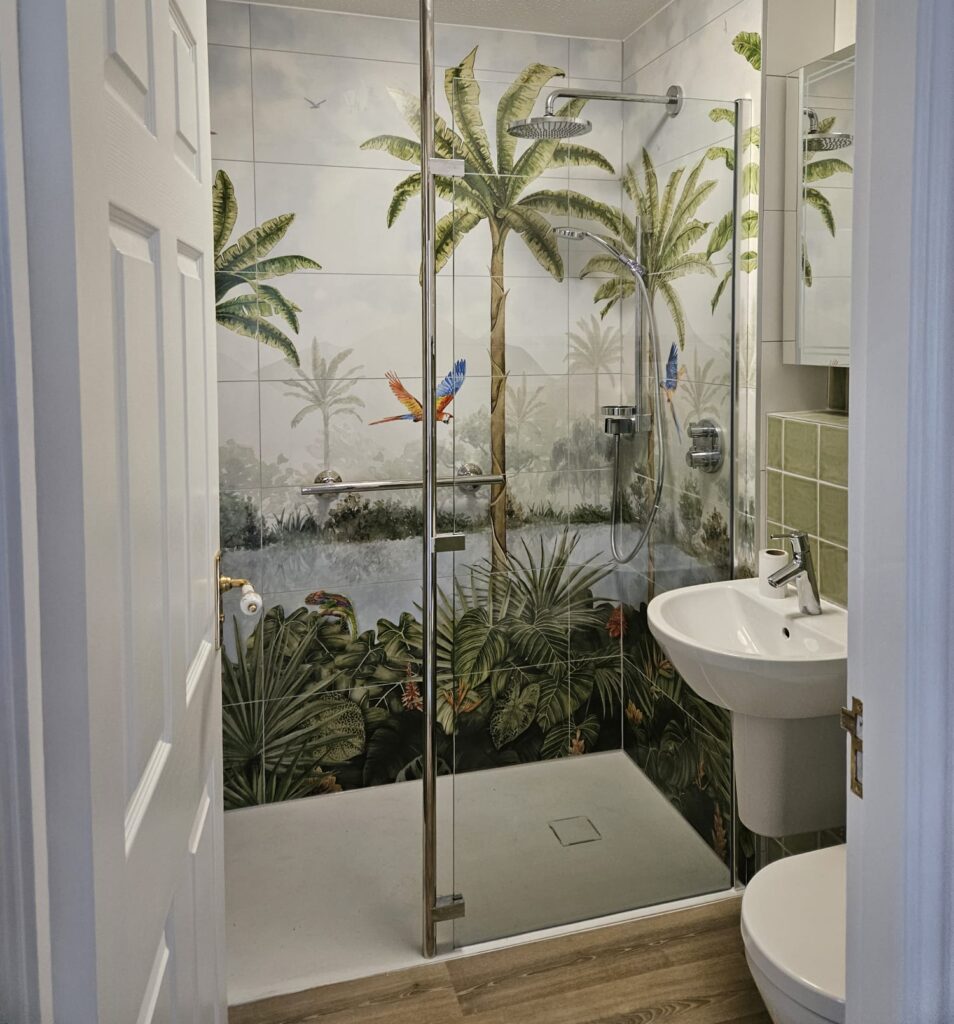
The mainstream bathroom world in 2026 is full of colour. Earthy neutrals, muted greens, warm taupe’s, soft blues and even butter yellows are replacing the stark white bathroom as the default palette. Textured surfaces, fluted panelling, ribbed glass, limewash-effect walls – add depth and character. These trends are fully compatible with accessible design, and there is no reason at all to exclude them.
In fact, some of these choices actively support accessibility. Tonal variety between walls and flooring helps with spatial awareness and depth perception, which can be particularly beneficial for people with visual impairments. Contrasting tones on sanitaryware against the wall colour make it easier to locate the basin, WC or shower controls at a glance. This is good universal design, and it corresponds closely with what the interior press is recommending as stylish for 2026.
Wood-effect vanity units, natural stone-look tiles, and matte-finish surfaces create warmth and texture that makes the bathroom feel lived-in and welcoming. Pair these with consistent metalwork, soft ambient lighting, and a few carefully chosen accessories, and you will have a space to be truly proud of.
Think Long-Term: Design for Tomorrow
One of the smartest approaches to accessible bathroom design is to think not only about what you need today, but about what you or your family may need in five or ten years’ time. Progressive conditions, the natural effects of ageing, or changing household composition can all shift the demands on a bathroom. Designing with adaptability built in can save significant cost and disruption later on.
Practical steps include reinforcing walls and ducts during the initial installation so that grab rails, shower seats or a ceiling hoist can be fitted at any point without major building work. Specify a level-access shower from the outset, even if you don’t currently require one, it removes by far the most common barrier to future accessibility. And consider comfort-height WCs and wall-hung basins that can be repositioned if needs change.
Building Regulations Part M4(2), the “accessible and adaptable dwellings” standard, captures this thinking at a regulatory level, requiring that walls in wet rooms are strong enough to support grab rails and that ceiling structures can take the weight of an overhead hoist rated to 200kg. Even if your home predates these requirements, adopting their principles voluntarily is a sound investment.
Funding Your Project: What You Should Know
Many accessible bathroom projects in England can be supported by a Disabled Facilities Grant (DFG), administered by your local council. The current maximum is £30,000 per application (up to £36,000 in Wales), and some councils offer discretionary top-up funding for more complex work. The grant covers both labour and materials and following a significant funding increase for 2024–26, the national pot has grown to £711 million, resulting in more resources and shorter wait times in many areas.
The process requires an assessment by an occupational therapist and formal council approval before any work begins. If you or someone in your household is disabled or has a long-term health condition, it is well worth exploring this route early in the planning process. The grant does not affect any benefits you receive, and qualifying products and installation work may also be eligible for VAT relief at 0% rather than 20%.
We cover this topic in detail in our recent blog on the latest regulations and grants for accessible bathrooms, which is well worth a read if you are at the early stages of planning.
Work With Specialists Who Understand Both Sides
One of the biggest risks in accessible bathroom design is working with people who understand only one half of the equation. A mainstream bathroom fitter may deliver a beautiful room that fails to meet your clinical or mobility needs. A clinical equipment supplier may meet every functional requirement but leave you with a room that feels like an afterthought.
Aquadapt exists precisely to bridge that gap. As part of the CoreCare Global group of companies, we sit at the intersection of specialist healthcare provision and design-led home improvement. Our team have years of experience working closely with occupational therapists, healthcare professionals and their clients to deliver bespoke bathroom solutions that are clinically appropriate, fully compliant, and genuinely attractive.
Every project we carry out is unique, because every client’s needs are different. We offer a full design and installation service, including plumbing, electrics, joinery, specialist flooring, small building works and decorating. From initial site survey through to final sign-off, we manage the entire process, so you can focus on choosing the finishes you love rather than worrying about the technical details underneath.
Your Bathroom, Your Style
The accessible bathroom of 2026 is not a compromise. It is a considered space that puts your safety and comfort first while reflecting your personality and taste. With the right products, the right layout, and the right team behind you, there is no reason why a fully adapted bathroom should look or feel any less special than the ones you see in design magazines.
Ready to Start Your Accessible Bathroom Project?
Book a free site survey with one of our experienced advisors. We’ll visit your home, discuss your needs and preferences, and show you what’s possible.
Call us on 01423 799 499
or visit aquadapt.co.uk/book-appointment
Frequently Asked Questions
Can an accessible bathroom really look stylish?
Absolutely. Modern accessible bathrooms often look better than conventional ones because they are designed with more thought. Clean lines, open floor spaces, coordinated finishes and contemporary fixtures such as walk-in showers and wall-hung sanitaryware are all standard features in high-end mainstream design, and they are exactly what makes a bathroom more accessible. The clinical look only appears when safety features are added as an afterthought rather than designed in from the start.
What is a wetroom, and is it better than a walk-in shower?
A wetroom is a fully waterproofed (or “tanked”) bathroom where the entire floor is sealed and gently graded towards a drain, removing the need for a shower tray altogether. A walk-in shower uses a low-profile or level-access tray with an open entry point. Both are excellent choices for accessibility. Wetrooms offer the most seamless, barrier-free look, while level-access trays can sometimes be easier to install and provide slightly better water containment. Aquadapt can advise on which option best suits your property and needs.
Do grab rails have to look like hospital fittings?
Not at all. Grab rails are now available in a wide range of designer finishes including brushed brass, matte black, brushed nickel and polished chrome. Many coordinate directly with mainstream tap and shower ranges. Some double as towel rails or shelf supports, so they serve a visible purpose in the room beyond safety. Chosen well and matched to the rest of the brassware, a grab rail can look like an intentional part of the design rather than a bolt-on addition.
What is the Geberit AquaClean Mera?
The Geberit AquaClean Mera is a wash-and-dry shower toilet that combines bidet functionality, warm air drying, odour extraction and automatic flushing in a single wall-hung unit. It looks like a sleek, contemporary WC but offers hands-free personal hygiene that can be life-changing for people with reduced mobility or dexterity. The Mera Care variant adds height adjustability, compatibility with paediatric shower chairs, and advanced control options including eye-gaze technology. Aquadapt supplies and installs the full Mera range.
How much does an accessible bathroom cost?
Costs vary widely depending on the size of the room, the extent of the work, and the products and finishes selected. Aquadapt offers options from practical utility through to high-end luxury. Many projects in England can be part-funded or fully funded through a Disabled Facilities Grant of up to £30,000 (£36,000 in Wales), and qualifying work may also attract VAT relief at 0%. A site survey with Aquadapt is free and will give you a clear idea of costs for your specific project.
What is a Disabled Facilities Grant?
A Disabled Facilities Grant (DFG) is a local council grant available in England and Wales to help cover the cost of essential home adaptations for disabled people. It can fund work including level-access showers, wetrooms, grab rails, widened doorways and stairlifts. The grant is means-tested for adults but not for children, and it does not affect any benefits you receive. The process begins with an assessment by an occupational therapist. Aquadapt has extensive experience working with DFG-funded projects and can guide you through the process.
How long does a bathroom adaptation take?
A straightforward bathroom adaptation typically takes between one and two weeks from the start of on-site work, depending on the complexity and scope of the project. Larger conversions or projects involving structural alterations may take a little longer. Aquadapt manages the entire process from initial survey through to completion, coordinating all trades including plumbing, electrics, joinery, flooring, tiling and decorating so that disruption is kept to a minimum.
Should I future-proof my bathroom even if I don’t need adaptations yet?
It is one of the smartest things you can do. Reinforcing walls during a renovation so that grab rails or a hoist can be added later, specifying a level-access shower from the outset, and choosing a layout with good circulation space all cost relatively little at the build stage but can save significant expense and disruption if needs change in future. Building Regulations Part M4(2) encourages exactly this approach, and Aquadapt can advise on future-proofing measures tailored to your home.