
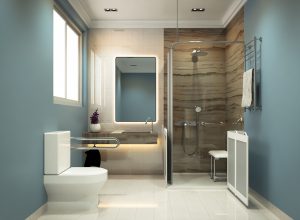
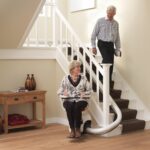
For many people living with reduced mobility, pain, or long-term conditions, the first real sign that daily life is changing is not the stairs or the kitchen. It is toileting. What was once automatic becomes stressful, time-consuming, and, for some, quietly humiliating.
That is why wash-dry toilets can be such a turning point. They are not about luxury or high-tech gadgets. They are about dignity, hygiene, confidence, and reducing dependence on others. For the estimated 1.2 million wheelchair users in the UK, along with the many other people living with conditions that affect dexterity and balance, a wash-dry toilet can change the situation entirely.
This guide explains what wash-dry toilets are, how they work, who they help most, and what needs to be considered before installing one. We have written it to be useful for families and professionals alike, including occupational therapists, case managers, and anyone planning a safer disabled bathroom.
Jump straight to…
What Is a Wash-Dry Toilet?
A wash-dry toilet, sometimes called a shower toilet or bidet toilet, looks much like a high-quality modern WC at first glance. The difference lies in what it can do once you are seated.
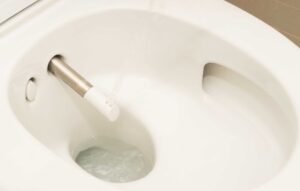
Instead of relying on toilet paper and awkward twisting or reaching, a wash-dry toilet uses a built-in spray of warm water to clean the intimate areas, followed by a controlled flow of warm air to dry. The whole process is designed to be as hands-free as possible, with simple controls and preset settings tailored to the individual.
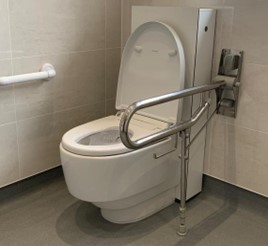
Depending on the model and specification, typical features include:
- Warm-water washing — a concealed nozzle extends and delivers a gentle, targeted spray. On better-quality models, you can adjust the water temperature, pressure, and spray position, and choose between posterior and front wash modes.
- Warm-air drying — after washing, a built-in dryer blows warm air onto the skin for a set period, often eliminating the need for toilet paper altogether.
- Comfort and hygiene extras — many models include a heated seat, soft-close lid, automatic deodorisation, and self-cleaning nozzle systems.
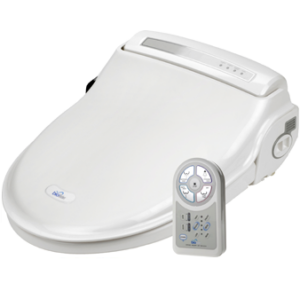
- Accessible controls — depending on the model, users can operate the toilet via a side control panel with large buttons, a handheld remote, or sensor-based functions that start automatically once seated.
There are two main ways to bring this technology into a UK home. Fully integrated wash-dry toilets are complete WC units with all the smart functions built in, ideal where a bathroom is being fully refurbished or built from scratch. Add-on wash-dry seats replace the existing toilet seat and add wash and dry functions to a standard toilet pan, often a more budget-friendly option where the existing setup is suitable.
How a Wash-Dry Toilet Works in Practice
For someone new to the concept, a wash-dry toilet can sound daunting. In reality, the experience is designed to feel familiar and straightforward.
You sit down and use the toilet as normal, no special mode required. Heights can be chosen to suit the user, and the toilet can be paired with supportive rails and frames. Once finished, you press a button on the side panel or remote or use an automatic mode. A nozzle extends and delivers a gentle warm-water spray. Temperature, pressure, and position can be preset or adjusted during use, with some models offering oscillating sprays and a separate front wash mode for women’s hygiene. After washing, warm air dries the skin without friction. When the cycle finishes, the nozzle retracts and self-cleans.
The person can then stand or transfer away without needing to twist, reach, or manage toilet paper. Common preferences can be saved as presets, and for multi-user households, different profiles make the toilet comfortable and safe for everyone.
The Independence Dividend: Real-World Benefits
Occupational therapists regularly highlight toileting as a key determinant of whether someone can safely remain at home. Even when a person can walk or transfer with aids, needing full assistance for wiping can be the tipping point towards residential care.
Wash-dry toilets offer more than comfort. They unlock genuine, everyday independence in ways that ripple through a person’s whole life.
Regaining Privacy and Dignity
For many users, the biggest change is the simplest: they can finally use the toilet without another person in the room. Even if they still need assistance to transfer onto the toilet, removing the need for hands-on help transforms the nature of the support. The most intimate part of the task becomes automated, and the role of the carer shifts from doing to supporting.
Safer, Gentler Hygiene
For anyone with sensitive skin, haemorrhoids, or fragile tissue, repeated wiping with dry toilet paper can be painful and damaging. Warm water and air reduce friction and abrasiveness, help prevent soreness, and can be more effective at cleaning after continence episodes. The ability to fine-tune water pressure is particularly important for people with pain, spasticity, or heightened sensitivity. A consistent, thorough clean each time can also reduce anxiety around odour and hygiene confidence in public or social situations.
Reduced Carer Strain and Care Hours
Wash-dry toilets can significantly reduce the physical and time burden of toileting support. Carers may spend less time per visit in the bathroom, avoid awkward back-straining postures, and reduce the need for double-up care. In community settings this makes visits more efficient; in care homes, hospices, and hospitals it supports better infection control and more dignified routines.
Staying at Home for Longer
Because toileting is so central to daily living, improving independence here can delay or avoid the point at which relocation to residential care is discussed. For many families, the cost and disruption of installing a wash-dry toilet, especially when combined with wider adaptations, is far preferable to the emotional and financial cost of an earlier-than-necessary move into a care home.
What to Look For: A Practical Specification Guide
A wash-dry toilet is not just a product choice, it is a system. The best model in the world will disappoint if the bathroom layout, transfers, or controls are wrong.
Transfers and access come first. How does the person get to the toilet? Is there enough space for their preferred transfer method, and for a carer if needed? Getting these fundamentals right is the difference between a functional disabled bathroom and one that looks good on paper but fails in daily use.
Toilet height and seating position matter more than many people realise. Height affects transfer difficulty and stability, while consistent seating position is essential for effective spray alignment.
Controls should match the user’s abilities. Consider hand strength, dexterity, vision, and whether tremor could cause accidental presses. Some people do best with a side panel; others need a remote with large buttons or fully automatic presets.
Installation requirements include a nearby electrical supply, suitable water feed, isolation valves, and space for maintenance access. Wall-hung models need robust supporting frames.
Compliance and safety are essential. In the UK, ensure correct electrical safety ratings for bathroom zones, WRAS-compliant water connections with backflow protection, and that the installation meets relevant building standards.
The Geberit AquaClean Mera
Among the wash-dry toilets regularly specified for disabled bathroom adaptations in the UK, the Geberit AquaClean Mera has established itself as a professional benchmark. Produced by Geberit, one of Europe’s foremost sanitary technology manufacturers, the Mera range is widely used across the care, rehabilitation, and home adaptation sectors.
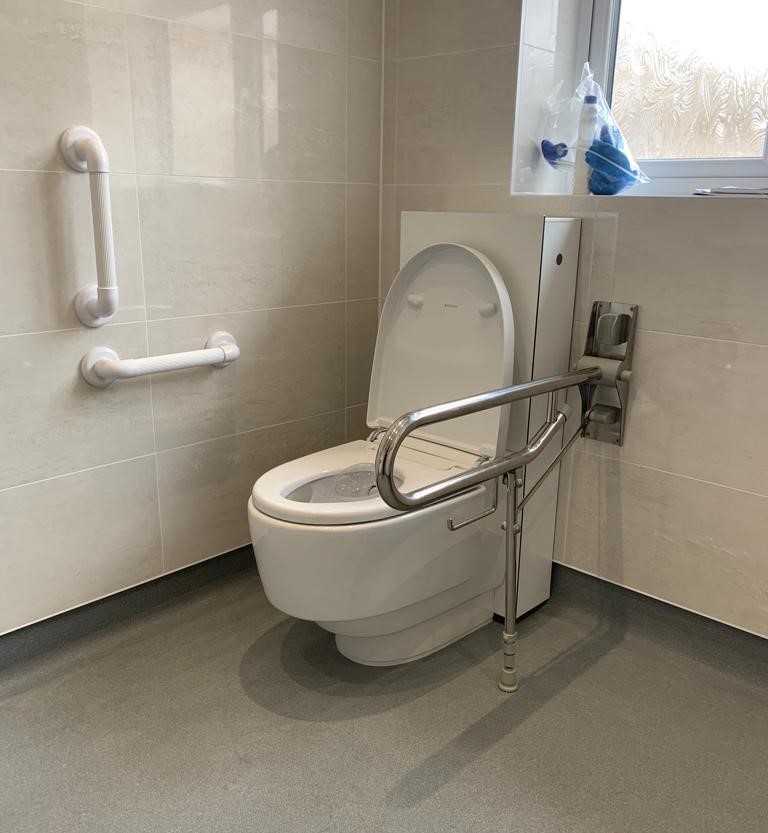
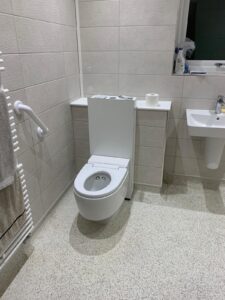
The Mera Care variant is designed specifically for people with disabilities and long-term conditions. It combines washing, drying, odour extraction, and flushing in a single, clean-lined unit that looks far more like a contemporary WC than a piece of medical equipment. That matters, because a disabled bathroom should feel like a proper bathroom, not a clinical space.
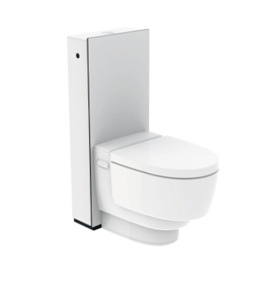
Key features of the Geberit AquaClean Mera include:
- WhirlSpray wash technology — delivers a thorough, gentle clean using aerated warm water. The spray arm is adjustable, and an oscillation function provides broader coverage. A separate front wash nozzle is included for women’s hygiene.
- Warm-air dryer — fully extendable with unlimited programme duration and five temperature settings, so users are not rushed through the drying cycle.
- Multiple control options — the Mera can be operated via a push-button side panel, a handheld remote control, or touchless infrared sensors that detect when the user is seated and start the wash cycle automatically. The remote has Bluetooth connectivity, enabling integration with eye-gaze systems and voice control for users with severe physical disabilities.
- Height-adjustable frame — the built-in stainless-steel frame allows the seat height to be set between 425mm and 560mm, accommodating a wide range of users and transfer methods. Adjustments are made from the front of the unit.
- Up to five user profiles — each household member can store personal preferences for water temperature, spray intensity, dryer settings, and wash duration, so the toilet adapts to whoever is using it.
- Compatibility with mobility aids — the Mera works with commode chairs and shower chairs, operated by remote control rather than requiring direct seat contact. The strengthened seat also supports safe side transfers.
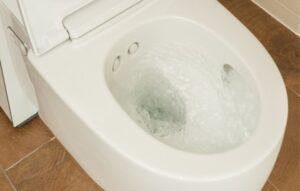
- Rimless TurboFlush pan — the rimless ceramic is easier to clean and more hygienic, with no hidden crevices for bacteria to colonise. A built-in odour extraction unit with a ceramic honeycomb filter keeps the air fresh.
One of the Mera’s most important qualities for long-term planning is its adaptability. All settings can be reprogrammed as a person’s needs change, whether that means adjusting water pressure following surgery, switching from manual to automatic controls as dexterity declines, or raising the seat height to ease transfers. For families and professionals thinking beyond the immediate situation, this flexibility is a significant advantage.
Aquadapt supplies and installs the Geberit AquaClean Mera using our own qualified plumbers for every fitting. We work closely with occupational therapists and case managers to ensure the toilet is specified, positioned, and set up correctly within the wider disabled bathroom layout. If you would like to discuss whether the Mera is the right choice for your client or family member, contact us or call 01423 799 499.
Cost, Funding, and Practicalities
Costs vary widely depending on the model and the building work required. Add-on wash-dry seats sit at the more affordable end, while fully integrated toilets with advanced features and more complex installation requirements sit at the higher end.
If you are exploring funding, it is important to understand the usual pathways. An occupational therapist assessment is often the starting point, particularly where there are clear mobility or dexterity limitations. Depending on eligibility and local authority criteria, a Disabled Facilities Grant may support necessary and appropriate adaptations, the maximum grant in England is currently £30,000. VAT relief may also apply for disability-related adaptation work. Personal budgets, charitable funding, and case management packages in litigation or insurance-funded rehabilitation are further routes worth exploring.
However, when weighing up value, the bigger picture matters more than upfront cost alone. Reduced reliance on paid carers, decreased risk of infections and skin breakdown, and the potential to stay safely at home for longer can all represent significant long-term savings, both financial and emotional.
How Aquadapt Can Help
At Aquadapt, we treat wash-dry toilets as part of a bigger goal: enabling someone to live at home with dignity, safety, and as much independence as possible.
That means we do not start with a model number. We start with questions. How does the person transfer today? What is the real barrier to independent toileting? What will change over the next few years? What does the disabled bathroom need to look like for daily life to work?
From there, we advise on layout, safe access, specification, and installation, always working closely with the occupational therapists and healthcare professionals involved in the person’s care.
If you or someone you support is struggling with toileting, now is a good time to explore what is possible. Book a free site survey or call us on 01423 799 499 to talk through the options.
FAQs: Wash-Dry Toilets
- What is the difference between a wash-dry toilet and a bidet?
A wash-dry toilet combines the functions of a toilet, bidet, and warm-air dryer in a single unit, so you stay seated on the same fixture from start to finish. A traditional bidet is a separate item that requires transferring between fixtures, and usually does not provide warm air drying or automated cycles. The terms “shower toilet” and “bidet toilet” are often used interchangeably with wash-dry toilet, but they typically refer to the same integrated concept.
- Who is a wash-dry toilet most suitable for?
They are most suitable for people who can sit safely on the toilet but struggle with wiping due to limited reach, pain, poor dexterity, tremor, fatigue, or balance issues. They can be particularly helpful for people with arthritis, neurological conditions, post-surgical limitations, bowel conditions like IBS or Crohn’s, and for older adults who want to maintain privacy and independence. Children and younger adults with complex disabilities also benefit significantly.
- Do wash-dry toilets reduce the need for carers?
Often yes, especially for assistance with intimate hygiene. It depends on the person’s ability to transfer safely, maintain a consistent seating position, and operate controls confidently. Some users may still need help with transfers or clothing management, even if the washing and drying functions remove the need for hands-on wiping. For those receiving paid care, the cost of installation can be recouped through reduced care hours within months.
- Can a wash-dry toilet be fitted into my existing bathroom?
In many UK homes, yes. Sometimes it involves replacing the current toilet with an integrated wash-dry model; in other cases, an add-on seat may be enough. Bathroom layout, electrics, and wet room zoning may affect what is possible, so a professional survey is recommended. The key question is not just whether the toilet fits, but whether the person can approach it, transfer safely, and use it without awkward movement.
- What are the most important things to get right before installing?
Safe transfers, enough space, the right toilet height, consistent seating position, and controls that match the user’s abilities. A wash-dry toilet is not just a product swap, it works best when the bathroom is designed around the person using it. Multidisciplinary input from OTs, equipment specialists, and experienced installers makes a significant difference to outcomes.
- How hygienic are wash-dry toilets?
They are designed to be highly hygienic. Because cleaning is done with water and air rather than repeated wiping, the risk of irritation and cross-contamination is reduced. Self-cleaning nozzles, deodorising features, and smooth easy-clean surfaces are standard on quality models. For people needing frequent toileting, the consistency and thoroughness of cleaning is often superior to what can be achieved manually.
- What kind of maintenance is involved?
Day to day, you clean a wash-dry toilet much like any other WC, following the manufacturer’s guidance. Periodically, an engineer may service the internal components, check filters, and carry out descaling, especially important in high-use or professional care environments.
- Can I get funding or VAT relief in the UK?
Funding may be available through Disabled Facilities Grants, depending on eligibility and local authority criteria. An occupational therapy assessment is usually required to confirm the adaptation is necessary and appropriate. VAT relief at 0% may apply for chronically sick or disabled individuals purchasing eligible equipment and adaptation work. Working with a specialist company like Aquadapt can make it easier to gather the evidence and quotes needed for grant applications.
- Why is the Geberit AquaClean Mera so widely recommended for disabled bathrooms?
The Mera is purpose-designed for the care and disability sector, with features that go well beyond a standard wash-dry toilet. Its height-adjustable frame, multiple control options including eye-gaze and voice activation, compatibility with commode and shower chairs, and ability to store up to five personalised user profiles make it exceptionally versatile. It is also built to adapt over time as needs change, which is a critical consideration when planning any disabled bathroom adaptation. See the Geberit AquaClean Mera page on our website for full specifications.