

Why the Tray You Choose Matters More Than You Might Think
When most people picture a wet room, they think about the finished look, clean lines, a walk-in shower, no awkward step to negotiate. But beneath that polished surface, the single most important decision is the one you rarely see once the job is done: the shower tray.
In any accessible bathroom, the shower tray is the foundation. It determines how safely you can enter and exit the shower. It controls where water goes and how efficiently it drains. It dictates what screens, seats, and grab rails can be fitted around it. And it needs to work with the structure of your home, whether that’s a timber-joisted first floor or a solid concrete ground slab.
Getting this decision right results in a bathroom that works beautifully for years. Getting it wrong can mean pooling water, inadequate drainage, leaks to rooms below, or a space that simply does not meet the user’s needs as those needs evolve.
Every Aquadapt project begins with a professional assessment, but we find the best outcomes happen when clients and referrers understand the decisions involved. This guide breaks down the key factors that should shape your choice, drawing on UK best practice and our experience of designing and installing disability wet rooms across the country.
Jump straight to…
What Is a Level-Access Shower Tray?
People often use “wet room” as a catch-all term, but there is an important distinction between a level-access shower tray and a full wet room floor. Understanding the difference is the first step toward making the right choice.
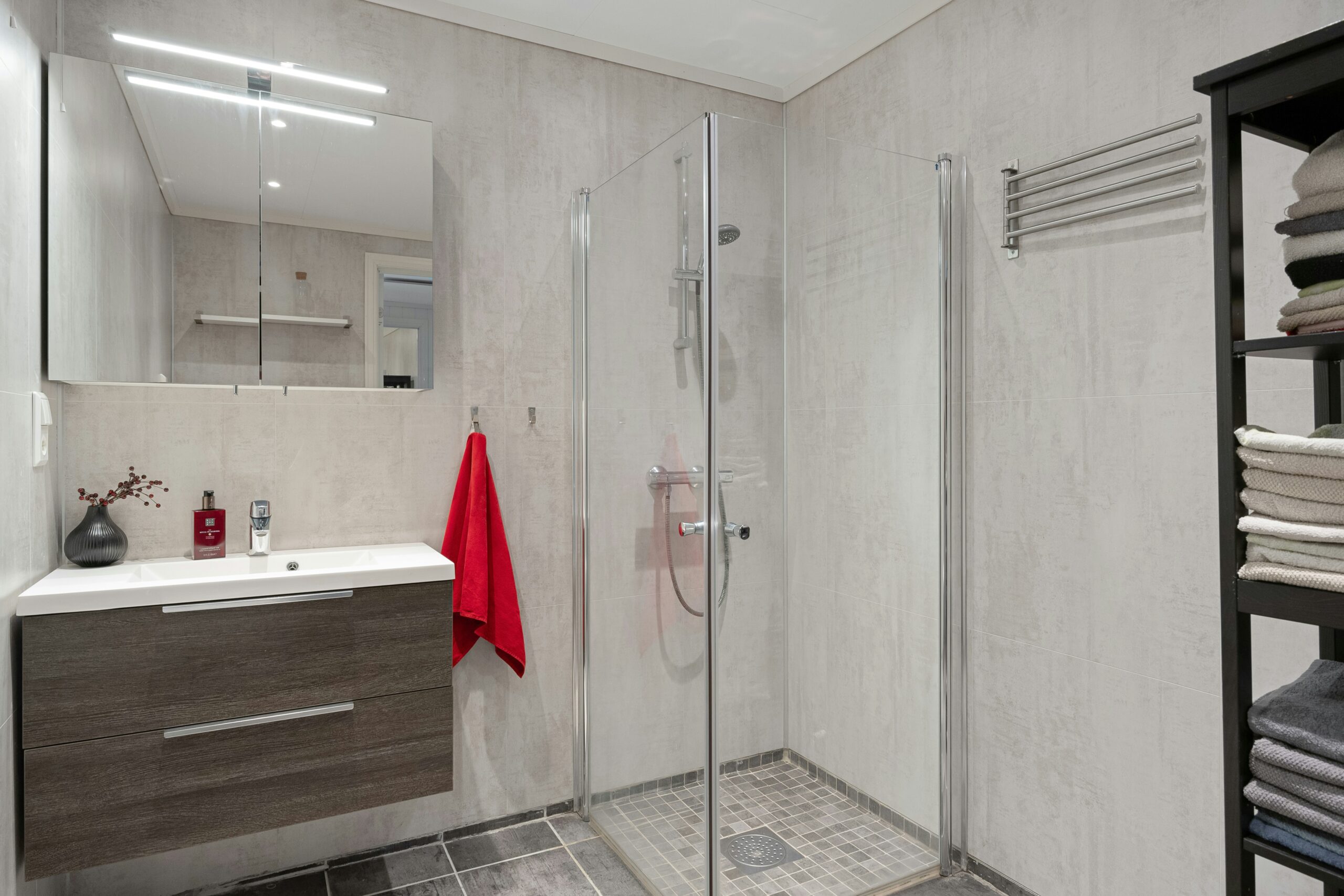
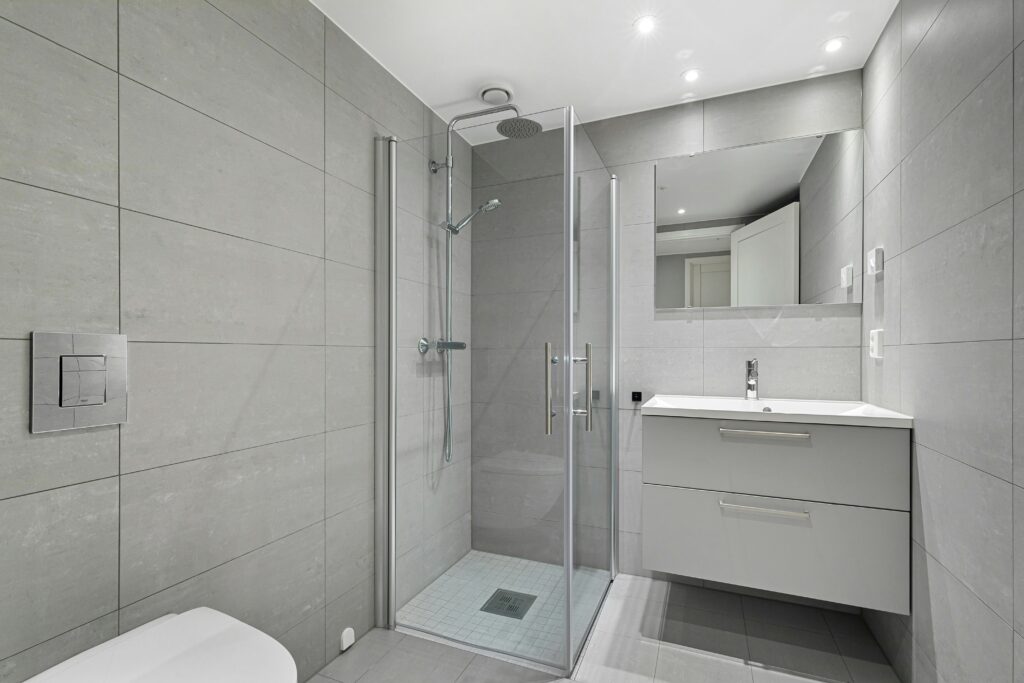
A level-access shower tray is a specially designed shower base, recessed into the subfloor so that its surface sits flush with the surrounding bathroom floor. This creates a seamless, step-free entry point with no threshold to trip over, while the tray itself provides a defined showering zone with a built-in gradient (or “fall”) directing water towards a central or offset drain.
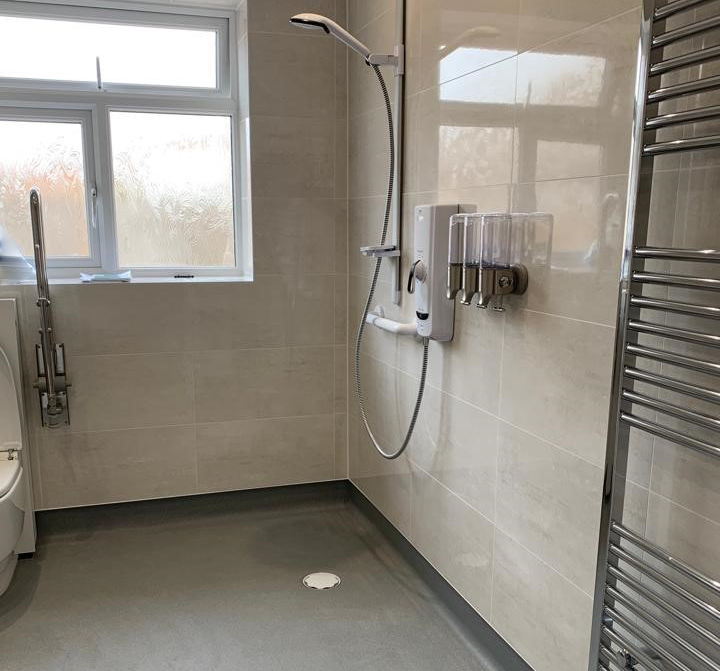
A full wet room, by contrast, involves waterproofing and grading the entire room floor to a drain, with no separate tray at all. The whole floor becomes the shower area.
In many UK home adaptations, especially wet rooms for disabled people, a level-access tray is integrated into a wet room-style bathroom. It gives you the step-free access of a wet room with the added benefits of better water containment, a defined area for screens and fixings, simpler waterproofing, and less disruption during installation. For a detailed comparison, see our guide to the differences between a level-access shower tray and a wet room.
Begin with the Person, Not the Product
The right tray is chosen first by who is using it, not by what looks best in a brochure.
Is the user ambulant but unsteady on their feet? Do they use a walking frame or wheelchair? Will they shower independently, or does a carer need room to assist? Is a shower seat needed now, or likely to be needed in the future?
These questions directly influence tray size, edge profile, load rating, and the type of screens or doors that surround the showering area. A person who currently walks with a stick may need a wheelchair-compatible layout within a few years if their condition is progressive. Planning for that from the outset avoids costly rework later.
Occupational therapists typically assess the individual’s needs and recommend specifications. Aquadapt works closely with OTs and other healthcare professionals to translate clinical recommendations into practical, design-led installations that genuinely enhance quality of life.
Tray Dimensions Are Only Half the Story
It’s easy to get caught up in tray dimensions and overlook other key considerations such as the space to approach the shower, room to turn or transfer, and where screens or doors will sit. The tray itself is only one piece of the jigsaw puzzle.
UK building guidance provides useful benchmarks. Approved Document M, the section of the Building Regulations dealing with access to and use of buildings, shows a 1000 × 1000 mm level-access shower as a baseline in wheelchair-adaptable bathroom layouts, and a 1200 × 1200 mm shower in wheelchair-accessible layouts, alongside a 1500 mm clear turning circle for wheelchair manoeuvring. These dimensions apply to new-build dwellings, but they represent sensible best practice for adaptations too.
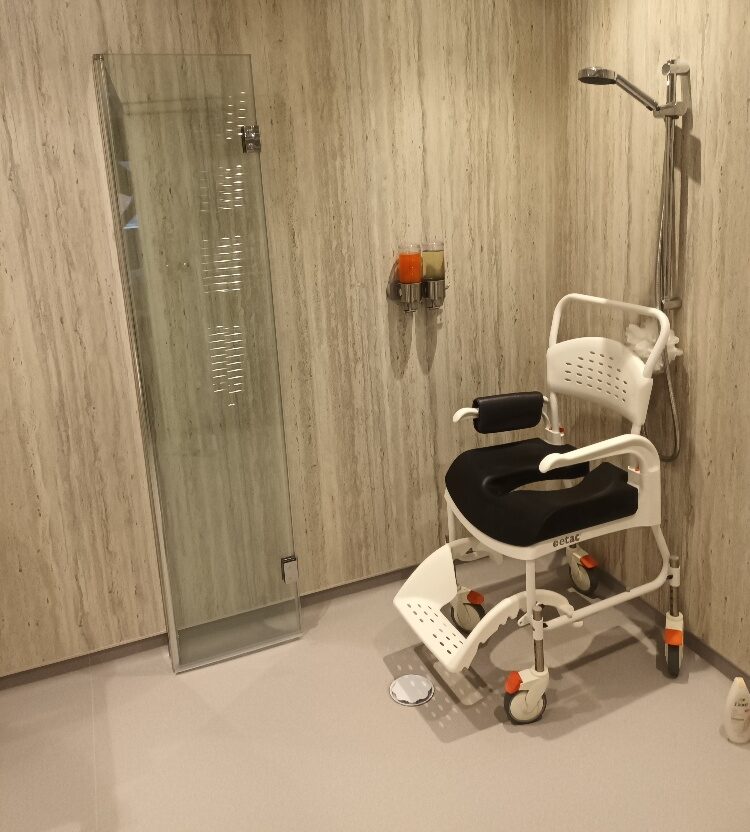
In practical terms, this means starting at 1000 × 1000 mm as a minimum and going larger wherever mobility, carer access, or future needs demand it. Bath-replacement trays, designed to fit the footprint left by a removed bath, are a popular option that minimise disruption while providing a generous showering area. Bespoke and custom-sized trays are also available for unusual spaces.
At Aquadapt, we have successfully adapted very small bathrooms and even spaces under stairs to provide level, wheelchair-accessible showering. Accessibility can often be achieved within significant spatial constraints when the design is handled by experienced professionals.
Check What’s Under the Floor
The type of floor beneath your bathroom is one of the most critical factors in tray selection, and one of the most overlooked by homeowners shopping online.
Timber floors, common in upper storeys and many older UK properties, are generally easier to recess a tray into. The subfloor is cut, the tray or former is fitted between the joists, and plywood reinforcement with additional supports ensures rigidity. However, timber floors move naturally with temperature and humidity, so a decoupling waterproof membrane is essential to prevent cracking.
Concrete or solid floors, typical on ground floors, may require cutting into the slab to accommodate the tray and drainage pipework. Where the concrete cannot be breached, for example, in some flats or over underfloor heating, surface-mounted low-profile trays or pumped waste systems become necessary, though these can add cost.
LABC Warranty guidance highlights that the structural floor beneath a wet room must be rigid enough to avoid cracking and movement, and that suspended timber floors can cause problems if they are not adequately stiffened. This is why we strongly recommend a professional site survey, to assess subfloor condition, joist direction, services, and drainage routes before the tray selection is made.
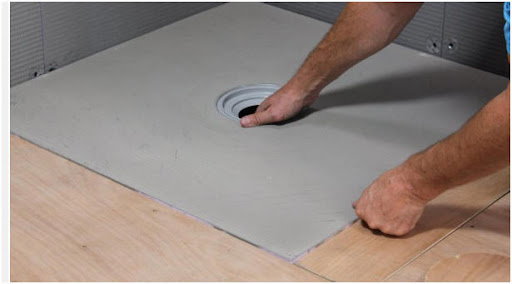
Drainage: The Detail That Makes or Breaks the Installation
A shower tray can look perfect and still fail if the drainage is wrong. Industry data from LABC Warranty shows that inadequate falls, overwhelmed gullies, and inaccessible traps are among the most common causes of wet room failures and warranty claims.
Drain type. Point drains (a single square or circular outlet) are the traditional choice and work well for smaller trays. Linear drains (a long, narrow channel) allow a gentler floor gradient, suit larger-format tiles, and can give a more contemporary look. The drain type should be decided early because it affects the fall geometry, floor build-up, and tile layout.
Flow rate. The drain and trap must cope with the shower’s water output. Standard traps handle between 25–48 litres per minute, but high-flow shower heads may exceed this. Always match the waste specification to the intended shower valve and head.
Trap access. Drains need periodic cleaning. Ensure the trap is accessible for maintenance without destructive works, a detail often missed in installations focused purely on aesthetics.
Waterproofing is Essential
This point cannot be stressed enough: tiles and grout are not waterproof. They are water-resistant at best. The Tile Association stipulates that in wet areas such as showers and wet rooms, substrates must be protected with a suitable proprietary tanking membrane system. Relying on tiles alone is one of the most common, and most expensive, mistakes in bathroom installation.
Tanking (the industry term for waterproofing) involves applying an impermeable membrane to floors and walls in the wet zone. On floors, the membrane should extend across the full shower area and at least one metre beyond the tray in all directions. On timber floors, a thicker decoupling membrane is recommended to accommodate natural movement. Walls within the splash zone need a flexible liquid membrane, reinforced at all junctions, corners, and pipe penetrations with sealing tape.
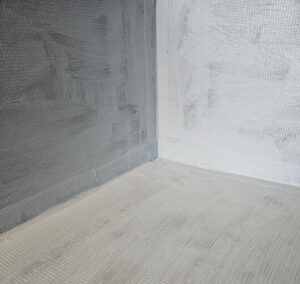
A level-access tray can simplify waterproofing compared with a full wet room, because you are tanking the immediate area rather than the entire room floor and walls to ceiling height. But corners, thresholds, and tray-to-floor transitions still need meticulous professional detailing.
Aquadapt’s in-house installation team handles all waterproofing as a standard part of the service. When correctly installed, a tanking system will last the lifetime of the floor covering, but poor waterproofing is invisible until the damage appears, often as leaks to rooms below, mould growth, or structural deterioration.
Slip Resistance and Safe Transfers
Falls are the single largest cause of emergency hospital admissions for people aged 65 and over in the UK, and the bathroom is one of the highest-risk rooms in any home. Slip resistance is therefore a vital functional safety requirement.
Look for trays with a textured, slip-resistant tread pattern as standard, not just a smooth acrylic surface. The surface needs to perform when wet and soapy, not just dry. Many specialist accessibility trays also offer anti-microbial properties, reducing bacterial build-up in care settings.
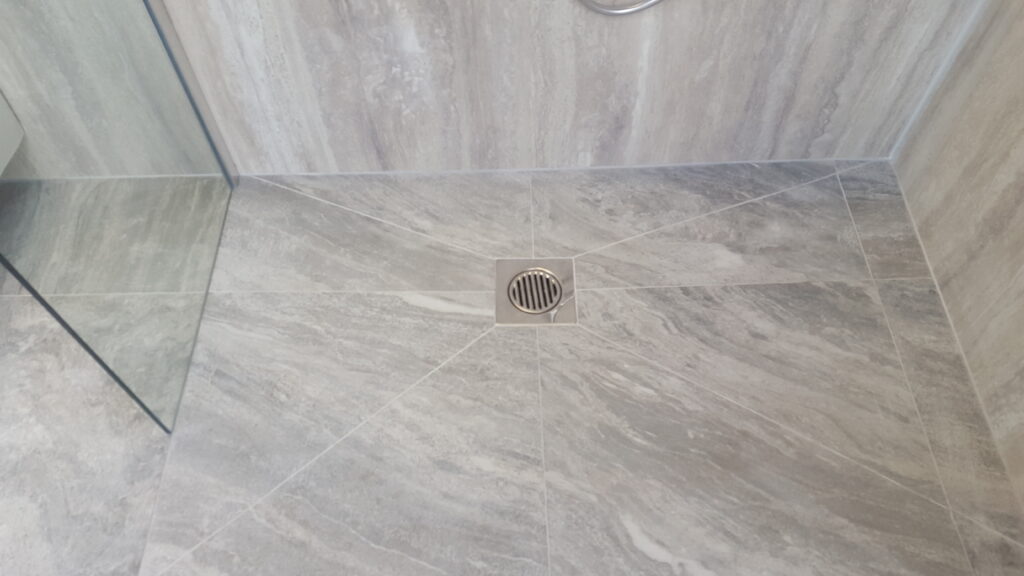
Critically, the route into and out of the shower matters just as much as the tray surface itself. The surrounding bathroom floor should also be slip-resistant, and transitions between the tray and the adjacent flooring must be smooth and level. HSE guidance states that where floors are frequently contaminated with water, people should still be able to walk without slipping.
For more on flooring options, including the choice between tiles and specialist vinyl, see our wet room flooring guide.
Futureproofing: Think Five Years Ahead
One of the most valuable things you can do when choosing a level-access shower tray is to think beyond today’s needs. A bathroom adaptation is a significant investment, and it should serve the user well as their circumstances change.
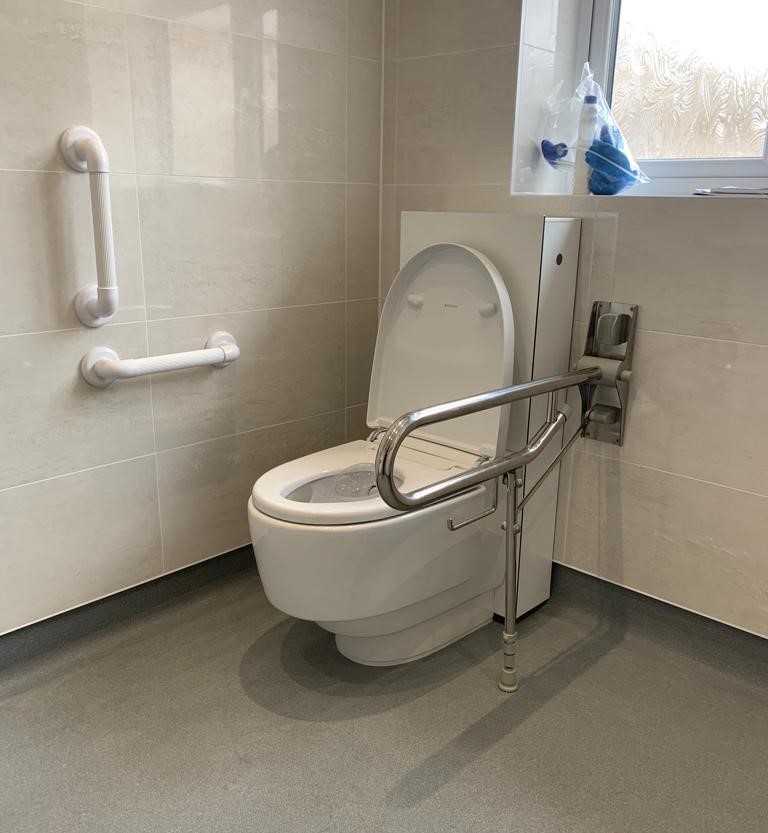
Approved Document M guidance requires that walls in accessible bathrooms should be strong enough to support grab rails, seats, and other adaptations that could impose a load of up to 1.5 kN/m². Even if rails are not needed on day one, reinforcing walls at the installation stage is far cheaper than retrofitting them later.
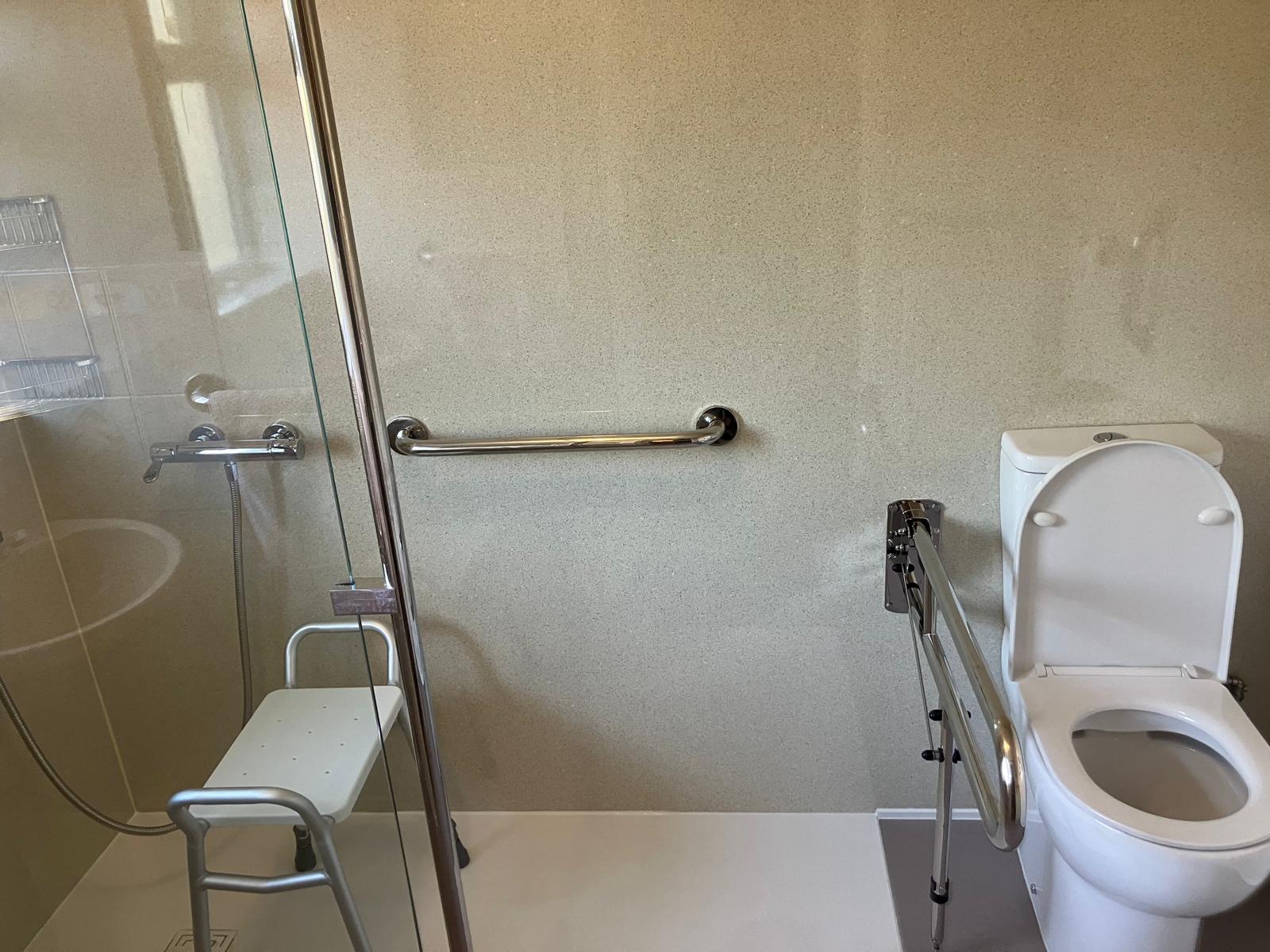
Choose a tray large enough to accommodate a shower seat or commode chair in the future. Consider half-height doors that allow carers to assist from outside the wet zone while preserving the user’s dignity. Ensure there is space for a handheld shower on a riser rail as well as a fixed head.
At Aquadapt, futureproofing is part of the initial conversation, and we offer trays tested to loads over 60 stone, half-height carer doors, a wide range of shower seats and grab rails, and custom tray sizing to suit every situation.
When a Level-Access Tray Is the Smarter Choice
A full wet room floor, where the entire room is tanked and graded to a drain, provides the most open, barrier-free space and can be the ideal solution for complex wheelchair manoeuvres or a complete bathroom redesign. But in many real-world UK adaptations, particularly in existing homes, a level-access tray offers the better balance.
A tray provides better water containment, reducing the risk of water spreading across the bathroom. It offers a defined fixing line for screens, half-height doors, and grab rails. It requires less extensive waterproofing than tanking an entire room. And it can often be installed with less disruption, replacing an existing bath or shower enclosure without a full bathroom renovation.
Installation Quality Is Part of the Product
A good tray badly installed is still a bad shower. LABC Warranty’s technical guidance lists a catalogue of failures caused by poor detailing: unsupported trays that flex, broken sealant joints, inadequate waterproof junctions, wrong tanking materials for the substrate, and poor coordination between plumbing, tiling, and waterproofing trades.
This is why choosing an installer who understands accessibility, drainage, and wet-area waterproofing is just as important as choosing the tray itself.
Aquadapt’s in-house team of plumbers, joiners, electricians, and decorators manage every project from structural alterations through to the final coat of paint. We are a family-run company, part of the CoreCare Global group, with over 35 years of experience in accessible bathroom design. Our level-access shower installations are completed in the strictly scheduled time frame and with minimal disruption to the household.
Choose With Confidence
Choosing the right level-access shower tray means balancing floor construction, drainage, space, mobility needs, slip safety, waterproofing, and personal style. That’s a lot of variables, but you do not need to navigate them alone.
Aquadapt’s highly experienced advisors assess every factor during a free, no-obligation site survey and work alongside healthcare professionals to recommend the ideal solution. Whether the project is privately funded or supported by a Disabled Facilities Grant, we provide a complete, end-to-end service from initial design through to installation and finishing.
Accessible bathrooms can be both practical and beautiful. The days of institutional-looking adaptations are long gone. If you would like to explore what’s possible, book a site survey, visit our showroom in Wetherby, or call the team on 01423 799 499.
Frequently Asked Questions
- What size level-access shower tray do I need?
For wheelchair-accessible bathrooms, UK Building Regulations guidance recommends a minimum level shower area of 1200 × 1200 mm. In smaller WC or cloakroom settings, 1000 × 1000 mm can work. However, the best size is the one that accommodates the user’s mobility, any shower seating, and carer access, with adequate circulation space around the tray.
- Is a level-access shower tray better than a full wet room?
Both provide excellent step-free showering, but they suit different situations. A level-access tray offers better water containment, a defined fixing line for screens and doors, simpler waterproofing, and less disruption during installation, making it ideal for adaptations in existing homes. A full wet room provides the most open, barrier-free space and may be preferred for complex wheelchair requirements or complete bathroom redesigns. Our team can advise on the best approach for your specific situation.
- Can a level-access shower tray be installed on a wooden floor?
Yes. Specialist trays and wet room formers are designed for timber joist floors. The subfloor is reinforced with plywood and supported with additional timber noggins, and a waterproof decoupling membrane is applied to manage the natural movement of wood. A professional site survey confirms suitability and identifies the best product and drainage route for your floor construction.
- Can a level-access tray be fitted upstairs?
Yes, upstairs installations are common. The floor must be structurally assessed to confirm it can support the load, and the installation must use appropriate tanking, falls, and drainage to protect the structure below. Aquadapt’s site surveys include a full assessment of the subfloor, joist condition, and drainage options for upper-storey bathrooms.
- Which drain type is better — linear or point?
Linear drains (long, narrow channels) allow a gentler floor gradient, suit larger-format tiles, and give a contemporary look. Point drains (a single square or circular outlet) can be simpler and more cost-effective but may require a slightly steeper fall. The choice should be made early because it affects the floor build-up, tile layout, and overall aesthetic. Your installer can recommend the best option for your tray and room.
- Can I get financial help to pay for a level-access shower?
You may be eligible for a Disabled Facilities Grant (DFG) through your local council. The DFG covers essential home adaptations including level-access showers and wet rooms. In England, the statutory maximum grant is £30,000. Applications are usually made following an occupational therapist assessment, and eligible disabled individuals may also qualify for zero-rated VAT on certain adaptation products and installation services.
- What features should I add for future mobility needs?
Plan for a tray large enough to accommodate a shower seat or commode chair later. Ensure walls are reinforced for grab rails and fold-down seating at the installation stage as this is far cheaper than retrofitting. Consider half-height doors that allow carer assistance while preserving dignity, and a thermostatic mixer shower with a handheld head on a riser rail. Aquadapt designs with future needs in mind from the very first consultation.