



If you’re considering a new bathroom or adapting your existing one for improved accessibility, you might be weighing up whether you go for a full wetroom or just install a walk-in shower.
Both offer step-free showering and can make a bathroom feel more spacious. However, the difference in terms of installation and maintenance is significant, so is an important decision to get right.
In this guide, we compare wet rooms and walk-in showers to help you decide which solution is best suited to your home, budget, and future needs.
Jump straight to…
What is a Wet Room?
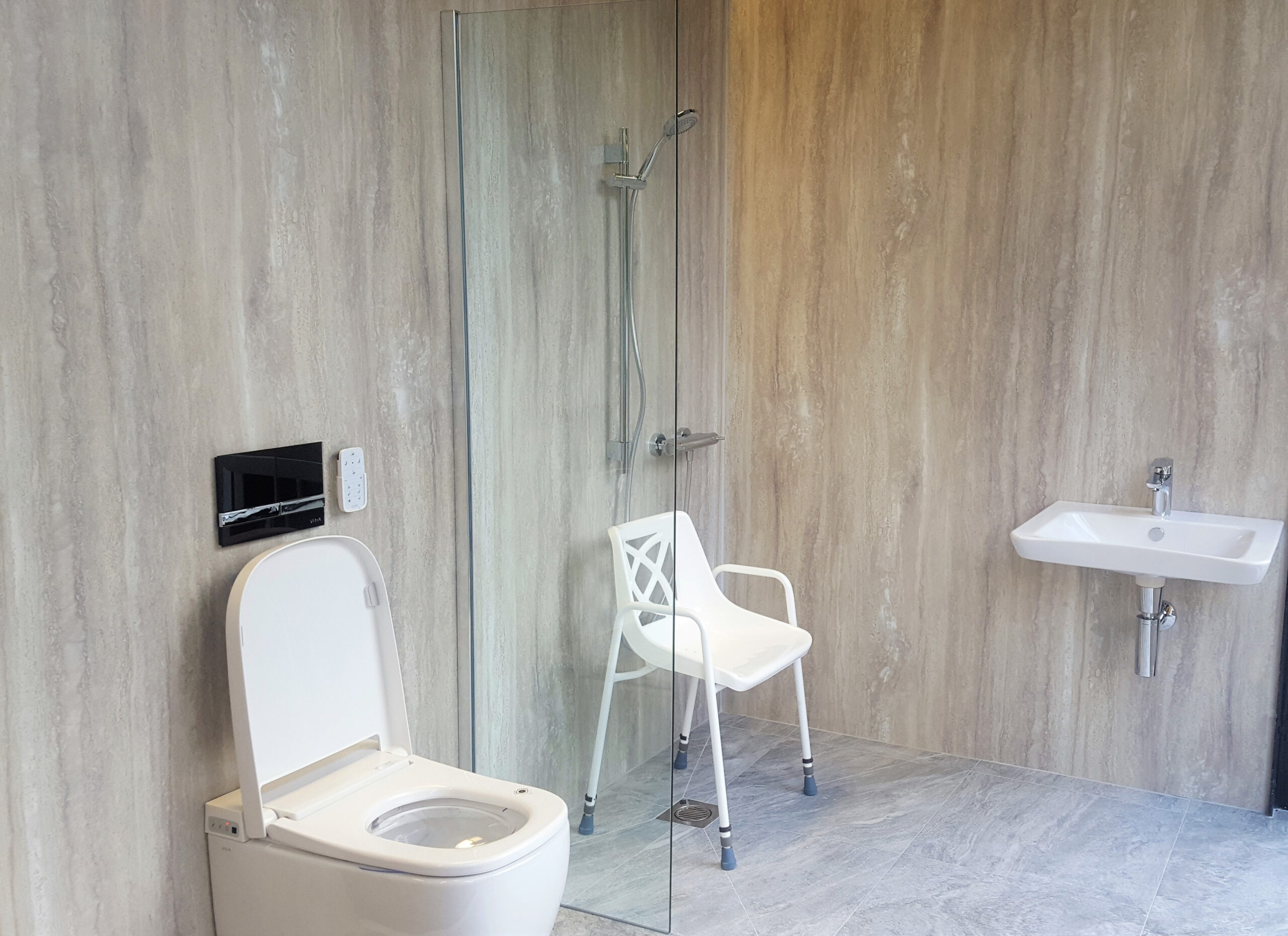
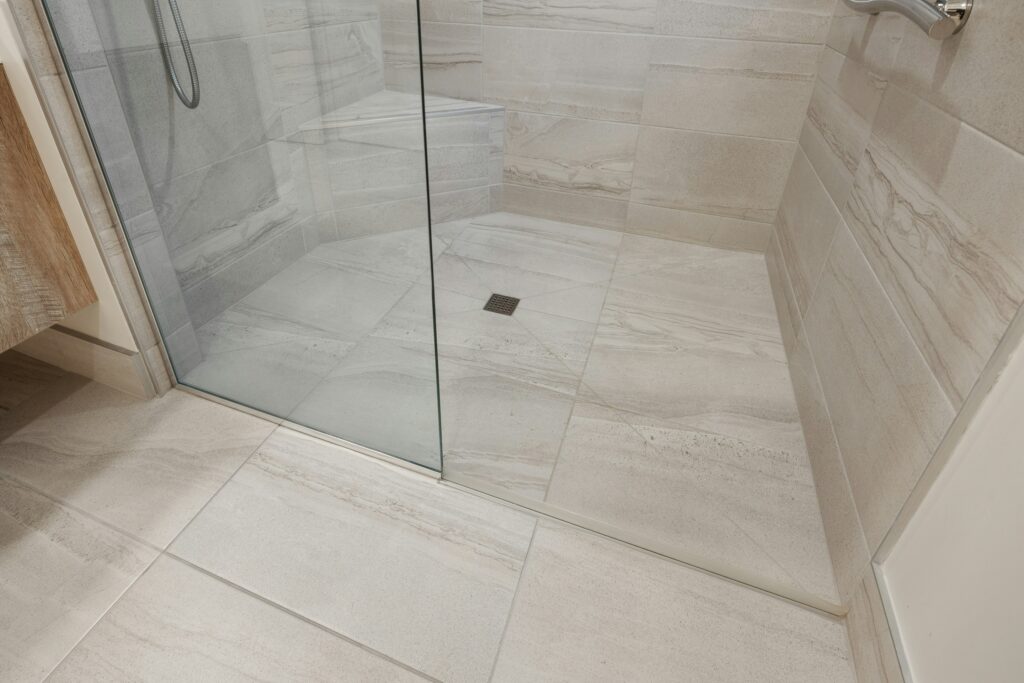
A wetroom is a fully waterproofed bathroom where the shower area integrates completely with the rest of the room. The entire floor is subtly sloped toward a drain, eliminating the need for a traditional shower tray.
The entire room is tanked and waterproofed, meaning water can safely be contained within the space. Wet rooms may be completely open-plan or include a simple glass screen to reduce splashing.
Benefits of a Wet Room
Zero Thresholds
The completely flat floor of a wet room provides the ultimate in accessibility, with no lips or edges to navigate. This feature makes wet rooms the gold standard for universal design and ongoing independence.
Maximum accessibility for wheelchair users
Without the defined boundaries of a shower tray, wet rooms provide an uninterrupted floor space that maximises accessibility. This open design is particularly beneficial for wheelchair users or those who require caregiver assistance, as it eliminates any barriers between the shower area and the rest of the bathroom.
Modern, open-plan appearance
Wet rooms offer a sleek, minimalist appearance that many find visually appealing. The absence of a visible tray creates a seamless look, as the former (the structure that creates the gradient for water drainage) sits hidden beneath the floor. This integrated design contributes creates a more spacious feel and contemporary aesthetic.
Easier to clean and maintain
Wet rooms can be finished with either:
- Tiled floors: Offering endless design possibilities with various colours, patterns, and textures.
- Special vinyl flooring: Heat-sealed around edges and corners, extending up the walls to create a waterproof environment.
This versatility allows you to create a look that complements your overall bathroom design while maintaining full functionality.
Potential Drawbacks of a Wet Room
- More extensive waterproofing required
- Longer installation times
- Water can spread more easily around the room
- Higher installation complexity
What is a Walk-In Shower?
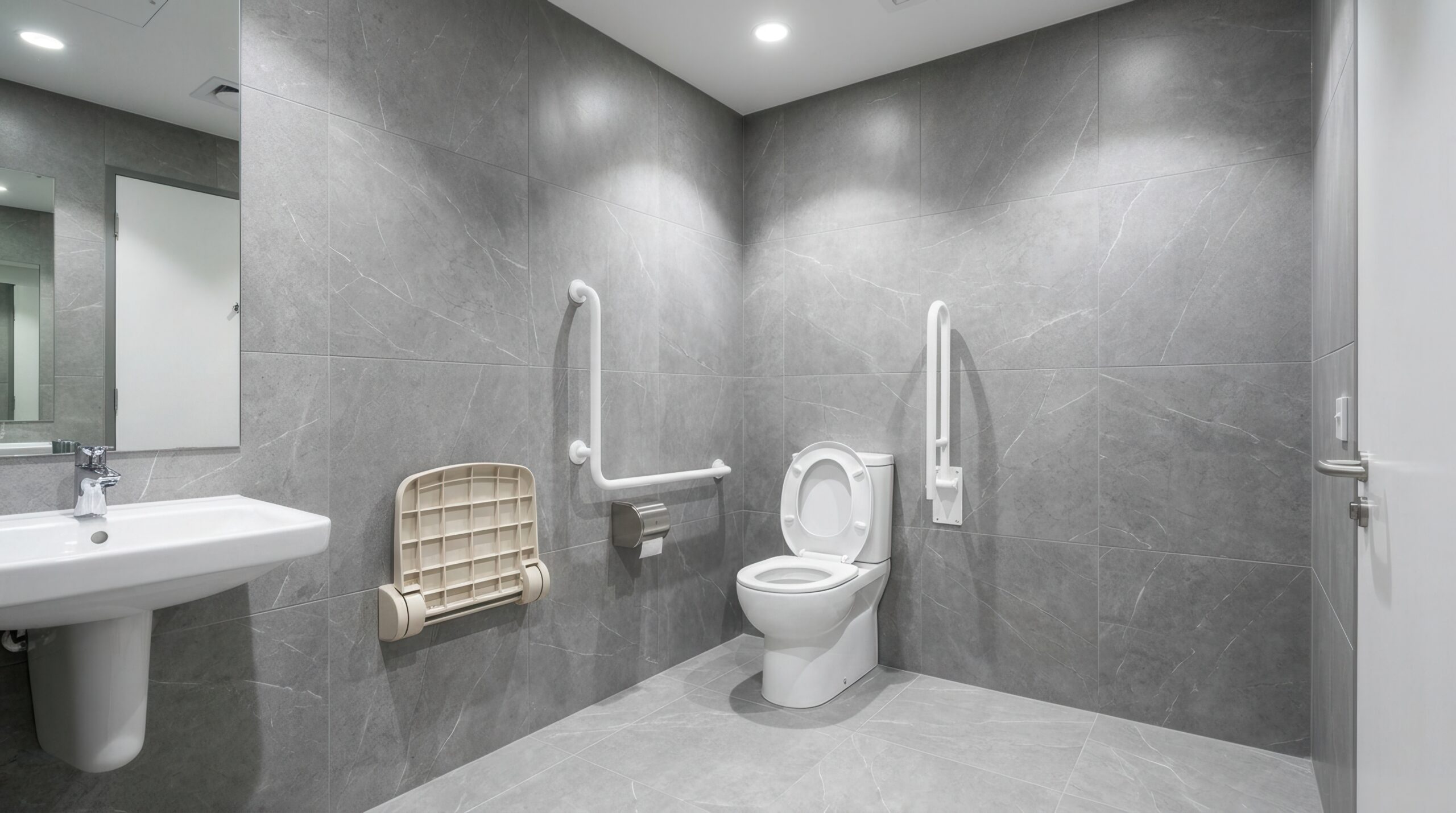
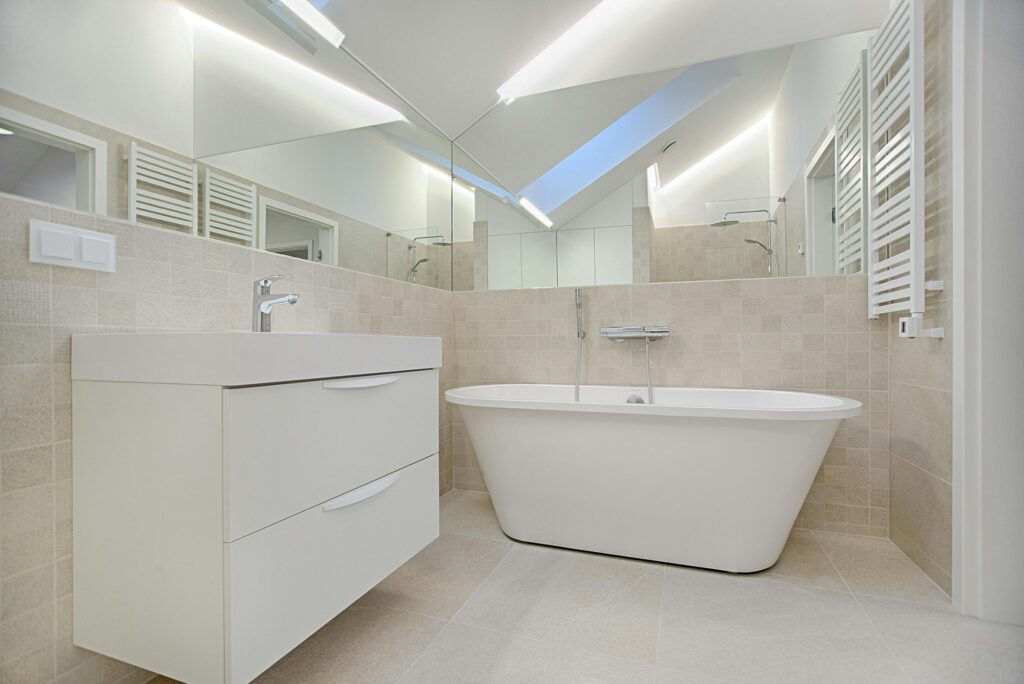
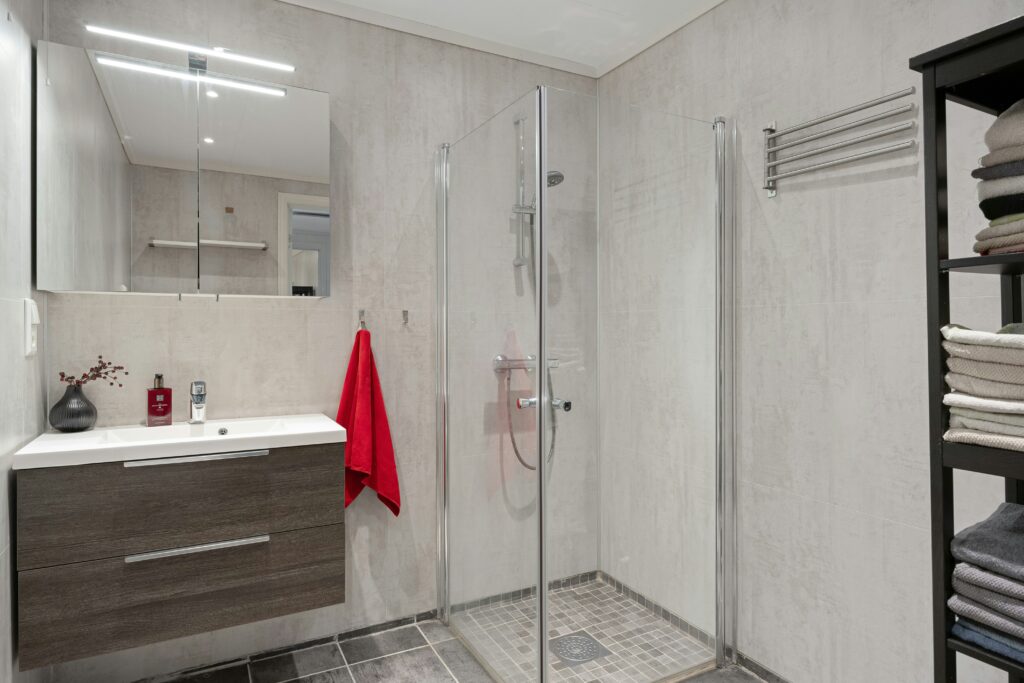
A ‘walk-in’ or ‘level access’ shower provides an open showering area without a traditional enclosed cubicle. Most walk-in showers use a level-access shower tray that sits flush with your bathroom floor, creating a seamless, step-free entry.
Unlike a wet room, the shower area remains clearly defined, helping to contain water while still offering easy access and a contemporary appearance.
Typically, these shower areas include screens or doors to help manage water spray.
Benefits of a Walk-In Shower
Excellent water containment
The defined area of a level access shower tray keeps water exactly where it belongs. The tray’s subtle edges and drainage system minimise the risk of it spreading throughout your bathroom, reducing potential slip hazards.
Easier and quicker to install
Unlike wet rooms, which require full room waterproofing, level access trays only need sealing around the immediate shower area. This means there’s no need for extensive vinyl application up walls, simplifying both installation and future maintenance.
Easy Installation of Fixtures
The clearly defined shower area makes it straightforward to add fixed screens, grab bars, or other accessibility fixtures. These additions can be securely attached around the tray’s edges, providing stability without requiring extensive bathroom modifications.
Potential Drawbacks of a Walk-In Shower
- Less open than a full wet room
- Defined shower area may slightly limit manoeuvrability
- Glass screens require regular cleaning
Wet Room vs Walk-In Showers: The Key Differences
Accessibility
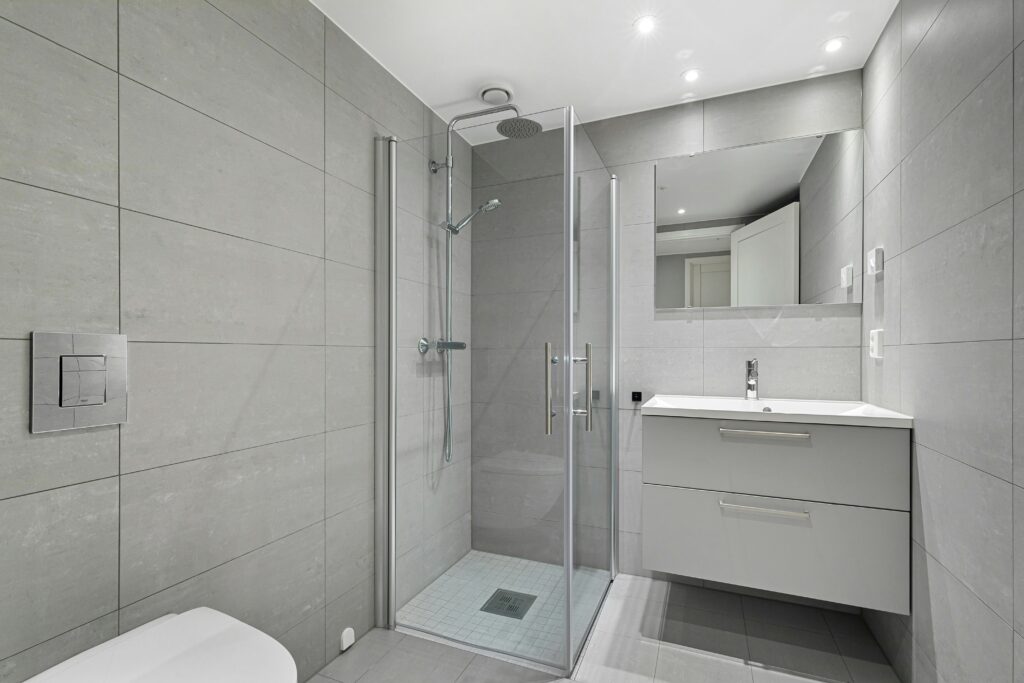
For wheelchair users with mobility challenges, a wet room offers the most unrestricted access. The absence of a defined shower area creates a completely open space that is easy to navigate.
However, modern level-access walk-in showers also provide excellent accessibility and are suitable for many users who require step-free showering.
Accessibility: Wet Room
Water Containment
One of the biggest practical differences is how water is managed.
Walk-in showers benefit from a dedicated shower area and drainage system that keeps water contained within the shower area. Wet rooms are completely open with floor gradients to drain the water and external waterproofing, allowing water to spread which may dampen clothing and bathroom products.
Water Containment: Walk-In Shower
Installation
Walk-in showers are quicker and easier to install, for the reasons already mentioned. In many cases, they can replace an existing bath or shower enclosure with minimal disruption.
Wet rooms require full tanking, specialist drainage, and floor gradients across the shower area, making installation work more involved.
Installation: Walk-In Shower
Appearance
Both options create a modern and contemporary feel, but wetrooms deliver the most seamless and minimalist finish.
Without a visible tray, the flooring flows continuously throughout the room, creating a luxurious spa-like feel.
Appearance: Wet Room
Maintenance
Wet rooms often have fewer edges, seals, and tracks to clean. However, because the whole room can become wet, more of the bathroom may need regular drying and cleaning.
Walk-in showers tend to keep moisture contained within a smaller area.
Maintenance: Draw
Which Option Adds More Value?
At Aquadapt, we believe there’s no one-size-fits-all solution. Our experienced team works closely with healthcare professionals and clients to assess individual needs and property requirements before recommending either a level access shower tray or wet room installation.
Both wet rooms and walk-in showers are attractive features for modern homes.
Wetrooms are often perceived as a more premium feature, and can appeal to buyers seeking luxury and accessibility. Walk-in showers, meanwhile, appeal to a wider range of homeowners due to their practicality, lower maintenance requirements, and easier installation.
In our view, there is no universal winner. The best choice depends less on property value and more on how well the solution meets the needs of the people using it.
Choose a wet room if you want:
- Maximum wheelchair accessibility
- Completely open-plan design
- Future-proofed mobility access
- A luxury spa-style appearance
Choose a walk-in shower if you want:
- Better water containment
- Simpler installation
- Minimal disruption during renovation
- Excellent accessibility with added practicality
Conclusion
When comparing a wet room and a walk-in shower, the right choice depends on your priorities.
Wet rooms provide the ultimate in accessibility and minimalist design, making them an excellent option for users who require unrestricted movement. Walk-in showers offer many of the same accessibility benefits while providing better water containment and a simpler installation process.
Whether you’re considering a wet room or a walk-in shower, our team can help you find the solution that works best for your home and lifestyle.
Frequently Asked Questions
Q: What is the main difference between a level access shower tray and a wet room?
A: A level access shower tray creates a dedicated showering area that sits flush with the bathroom floor, while a wet room waterproofs the entire room and slopes the floor towards a drain. Both offer step-free access, but wet rooms provide a more open-plan design.
Q: Are wet rooms more accessible than level access shower trays?
A: Wet rooms offer completely open floor space with no defined shower boundary, making them particularly suitable for wheelchair users and those who require carer assistance. However, level access shower trays still provide excellent step-free accessibility and can accommodate a wide range of mobility needs.
Q: Which option is easier to install in an existing bathroom?
A: Level access shower trays are usually easier and less disruptive to install because they can often replace an existing bath or shower enclosure. Wet rooms require full waterproofing and floor grading, which typically involves more extensive renovation work.
Q: Do wet rooms require more maintenance?
A: Wet rooms require the entire bathroom floor and showering area to be cleaned regularly, while level access shower trays contain most water and soap residue within a defined area. Maintenance requirements for both are relatively low when installed correctly.
Q: Which option is best for future-proofing a bathroom?
A: Wet rooms are often considered the most future-proof solution because they provide completely barrier-free access and maximum manoeuvring space. However, a well-designed level access shower tray can also offer long-term accessibility while providing better water control.