

The UK accessible bathroom market has rarely felt more alive. After years of slow change, accessibility and mainstream bathroom design have converged. Driving that shift has been an ageing population, better products, updated regulation, and the biggest Disabled Facilities Grant settlement on record.
The stakes are high though. Around a third of people aged 65 and over fall at least once a year. Among those aged 80 and over, it is closer to half. The bathroom is consistently among the highest-risk rooms in the home. A well-designed accessible bathroom is one of the most effective ways to keep someone safely independent.
At Aquadapt, we have over 35 years’ experience in the home adaptations industry. Here are the eight trends that we think occupational therapists, case managers, housing providers, and homeowners should have on their radar this year.
Jump straight to…
-
- Universal design becomes the mainstream baseline
- Wetrooms and level-access showers as the default
- Smart technology comes of age in accessible bathrooms
- Hidden accessibility and designer support rails
- Wash-dry toilets enter the mainstream
- Dementia-friendly and sensory-aware bathroom design
- Part M, Part T and the wider regulatory picture
- The Disabled Facilities Grant reaches £723 million
- What this means for you
- Ready to plan a 2026-ready accessible bathroom?
- Frequently Asked Questions
Universal design becomes the mainstream baseline
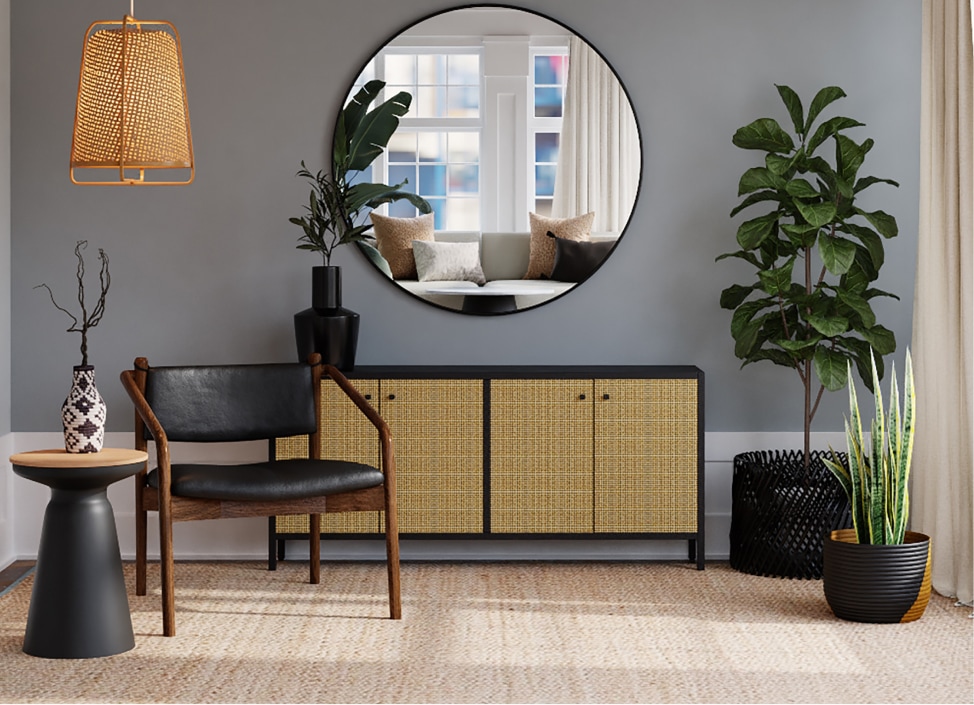
The biggest shift in 2026 is philosophical. Universal design, the principle that a space should work for every age and ability without visible modification, has moved from a nice-to-have to mainstream expectation.
Building Regulations Part M4(2), the “accessible and adaptable” standard, is now increasingly treated as the minimum rather than a niche add-on. The Housing Made for Everyone (HoME) coalition continues to campaign for it to become mandatory for all new UK homes.
Wetrooms and level-access showers as the default
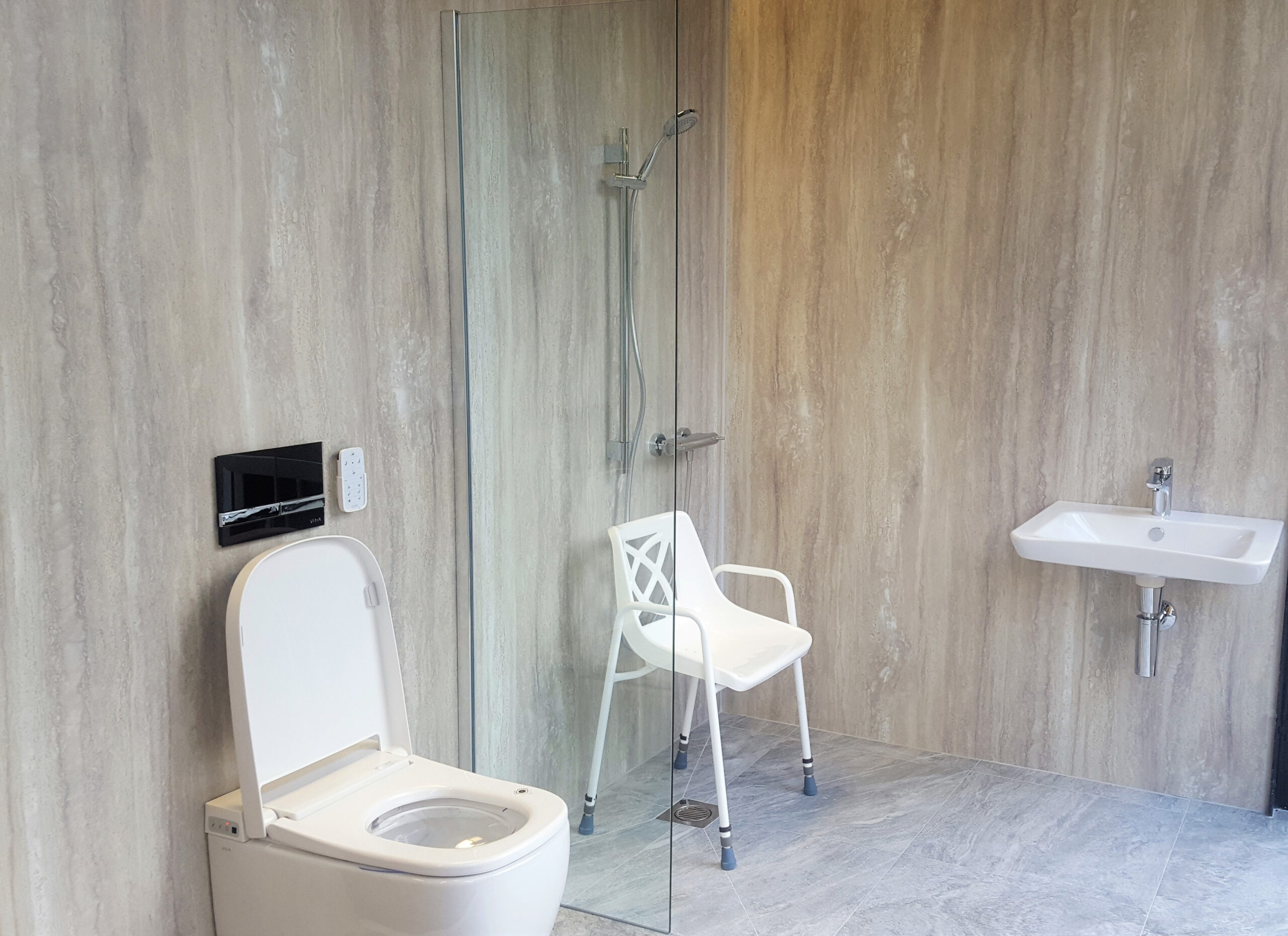
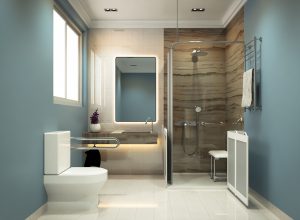
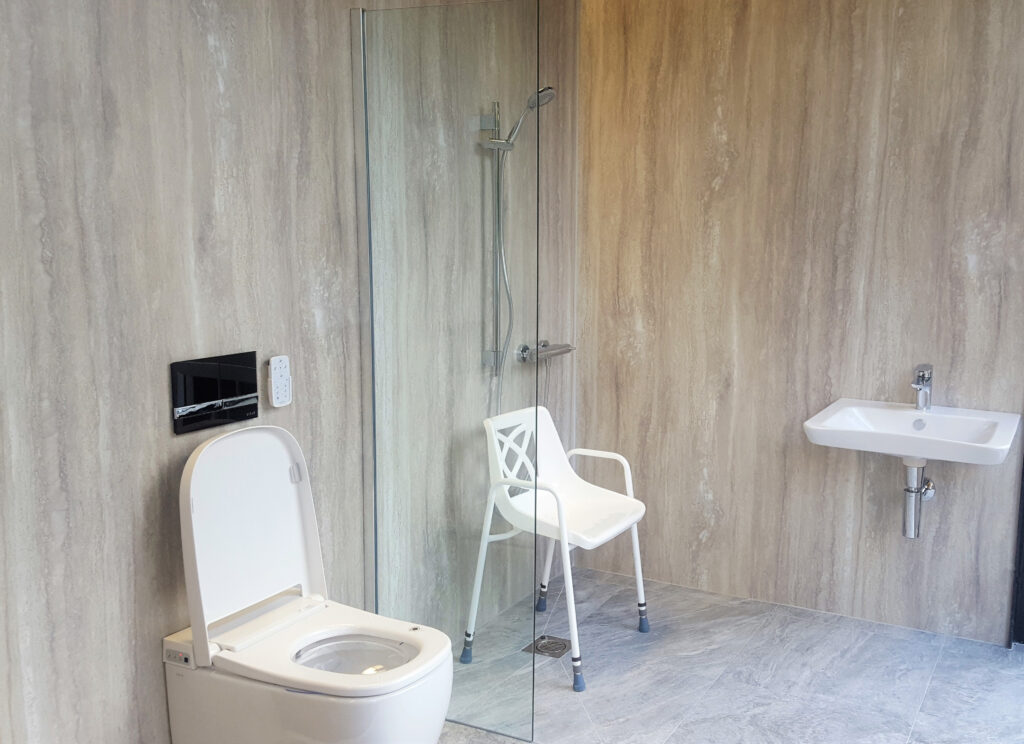
Wetrooms have moved from specialist product to default specification. Clean lines, large-format tiles and frameless glass look effortlessly modern. Step-free entry, linear drainage and slip-resistant flooring deliver accessibility without visible compromise.
The detail is also getting smarter. Subfloor structure, tanking, drainage routes and future wheelchair or carer access are now designed in from the outset. A well-executed wetroom is typically the single highest-impact intervention in any accessible bathroom project, and one that can genuinely add to the value of the home.
Smart technology comes of age in accessible bathrooms
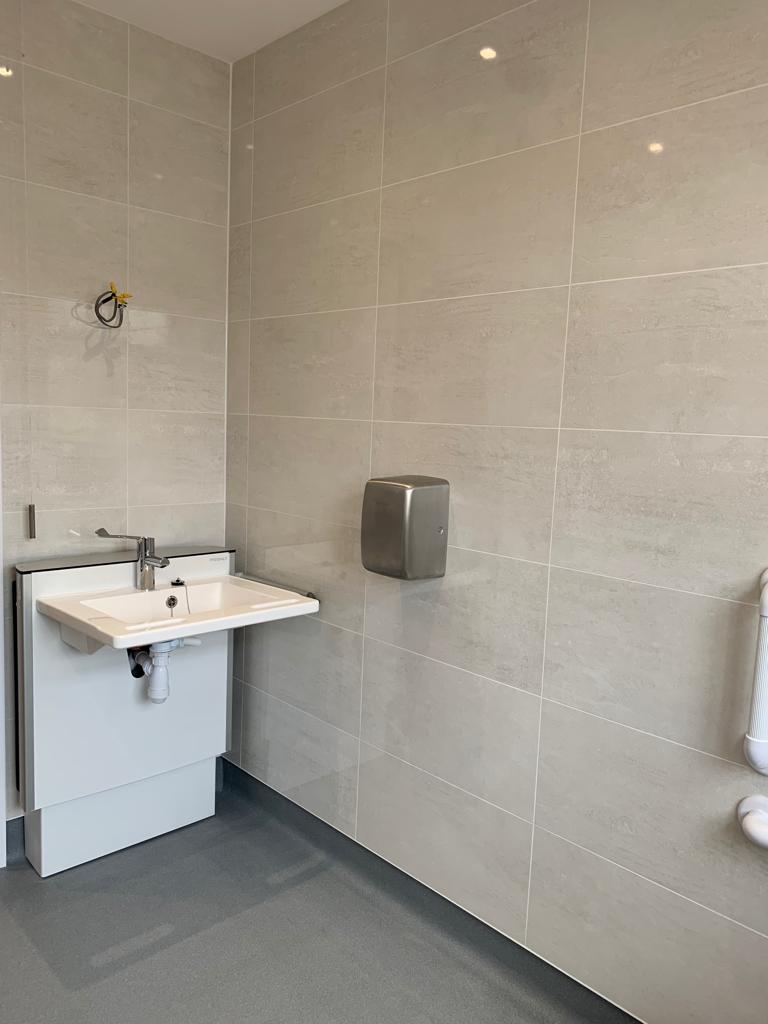
Bathroom technology in 2026 is no longer a novelty. Voice-activated taps, thermostatic digital showers with user profiles, sensor-activated night lighting, and smart toilets are increasingly found ordinary UK homes.
For users with reduced grip, limited reach, or progressive conditions, the benefits are significant: fewer fiddly controls, reduced scald risk, and safer night-time visits. The government’s own assistive technology research now recognises mainstream smart-home products within its definition of assistive technology, a meaningful step for occupational therapists specifying them within adaptation plans.
Hidden accessibility and designer support rails
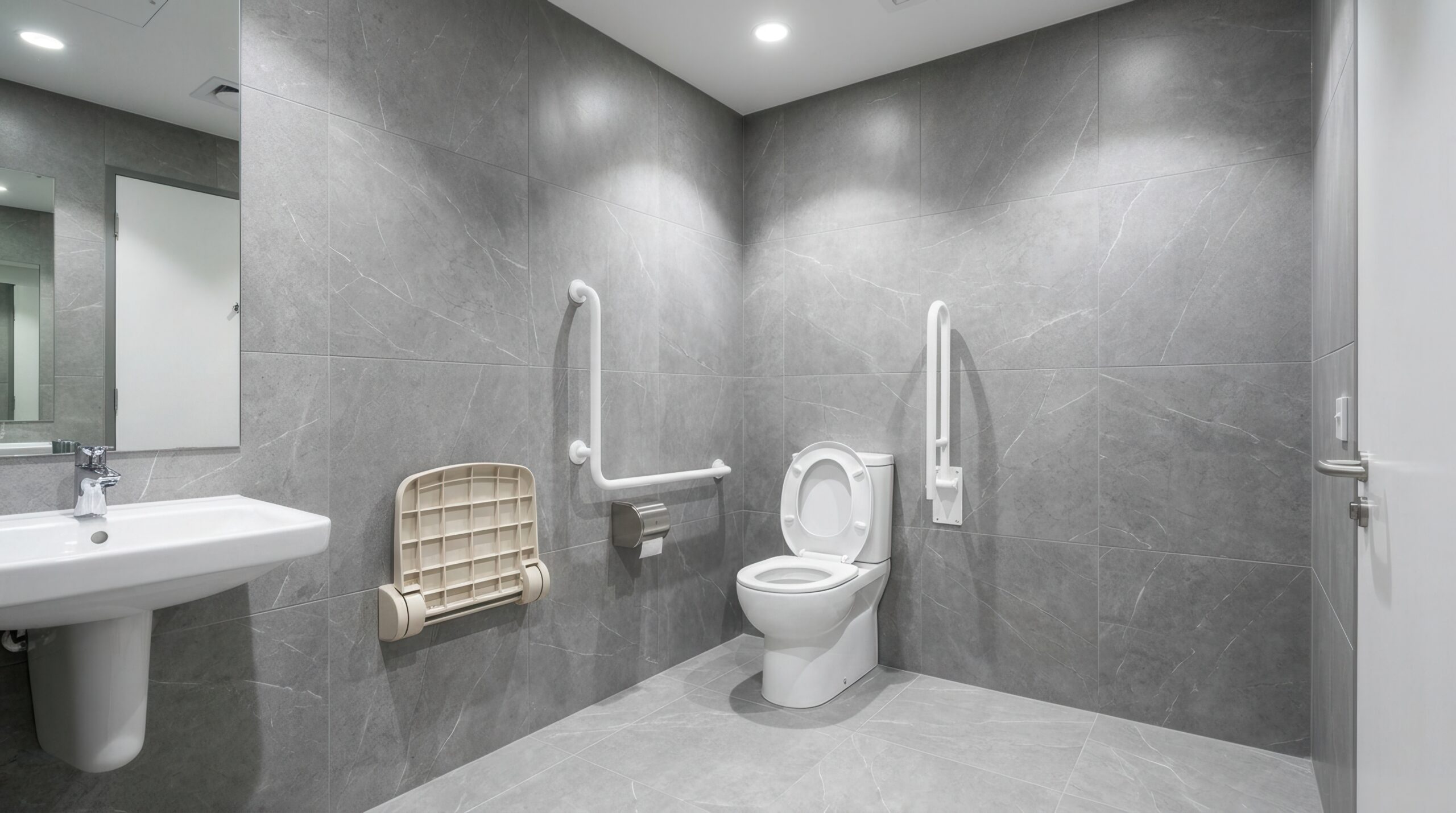
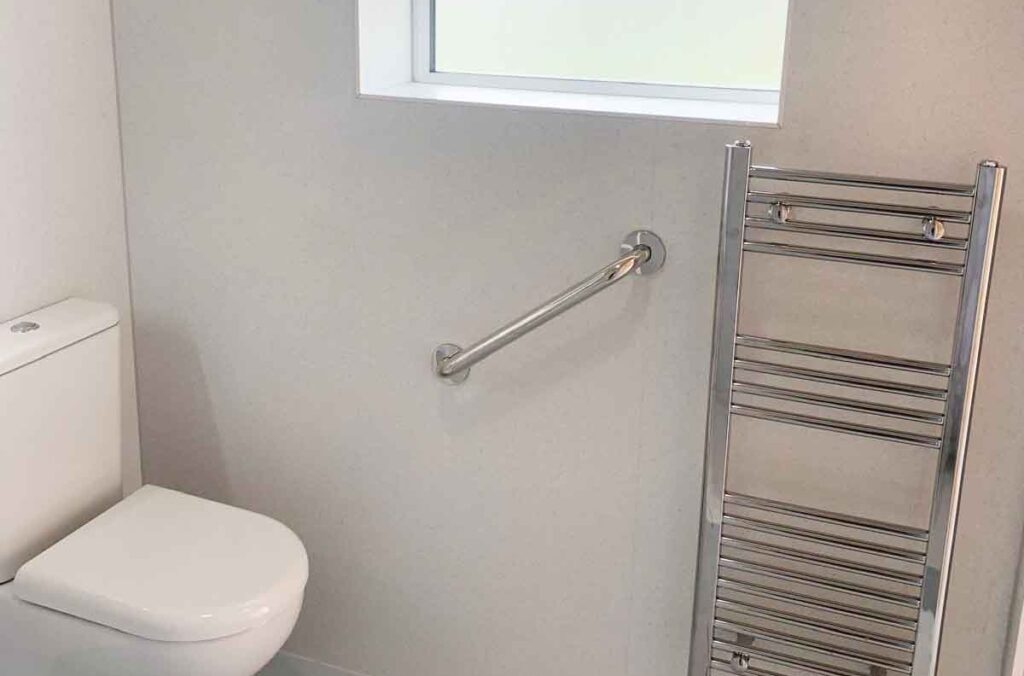
The white plastic hospital-style grab rail is on its way out. Today’s support rails come in brushed brass, matte black, brushed nickel, aged bronze and polished chrome, finishes that coordinate directly with mainstream tap and shower ranges. Some designs double as towel holders or shelf supports.
The wider principle is “hidden accessibility”: supportive features should blend in, not stand out. The right finish means it gets fitted, used, and kept.
Wash-dry toilets enter the mainstream
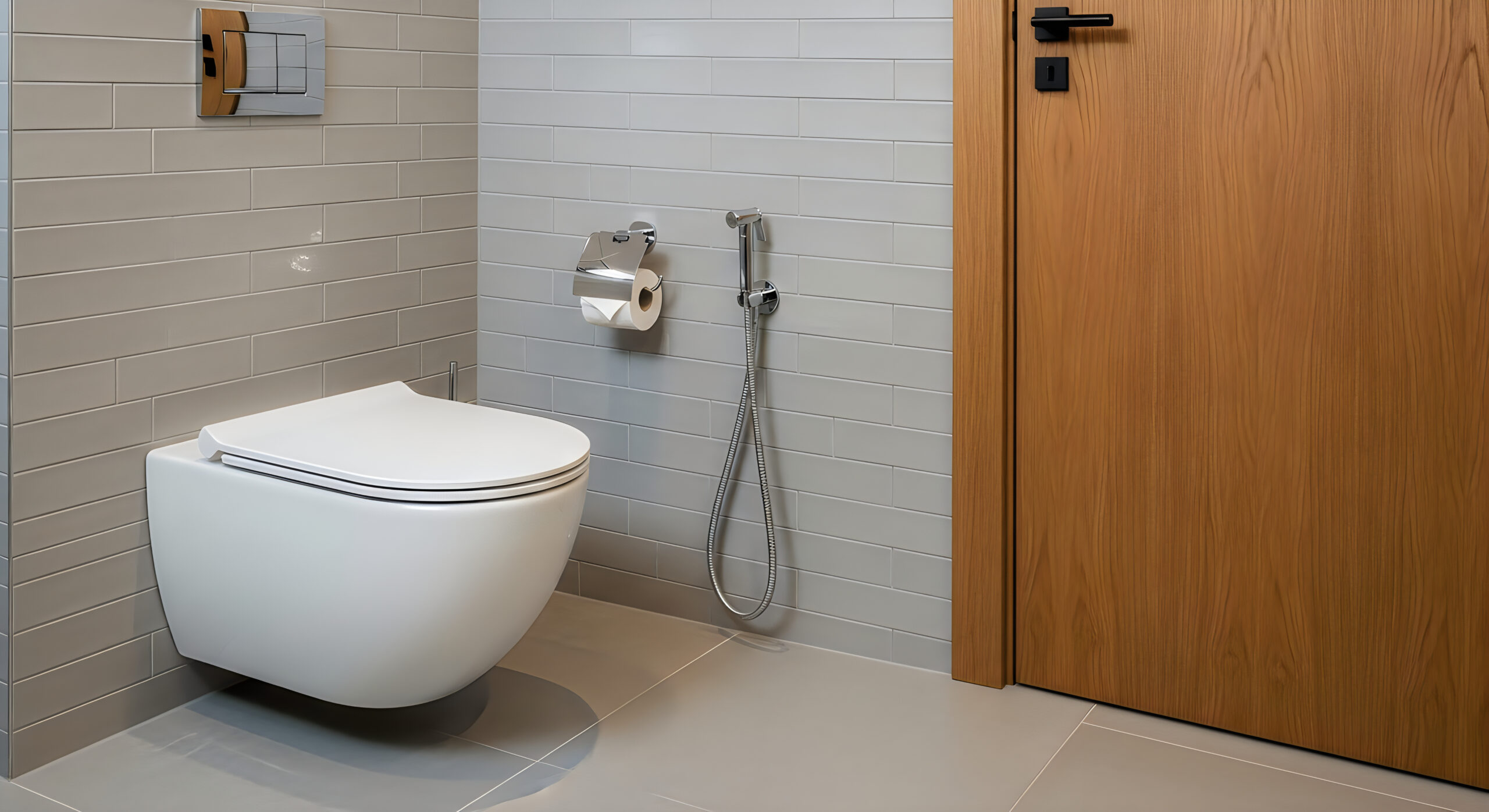
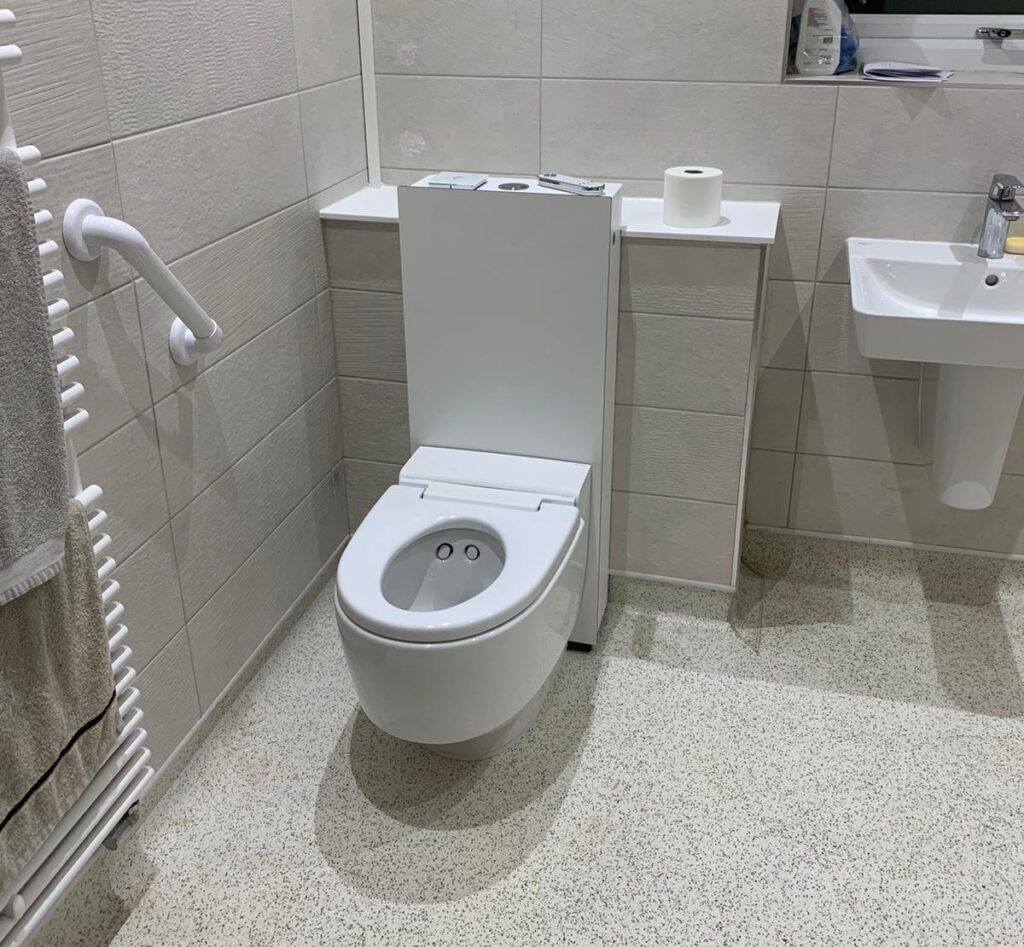
The wash-dry toilet has undergone the most dramatic repositioning of any product in the sector. Products such as the Geberit AquaClean Mera combine bidet functionality, warm-air drying, odour extraction and automatic flushing in a single wall-hung unit that looks like a premium mainstream WC.
For people living with arthritis, reduced grip, MND or spinal injury, they can be genuinely life changing. The Mera Care variant adds height adjustability (440–560mm), paediatric chair compatibility, and control options including eye-gaze technology.
Critically, UK government guidance confirms that wash-and-dry toilets can be funded through the Disabled Facilities Grant in England where they form part of a wider adaptation. This category is now firmly mainstream.
Dementia-friendly and sensory-aware bathroom design
An increasingly important trend is broadening accessibility to include cognition, orientation, and sensory experience. Bathrooms can be disorienting for people living with dementia: reflective, acoustically harsh, and full of visually similar fixtures.
In 2026, expect more attention to tonal contrast between walls, floors, sanitaryware and rails; layered lighting that supports recognition; and simpler, more intuitive controls. The shift toward warm earthy tones, muted sage greens and chalky plums, already a mainstream UK interior trend, actively supports visual clarity. Good universal design and good dementia-friendly design are, in most respects, the same design.
Part M, Part T and the wider regulatory picture
The regulatory baseline continues to shape 2026 design. Approved Document M remains the baseline for access in England. Part M4(2) requires walls strong enough to support grab rails and ceilings capable of carrying a 200kg hoist. Part M4(3) covers fully wheelchair-accessible homes.
For non-domestic projects, care homes, extra-care housing, hospitality, workplaces, Approved Document T came into force on 1 October 2024. It provides guidance on universal toilets, ambulant toilets, and single-sex cubicles. Part T does not replace Part M; the two work alongside each other. The Equality Act 2010 and BS 8300 continue to inform inclusive design across the built environment.
The Disabled Facilities Grant reaches £723 million
Funding for accessible home adaptations in England has never been stronger. In February 2026 the government confirmed a DFG allocation of £723 million for 2026–27, the largest on record. A £50 million in-year top-up announced in January 2026 brought total 2025–26 funding to approximately £761 million.
From 2026–27, a new allocation formula will distribute funding based on local demand. The maximum grant remains £30,000 in England, £36,000 in Wales, and £25,000 in Northern Ireland. Scotland operates its own housing adaptations system.
Wherever you are in the UK, the first steps are the same: early engagement with your local authority and an occupational therapist’s assessment.
What this means for you
For occupational therapists and case managers, 2026 offers a deeper and better-looking catalogue of accessible bathroom solutions than at any point in recent memory.
For homeowners, the combination of design maturity, smart technology, future-proofing standards and record DFG funding makes this a particularly strong year to act. A well-specified accessible bathroom should serve its user comfortably for the next decade, while looking every bit as considered as any mainstream renovation.
Ready to plan a 2026-ready accessible bathroom?
Book a free site survey with one of our experienced advisors. We offer a complete design and installation service, plumbing, electrics, joinery, specialist flooring, tiling, small building works and decorating, tailored to the individual.
Call us on 01423 799 499 or visit aquadapt.co.uk/book-appointment
Frequently Asked Questions
What are the top accessible bathroom trends for 2026?
Key trends include level-access wetrooms, integrated grab rails, spa-style interiors, non-slip flooring, and future-proof layouts that combine accessibility with modern design.
Are wetrooms good for accessibility?
Yes, wetrooms offer step-free access, making them ideal for people with mobility needs while also creating a sleek, spacious look.
Can accessible bathrooms still look stylish?
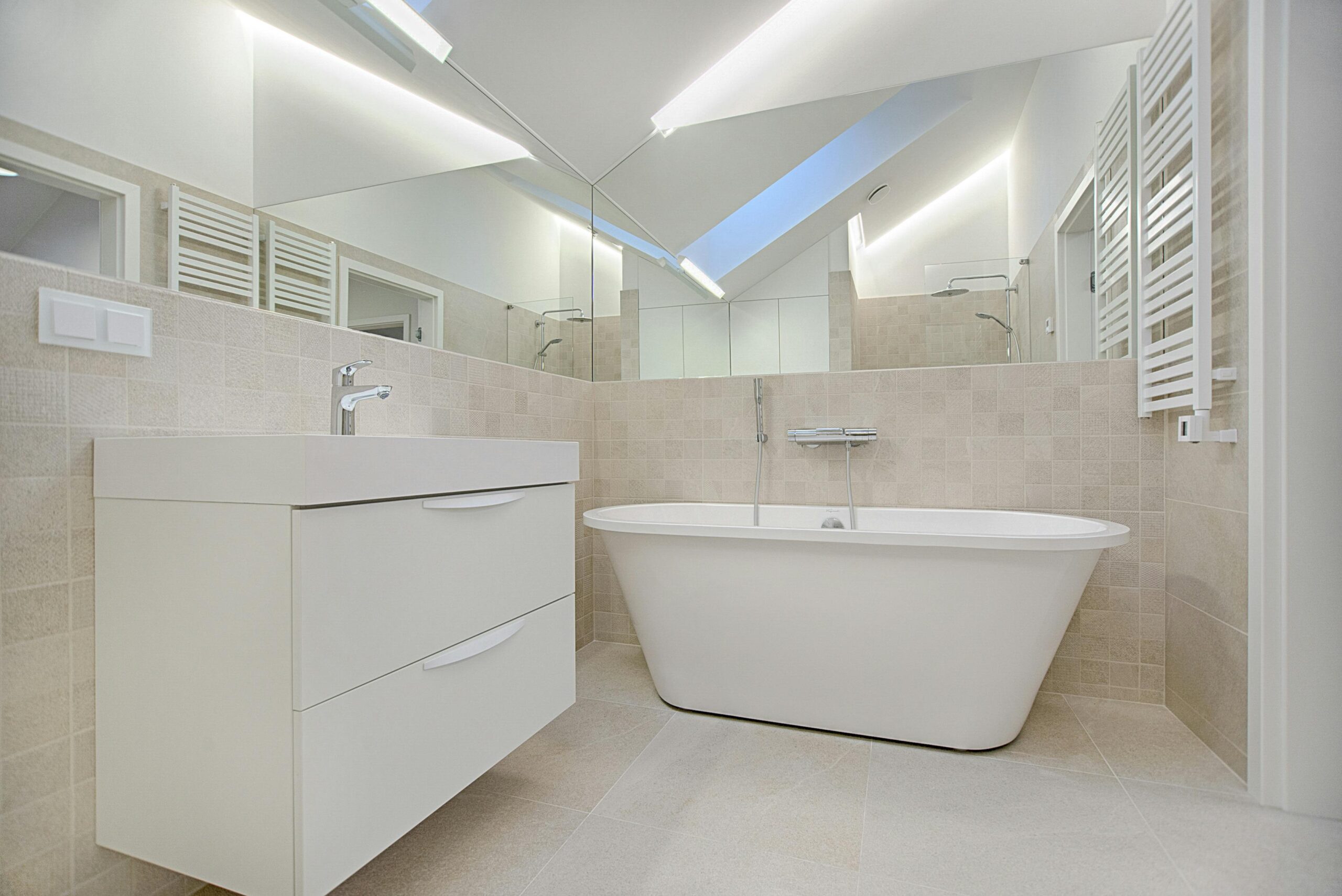
Modern accessible bathrooms use features like frameless glass, brushed metal finishes, and designer safety products to create a contemporary feel.
What is future-proof bathroom design?
Future-proofing means designing a bathroom that can adapt to changing mobility needs, with features like wider layouts, reinforced walls, and level-access showers.
Is UK funding available for accessible bathroom adaptations?
Yes, some homeowners may qualify for a Disabled Facilities Grant (DFG) to help fund accessible bathroom improvements.