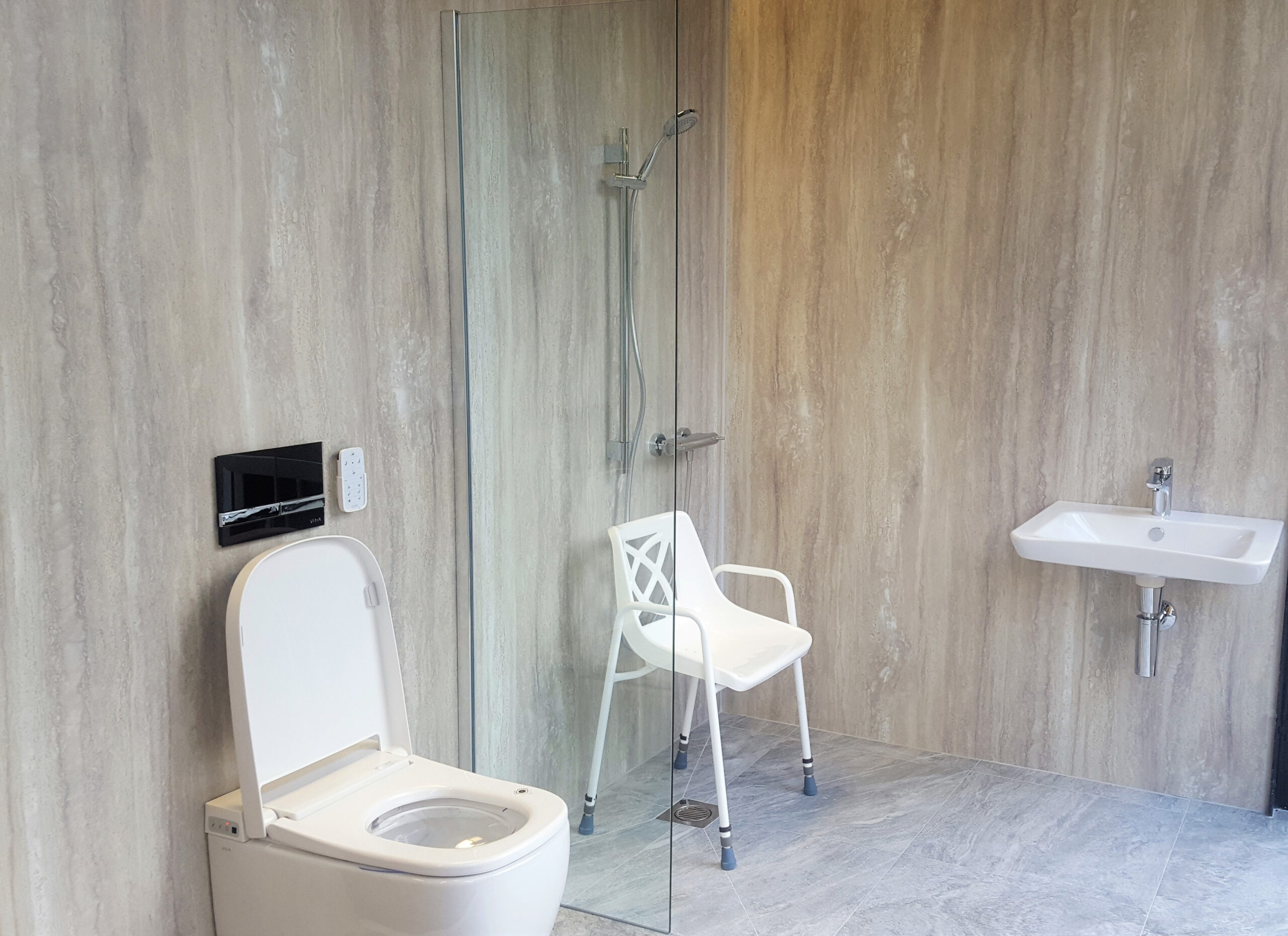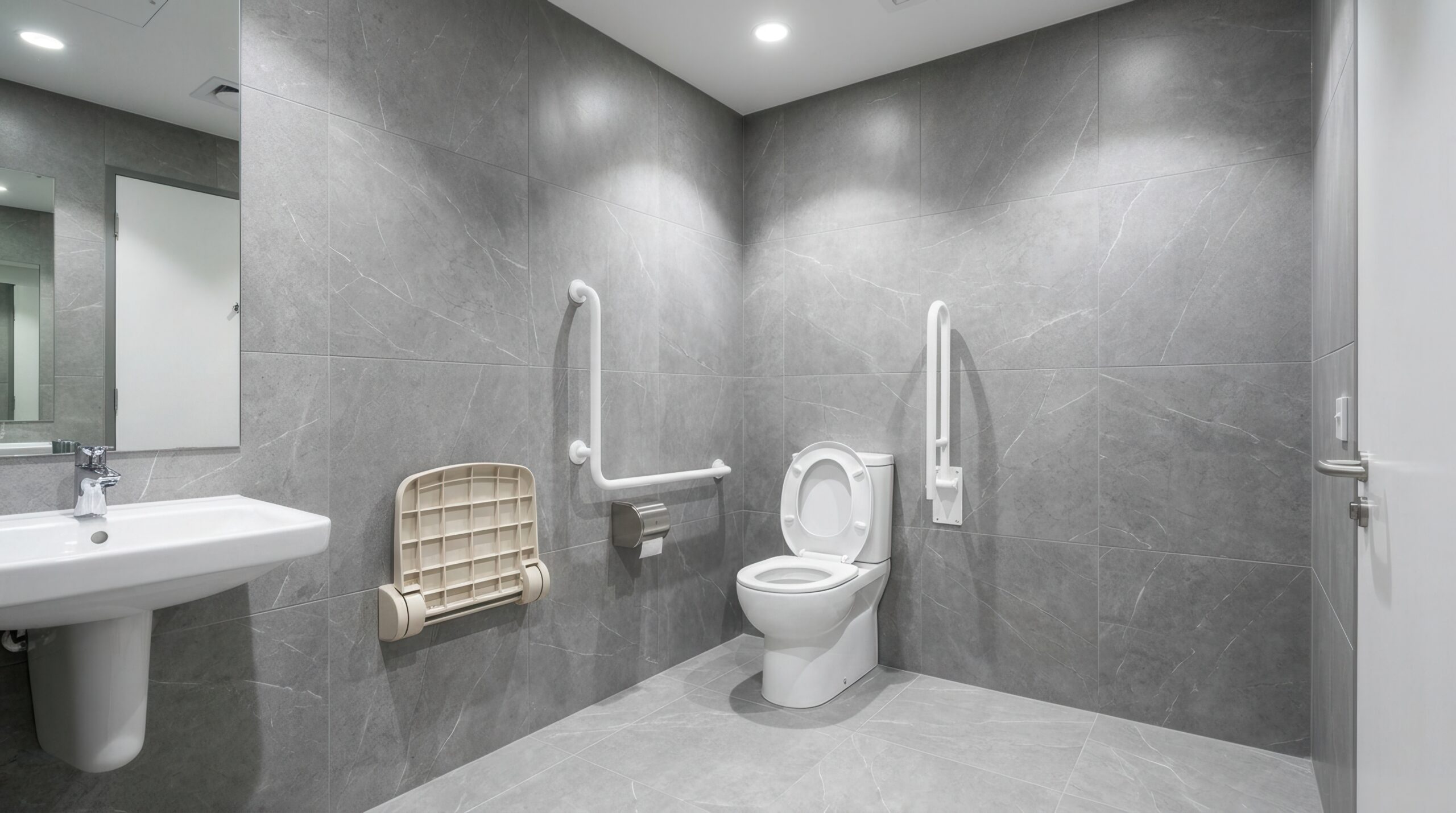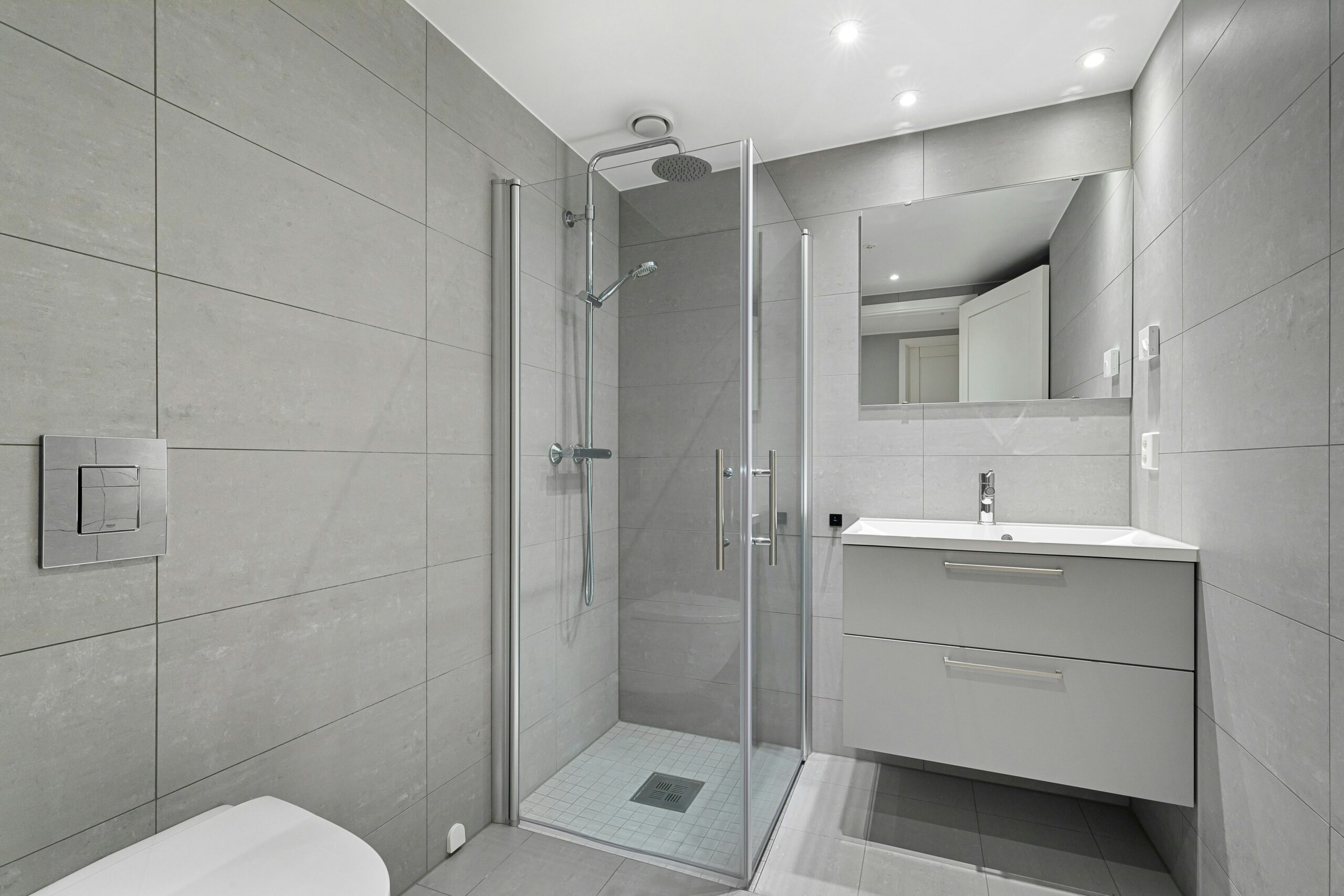


If you’re planning a wetroom, or helping someone adapt theirs, you already know how much a wetroom floor has to cope with. It’s wet every day, and everyone in the house crosses it, whatever their age, balance or mobility.
That matters more than it might seem. Around 1 in 3 people aged 65 and over fall at least once a year, rising to 1 in 2 of those aged 80 and over. Bathrooms and wetrooms, with their combination of water, soap and smooth surfaces, are where much of that risk concentrates.
For most wetrooms, the decision comes down to safety vinyl or anti-slip tile. Chosen and fitted well, either will keep the room safe. The difference lies in the safety ratings, the quality of the installation, and how each material performs over the years that follow. This article sets out the evidence, whether you are planning an adaptation for your own home or specifying one as an occupational therapist or case manager.
Jump straight to…
How Slip Safety is Measured in the UK
The benchmark in this country is the pendulum test, carried out to BS 7976-2 and BS EN 16165 and recognised by the Health and Safety Executive (HSE) and the UK Slip Resistance Group. A weighted rubber slider swings across the floor to simulate a heel strike, producing a Pendulum Test Value (PTV). A PTV of 0 to 24 indicates high slip potential, 25 to 35 moderate, and 36 or above low slip potential, equating to a slip probability of around 1 in a million.
Two main details matter for wetrooms. First, the test must be carried out wet: almost any floor performs well when dry. Second, barefoot areas such as showers should be tested with the barefoot slider (Slider 55) as well as the standard shod-foot rubber. Tile packaging in the UK often quotes R-ratings (R9 to R13) from the German ramp test. However, HSE guidance cautions that R9, and in some cases R10, floors will be slippery when wet. The practical rule is always ask for the wet PTV.
The Case for Safety Vinyl
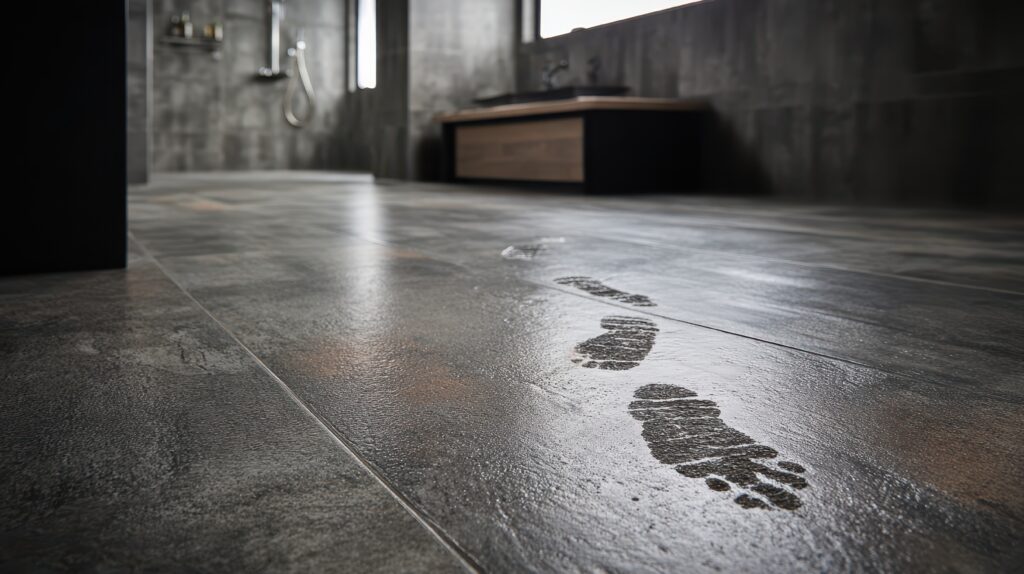
Specialist safety vinyl, produced by manufacturers such as Altro and Polyflor, has hard aggregates (quartz, aluminium oxide, and silicon carbide) embedded throughout the wear layer, so fresh particles remain active as the floor wears. It is the only flooring category manufactured to EN 13845, the standard governing sustained slip resistance, and leading ranges achieve a wet PTV of 36 or higher as a minimum, with some wetroom-specific products reaching 50+.
The installation method is the second half of the case for safety vinyl. Sheet vinyl is fitted in one piece with heat-welded seams and can be capped and coved a short distance up the wall, so the floor itself becomes a continuous waterproof surface. Water and bacteria have nowhere to collect, and wheelchair castors and shower chair wheels roll without resistance. The surface is also warmer underfoot, with slight cushioning if a fall does occur. Modern safety vinyl also comes in wood-effect, stone-effect, and contemporary plain finishes. Vinyl does carry limitations: an invisible repair is challenging if the surface is punctured, and high-specification safety ranges sit at the premium end of the market.
The Case for Anti-Slip Tiles
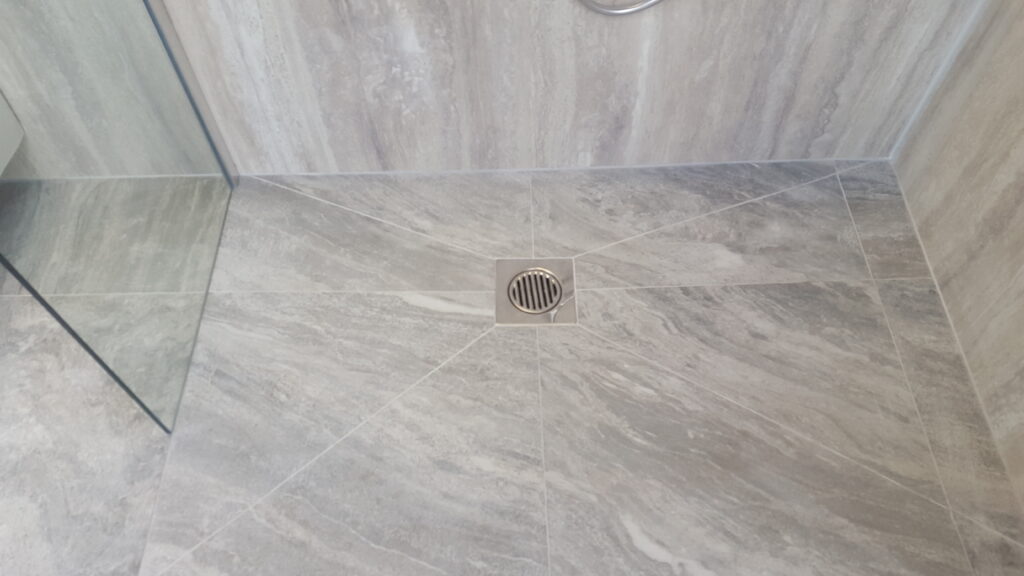
Correctly specified tiles are also an excellent option. A genuinely slip-rated textured porcelain, with a verified wet PTV of 36 or above, or Class B under the DIN 51097 barefoot ramp test, is a legitimate and safe wetroom surface. Porcelain has exceptional wear resistance, and individual tiles can be replaced if damaged. The aesthetic range is the widest of any flooring category, and tiles pair naturally with underfloor heating. Mosaic formats work particularly well in the shower zone, where the extra grout lines follow the drainage fall and add grip underfoot.
Some caveats: Standard glazed bathroom tiles rated R9 or R10 are unsuitable for a floor designed to get wet. Grout is porous and often needs resealing every 1 to 2 years to prevent moisture absorption and mould, and worn grout affects both hygiene and grip. With tile, waterproofing lives in the tanking system beneath the finish, so the quality of installation is vital. Finally, tile is a harder, colder landing than vinyl if a fall does happen.
Head-to-head: Safety Vinyl vs Anti-Slip Tile
| Safety vinyl | Anti-slip porcelain tile | |
| Slip performance when new | PTV 36+ wet as standard; leading ranges reach 50+ | PTV 36+ wet achievable with correctly specified anti-slip porcelain |
| Slip performance over time | Sustained by aggregates through the wear layer (EN 13845) | Depends on wear, cleaning regime and grout condition |
| Waterproofing | The floor itself is the waterproof layer: heat-welded seams, cap-and-cove detailing | Relies on the tanking system beneath; grout and seals need upkeep |
| Comfort and fall impact | Warmer underfoot with slight cushioning | Harder and colder; underfloor heating recommended |
| Wheeled equipment | Continuous surface with no grout-line resistance | Suitable if flat-laid; grout lines create minor resistance |
| Hygiene and maintenance | Joint-free and non-porous; neutral pH cleaning preserves grip | Porous grout needs resealing every 1 to 2 years |
| Design range | Wood, stone and contemporary plain effects | Widest aesthetic range; premium, spa-like finishes |
Which is Safer?
For clients with the highest safety needs, such as a history of falls or shower chair use, or a progressive condition where needs will change, safety vinyl is the stronger recommendation. Sustained slip resistance for the life of the floor, a continuous waterproof surface with nothing to catch a wheel or a toe, and a more forgiving landing collectively make it the default specification in clinical and care settings.
For mixed households and design-led projects where mobility needs are moderate, correctly specified anti-slip porcelain with mosaic zoning in the shower area is an attractive choice, provided the wet PTV is verified before purchase.
The key point is that the specification and the installation matter more than the material. A beautiful tile with the wrong rating and a premium vinyl with poorly welded seams are both unsafe floors. The safest wetroom is the one where the flooring decision is made alongside the drainage design, the subfloor build-up and a thorough assessment of the requirements of the person who will use it.
Regulations, Standards and Funding
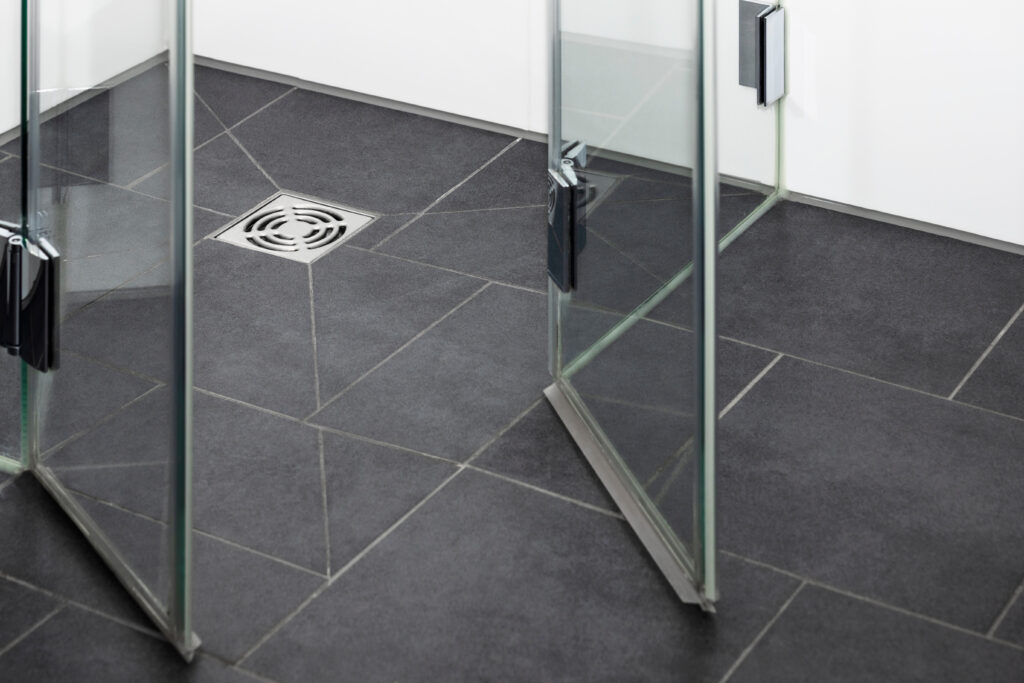
Slip resistance is embedded in the regulatory framework. Approved Document M of the Building Regulations expects slip-resistant floor surfaces in accessible sanitary accommodation, and BS 8300 sets out equivalent expectations for wet areas in accessible buildings. For referring professionals, a complete specification should state the required wet PTV with the slider type, EN 13845 conformity where safety vinyl is specified, and the DIN 51097 class for barefoot tiled areas.
On funding, wetroom flooring installed as part of an assessed adaptation can fall within a Disabled Facilities Grant of up to £30,000 in England (£36,000 in Wales), and qualifying adaptation work may also be eligible for VAT zero-rating under HMRC Notice 701/7. The DFG process begins with an assessment by an occupational therapist and requires council approval before work starts.
How We can Help
Every Aquadapt flooring recommendation starts with a free site survey. We assess the subfloor alongside drainage falls, the room layout and, most importantly, the unique needs of the person who will use it, working closely with occupational therapists and case managers where they are involved. As part of the CoreCare group of companies, we combine specialist healthcare knowledge with design-led installation, and you can see and feel our safety vinyl and anti-slip tile options at our showroom at Thorp Arch, Wetherby.
To book a free site survey with one of our experienced advisors, call us on 01423 799 499 or book online.
Frequently Asked Questions
What slip rating do I need for a wetroom floor?
The most reliable benchmark is a Pendulum Test Value (PTV) of 36 or above in wet conditions, tested with the barefoot slider for shower areas. This is the classification the HSE treats as low slip potential. If R-ratings are the only figures available, look for R11 or higher, but treat them with caution: R9 and some R10 floors will be slippery when wet.
Is vinyl really safer than tiles in a wetroom?
For users with the highest safety needs, safety vinyl generally has the edge. Its slip resistance is engineered to last the life of the product, its continuous surface doubles as the waterproof layer, and it gives a softer, warmer landing. A correctly specified anti-slip porcelain tile with a verified wet PTV of 36+ is also a safe choice. The unsafe options are unrated standard tiles and non-safety vinyl.
Do anti-slip tiles stay non-slip over time?
They can, but performance depends on maintenance. Surface wear, residue from unsuitable cleaning products and deteriorating grout can all reduce grip. Grout should be resealed every 1 to 2 years, and floors cleaned with products recommended for slip-rated surfaces. Safety vinyl differs in that its slip-resistant aggregates run through the wear layer, so grip is sustained as the floor wears.
Is safety vinyl waterproof?
Yes, when professionally installed. Sheet safety vinyl is fitted with heat-welded seams and can be capped and coved up the wall, creating a continuous waterproof surface that forms part of the room’s water management. Poor fitting undermines this completely, which is why professional installation is essential.
Can I have underfloor heating with either option?
Yes. Tiles are a natural partner for underfloor heating and conduct warmth particularly well. Safety vinyl is also compatible, subject to the manufacturer’s surface temperature limit, typically around 27°C. Aquadapt can advise on the right system for your chosen floor at the survey stage.
Will a Disabled Facilities Grant cover wetroom flooring?
Where flooring forms part of an assessed adaptation, such as a wetroom or level-access shower installation, it can be funded within a Disabled Facilities Grant of up to £30,000 in England or £36,000 in Wales. The process begins with an occupational therapist assessment and requires council approval before work starts. Aquadapt has over 30 years’ experience delivering DFG-funded projects and can guide you through the process.