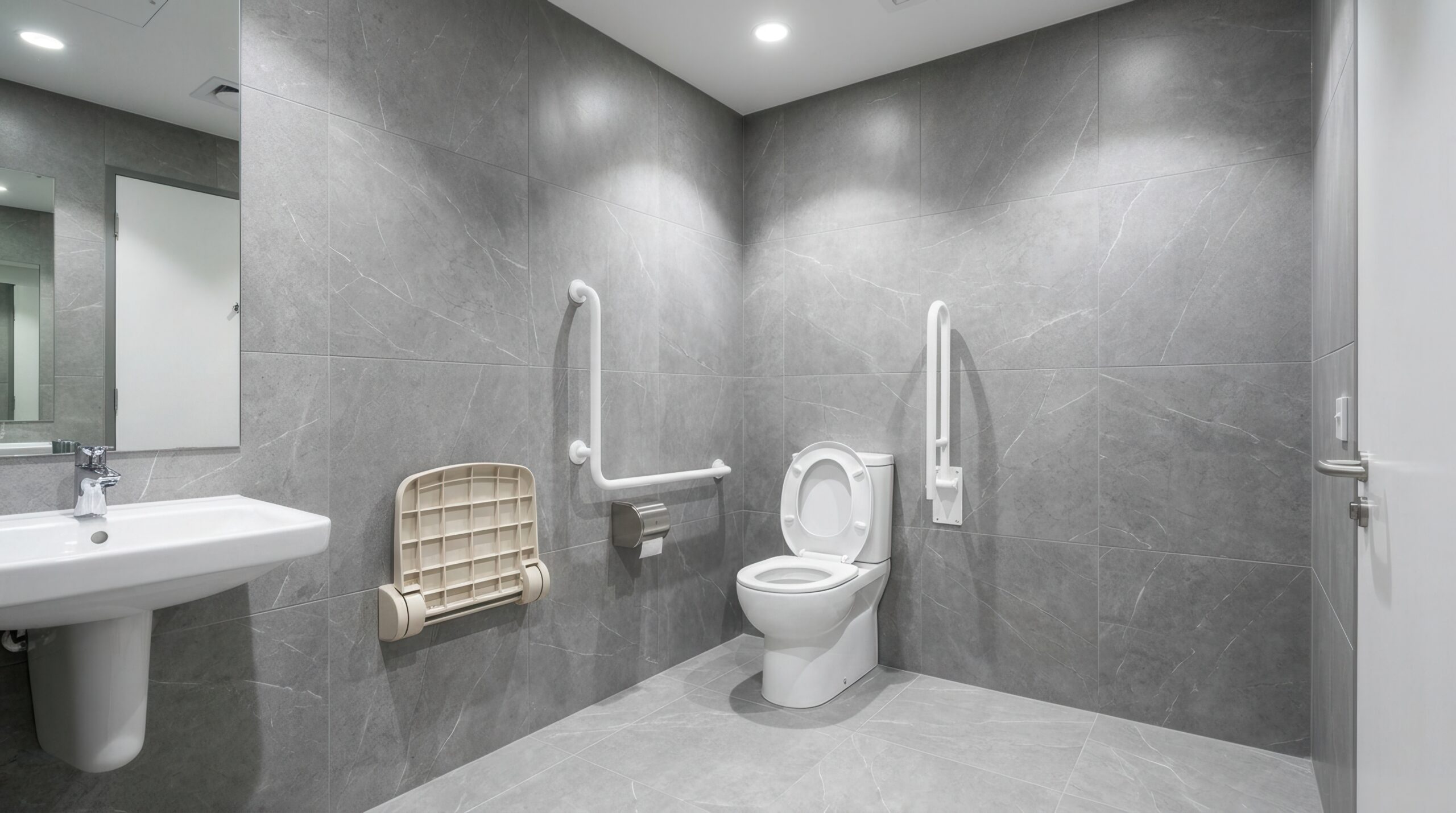


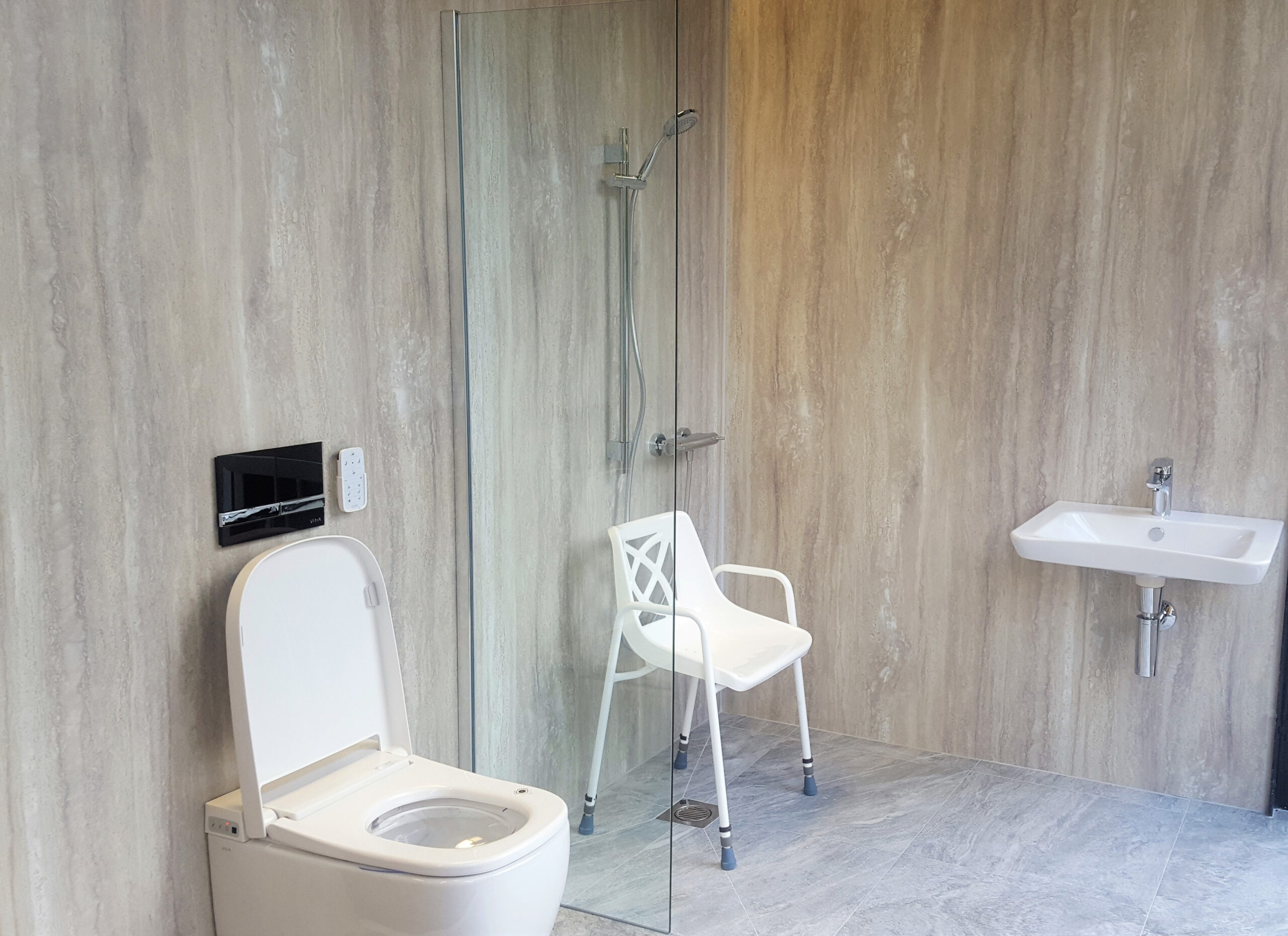
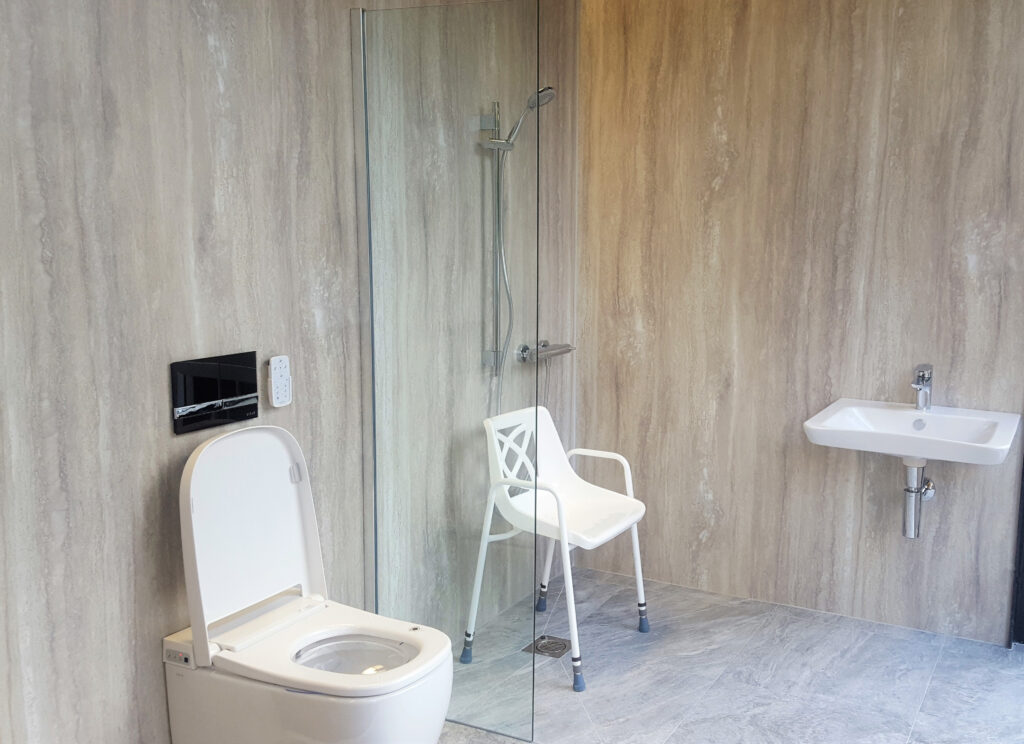
A disabled wetroom is a fully waterproofed, level-access bathroom where the showering area sits flush with the rest of the floor. There is no shower tray to step over or enclosure to step into, so the room works safely for someone to walk in, use a frame, transfer from a wheelchair, sits on a shower chair, or have a carer alongside them.
According to the NHS, around 1 in 3 people over 65 have a fall each year, and the bathroom is one of the higher-risk rooms in the home. For someone with reduced mobility, a progressive condition, or the after-effects of a fall or stroke, a bathroom with thresholds and slippery surfaces can be daunting but a disabled wetroom changes that.
This guide explains what a disabled wetroom is, what good design looks like, the UK regulations and sizes that apply, and how funding such as the Disabled Facilities Grant and VAT relief can help.
Jump straight to…
What makes a wetroom disability-friendly?
A standard wetroom is mostly a style choice to have an open, modern shower room. A disabled wetroom however is built around a specific brief: how a particular person moves, transfers and washes.
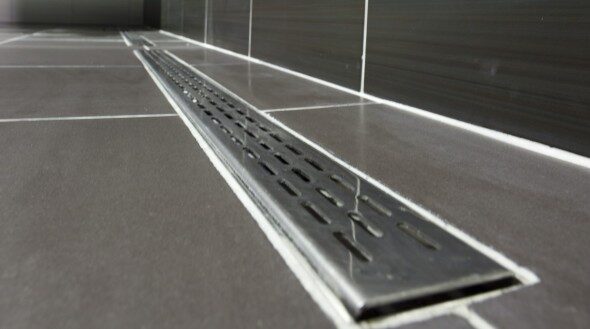
At Aquadapt, our level-access wetrooms use a former tray set into the floor, covered with waterproof, slip-resistant flooring, with a gentle slope towards the waste pipe so water clears quickly and does not pool.
That needs-led approach brings several elements together into a single system: no-threshold level access; floor falls and drainage; slip-resistant flooring; grab rails positioned around the user’s movements; appropriate shower seating; thermostatic, anti-scald controls; and generous turning and transfer space. Where a carer assists, half-height doors or screens keep them dry while supporting the user. The same room can include accessible toileting and height-adjustable basins.
Disabled wetroom vs level-access shower
A level-access shower gives step-free access, with a recessed tray sitting level with the floor. They are suitable for wheelchair and shower-chair users and are usually easier to contain. Installation is often simpler, which makes them a good fit for shower replacements and sometimes it is the lower-disruption choice.
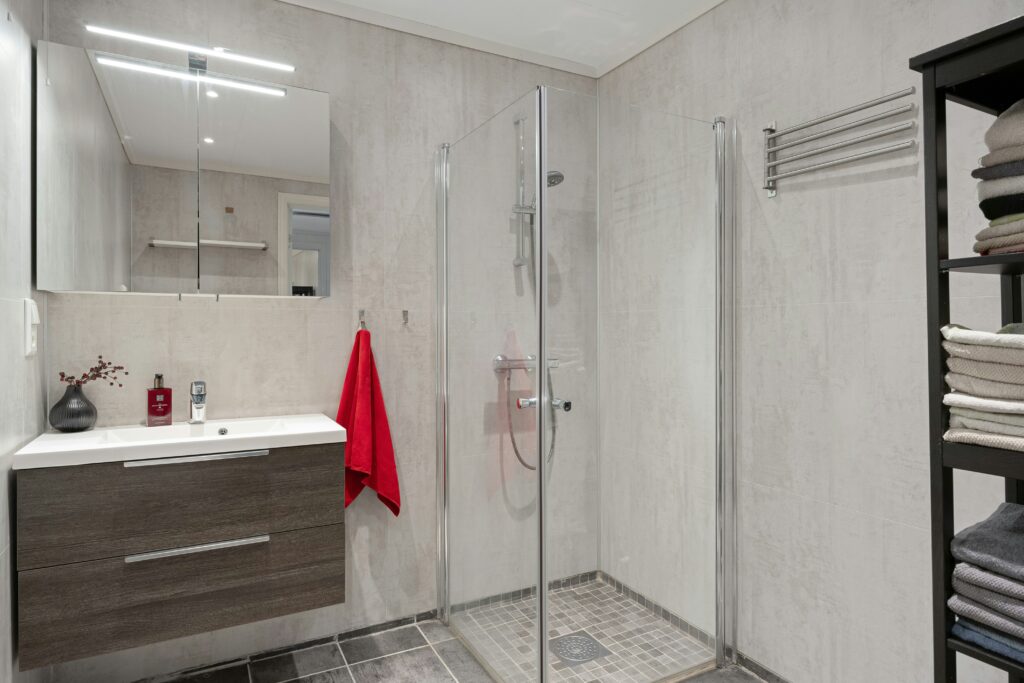
A disabled wetroom waterproofs the whole room, so the entire floor is tanked, graded to drain and open plan. That makes it often ideal for wheelchair and shower-chair users and well suited to a full bathroom adaptation. Water containment needs careful falls and drainage design, and installation is more involved.
Who is a disabled wetroom for?
Disabled wetrooms suit a far wider range of people than many assume: wheelchair and shower chair users; people living with arthritis, balance problems or reduced grip; those with progressive conditions such as multiple sclerosis, Parkinson’s or motor neurone disease; people recovering from a stroke or injury; older people who want to bathe safely and stay in their own home; and anyone who needs a carer’s help to wash.
GOV.UK recognises this breadth when it describes who Disabled Facilities Grants can support, from physical disability and age-related need to cognitive conditions such as dementia and progressive or terminal illness. It specifically lists improving access to a level-access shower as the kind of work a grant may cover.
The key features that matter
A well-designed disabled wetroom combines several carefully chosen aspects.
- Level access and drainage. A floor that wheelchairs and frames can roll straight into, with a calculated fall so water clears quickly and never pools.
- Slip-resistant flooring. Specialist safety vinyl or anti-slip surfaces rated for wet areas (commonly R10 to R11), warm underfoot and easy to clean. This is a safety feature in its own right.
- Shower seating. Wall-mounted fold-down seats, freestanding stools or specialist seating for postural needs, depending on the user.
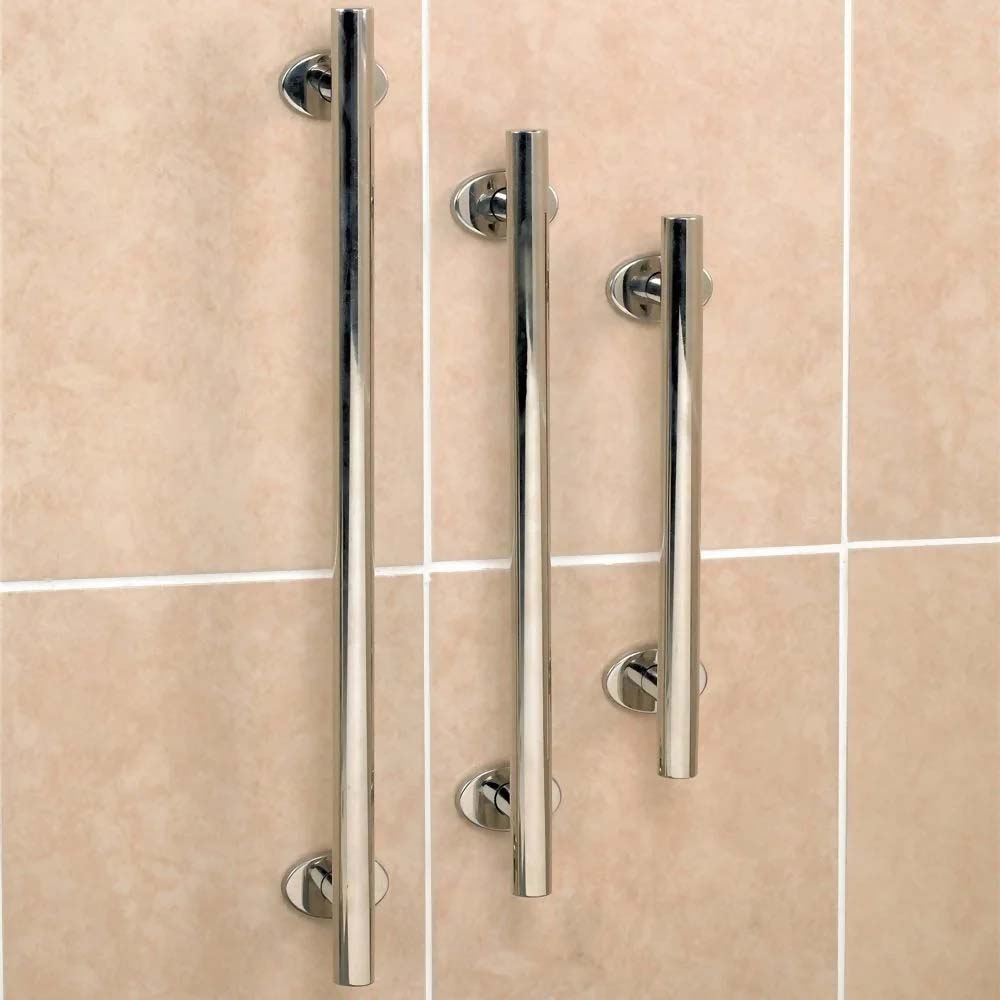
- Grab rails. Planned around real movements: entering, turning, sitting, standing, transferring and reaching, with each rail placed where the hand actually goes.
- Thermostatic controls. Anti-scald showers with easy-grip levers at a reachable height.
- Half-height doors or screens. Where a carer assists, these allow support while keeping water contained.
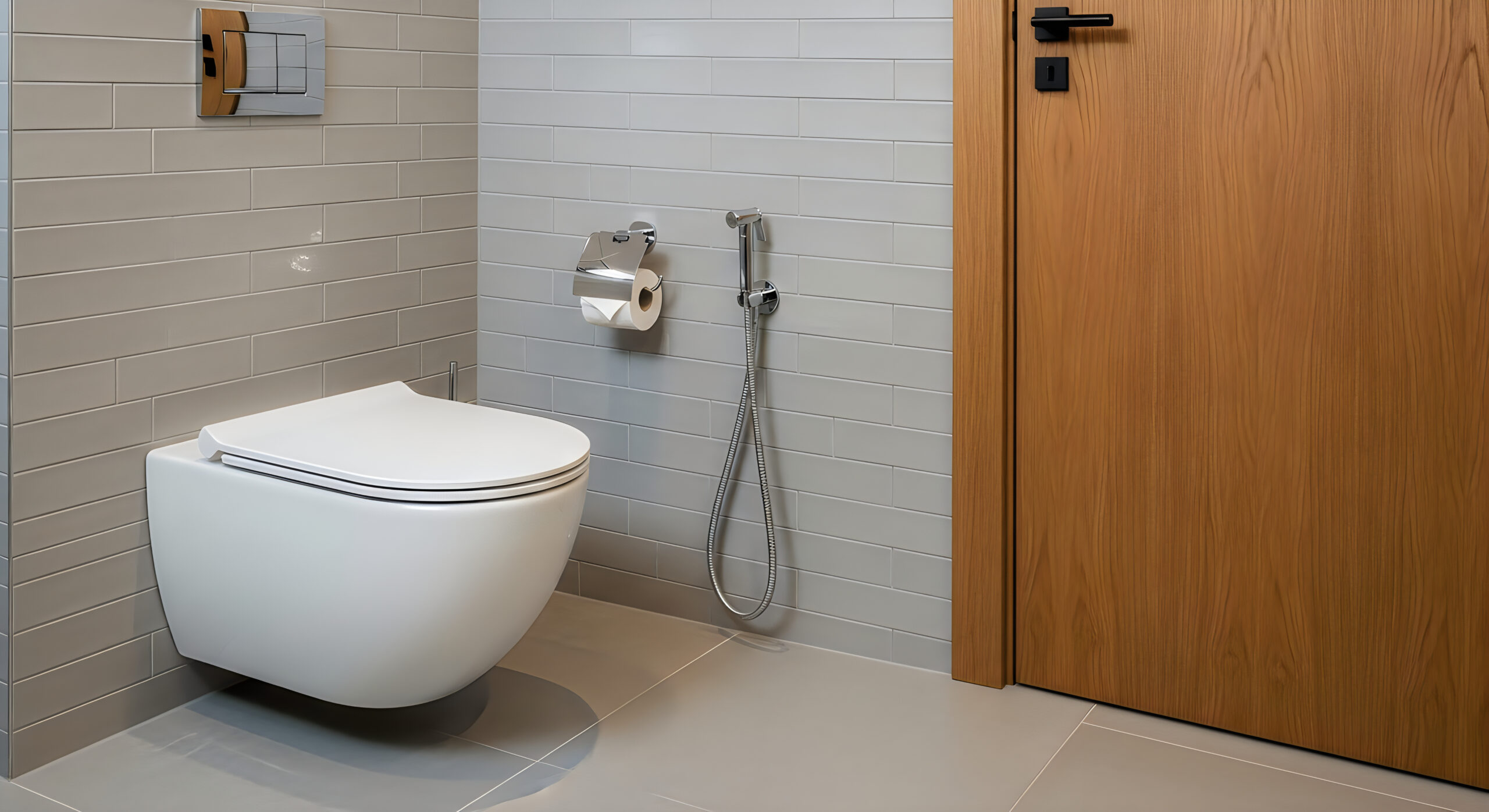
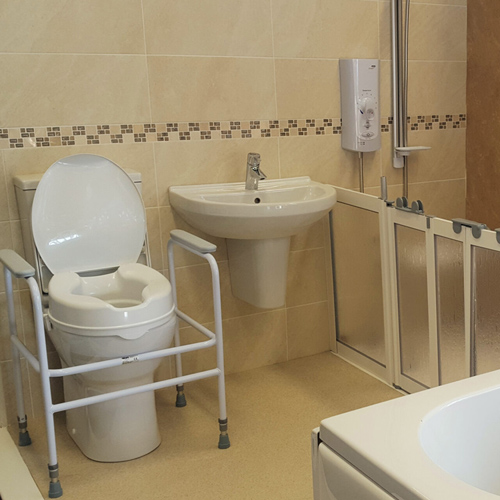
- Accessible toileting. From comfort-height WCs to wash-and-dry shower toilets such as the Geberit AquaClean, which give hands-free hygiene and make a real difference for people with reduced dexterity.
- Accessible basins and taps. Wall-hung basins with knee clearance, plus lever or sensor taps that are easy to operate.
- Lighting, heating and ventilation. Bright, even lighting, a warm room and good extraction make the space comfortable to use and easier to maintain.
What size does a disabled wetroom need to be?
Accessible wetrooms can be more compact than people think, even in a bathroom that seems too small. As a benchmark, Building Regulations Approved Document M set a minimum of 2,450mm x 2,450mm for a wheelchair-accessible wetroom containing a WC, basin and shower, allowing for a 1,500mm turning circle and a shower area of at least 1,000mm x 1,000mm. (link to minimum size for disabled wetroom)
Those figures are benchmarks for new and adaptable dwellings, and existing homes vary widely. The right size depends on the person, the layout and whether the room must accommodate a wheelchair, a shower chair, toilet transfers or carer assistance. We have adapted some genuinely compact rooms, including wetrooms fitted under the stairs, and in a tighter space the precision of the design is key.
How a disabled wetroom is built
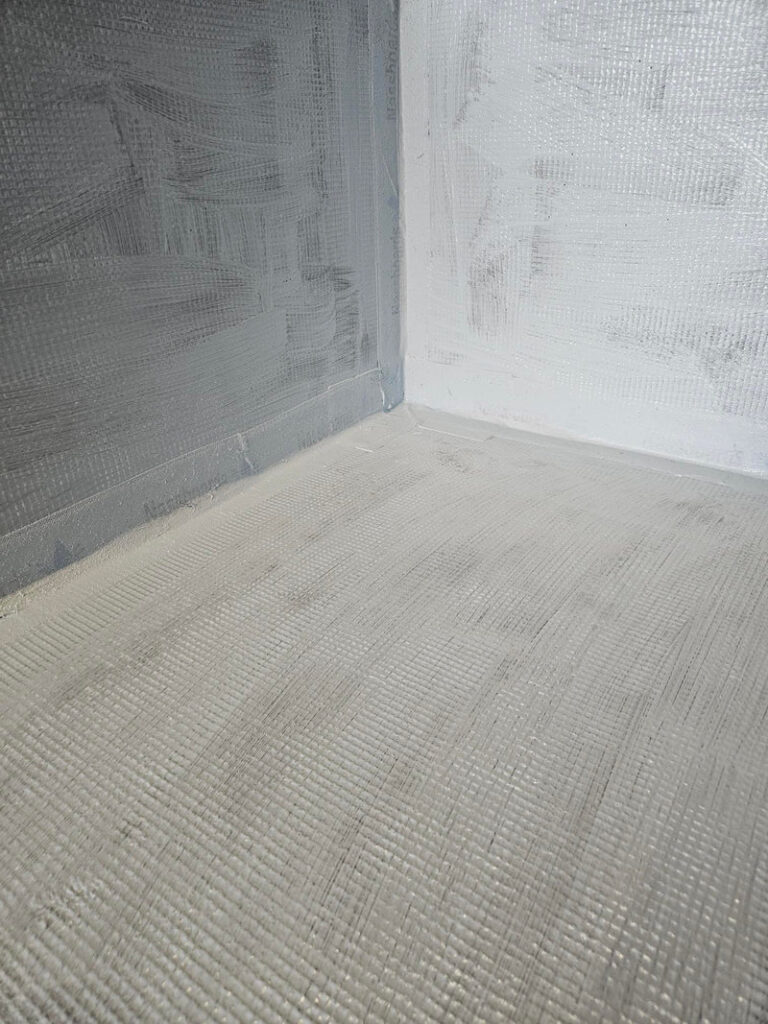
The sequence runs from survey and strip-out, through tanking (waterproofing the floor and walls), to forming the gentle fall towards the drain, fitting the drainage, laying slip-resistant flooring, and installing the sanitaryware and fittings. Tanking is the most important stage and the part you never see once the room is finished. Get it wrong and water finds its way into the joists and ceilings below. That is why the waterproofing, falls and drainage should always be designed and installed by wetroom specialists.
Design and aesthetics
The white plastic, hospital-style fittings that gave adapted bathrooms their reputation are long out of date. Today’s grab rails and supports come in brushed brass, matte black, brushed nickel and chrome that coordinate with your taps and shower fittings. Warm wood-effect and natural stone-look finishes, soft lighting and considered colour all sit comfortably alongside the safety features.
Several of these choices also support accessibility directly. Tonal contrast between walls, floor and sanitaryware aids depth perception and helps people with visual impairments locate the basin, WC or controls at a glance. Good accessible design and good interior design work towards the same end.
How Aquadapt can help
As part of the CoreCare group (alongside Innova Care Concepts and Vivid Care), we combine design-led home adaptation with access to clinical-grade expertise for more complex needs, from ceiling track hoists to Changing Places facilities.
We run a complete, in-house service (plumbing, joinery, specialist flooring, electrics, small building works and decorating) and work closely with occupational therapists and case managers to turn an assessed need into a finished room that is safe, compliant and genuinely attractive. You can see our main bathing products together in our Wetherby showroom, and healthcare professionals are welcome to book a CPD-accredited Lunch & Learn session.
A disabled wetroom protects independence. For many people, it is what keeps daily washing safe, private and possible at home.
Ready to explore your options?
Book a free, no-obligation site survey with one of our experienced advisers. We’ll visit your home, talk through your needs and preferences, and show you what’s possible. Call 01423 799 499, email [email protected], or visit aquadapt.co.uk/book-appointment.
Frequently asked questions
What is a disabled wetroom?
A disabled wetroom is a fully waterproofed, level-access bathroom where the shower area sits flush with the floor, with no tray to step over and no enclosure to navigate. It is designed around safe, independent or assisted use, with features such as slip-resistant flooring, grab rails, shower seating and thermostatic controls included according to the user’s needs.
Is a disabled wetroom the same as a level-access shower?
Not quite. A level-access shower is a step-free showering area, usually with a flush or recessed tray within a defined zone. A disabled wetroom tanks the whole room and goes open plan, with the entire floor waterproofed and graded to drain. Both give step-free access. Which is right depends on the person, the property and the budget.
Can I get a grant for a disabled wetroom?
Often, yes. The Disabled Facilities Grant, administered by your local council, can fund adaptations including level-access showers and wetrooms, up to £30,000 in England and £36,000 in Wales, with different schemes in Scotland and Northern Ireland. It is means-tested for adults but not for children under 18, and you should secure approval before any work begins.
Do I need an occupational therapist assessment?
If you are applying through the council or the Disabled Facilities Grant route, an occupational therapist assessment is usually central to the process. The OT looks at how you actually use the bathroom: getting in and out, transferring, balance, grip, reach, carer support and how your needs may change. They then recommend appropriate adaptations.
Can a disabled wetroom look stylish?
Absolutely. Modern accessible wetrooms use attractive flooring, contemporary fittings, designer grab rails, good lighting and warm finishes.
How small can a disabled wetroom be?
Smaller than most people expect. Approved Document M sets a benchmark minimum of 2,450mm x 2,450mm for a wheelchair-accessible wetroom with a WC, basin and shower, but real homes vary widely, and compact rooms can often be adapted very effectively.