
Most bathrooms are built around grip, reach and balance. Shower controls need turning, taps need twisting, and using the toilet means lowering and standing without support.
In an accessible bathroom, the right technology takes away the parts of washing and toileting that depend on grip, reach, balance or another person’s help.
This guide covers the smart technology available, who it helps, where it can let you down, and how it can be funded. If you’ve read our 2026 UK bathroom accessibility trends, this is the practical follow-up.
Jump straight to…
-
-
- What makes a disabled bathroom “smart”?
- Wash-dry toilets
- Digital showers and scald protection
- Taps, lighting and sensors
- Height-adjustable basins and baths: making the room fit the person
- Hoists, drying and assisted care
- Voice, apps and personal alarms
- Designing a smart bathroom that works
- Costs and funding
- Conclusion
- FAQs
-
What makes a disabled bathroom “smart”?
Smart doesn’t have to mean Wi-Fi. In an accessible bathroom, the term covers three broad groups of technology, and the first two work perfectly well without an internet connection.
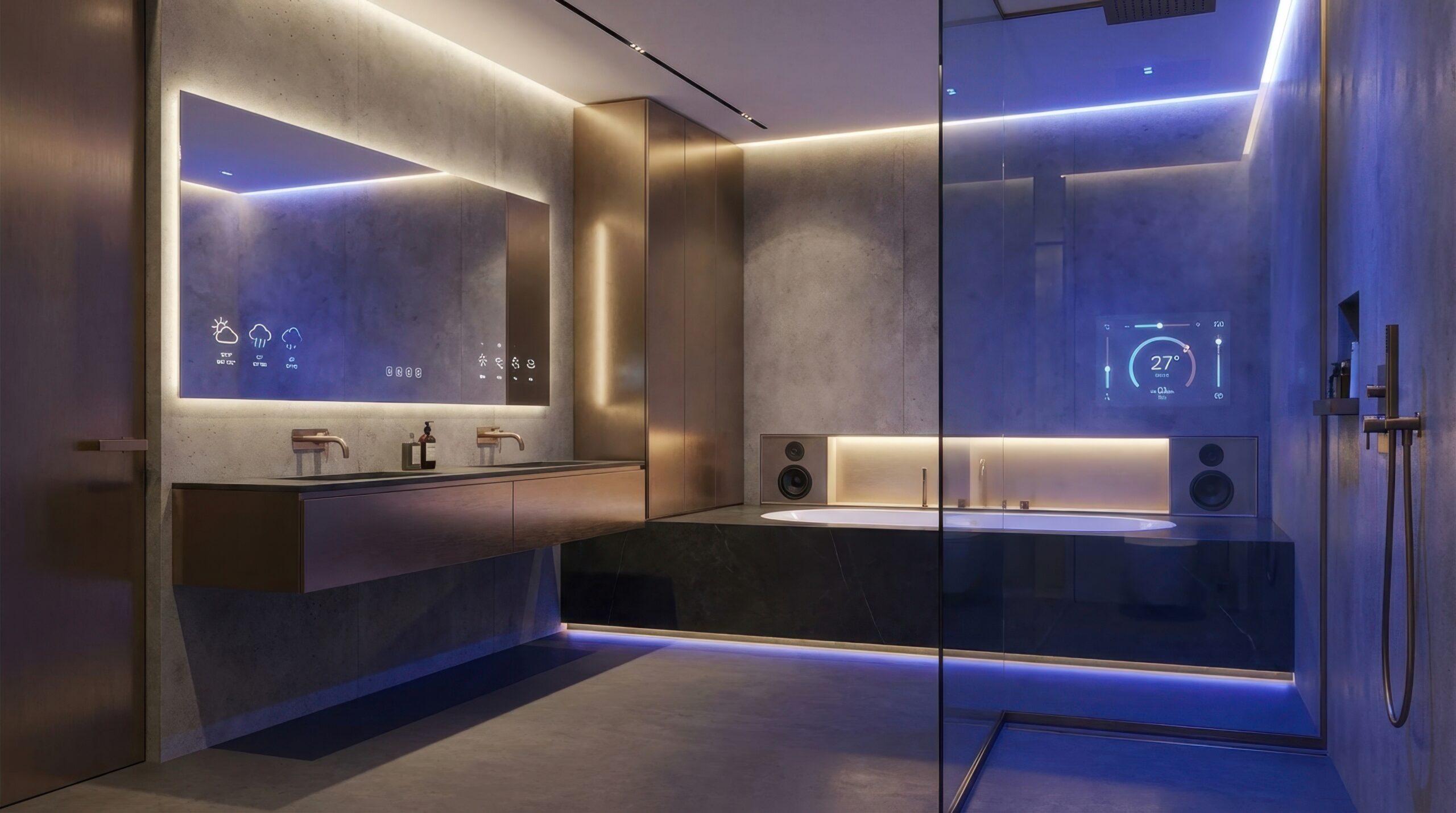
The first is powered equipment: basins, baths, toilet lifts and hoists that move at the press of a button. The second is automatic and sensor-led equipment, such as thermostatic shower controls, motion-activated lighting and toilets that detect when someone is seated. The third is connected technology, which adds app, remote or voice control and, in some cases, alerts for family or carers.
The government now recognises this breadth too. Its guidance for councils on the Disabled Facilities Grant includes a chapter on assistive technology, smart-home products included, where they meet an assessed need.
Whatever the category, we apply one simple test: does this feature remove a real barrier for the person using the room? If it reduces the need to grip, twist, reach, balance or remember, it’s definitely worth considering.
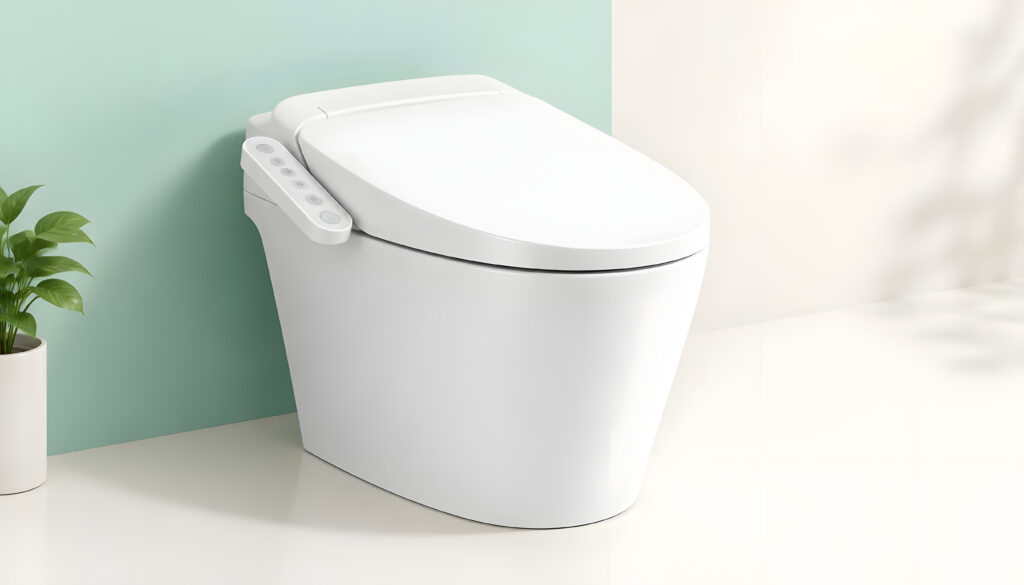
Wash-dry toilets: independence with personal hygiene
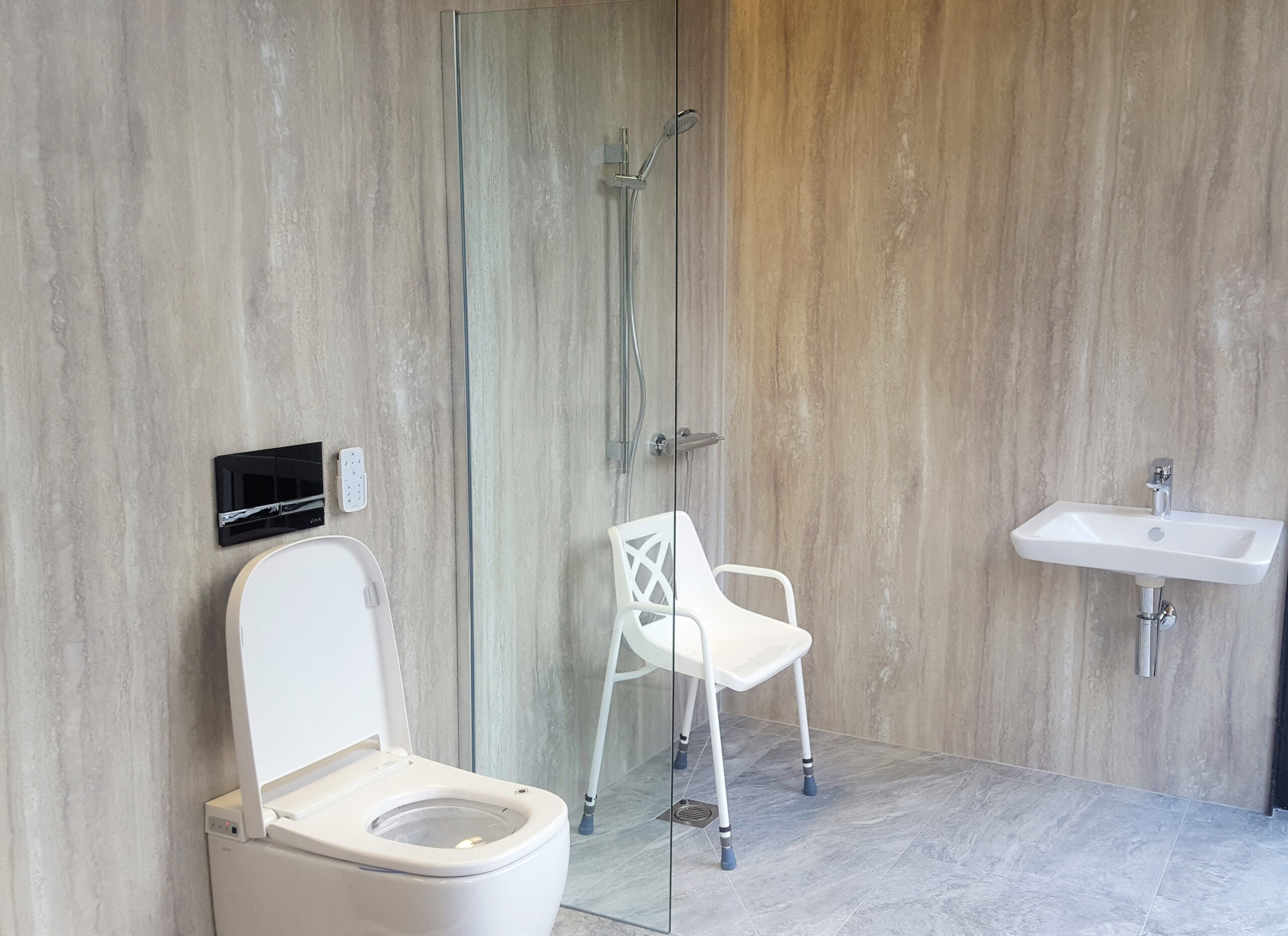
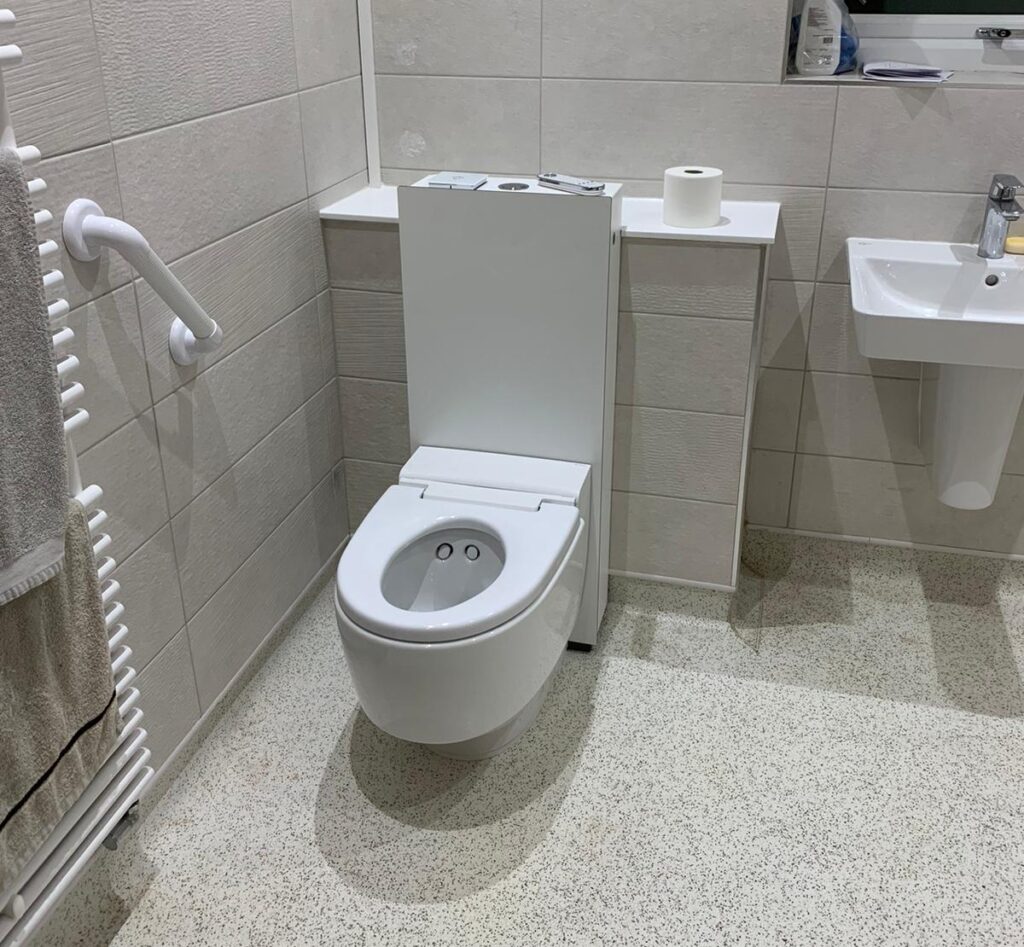
Of all the smart products we fit, the wash-dry toilet usually makes the biggest difference to daily life. It combines a toilet and bidet, cleaning with warm water and drying with warm air, so the user doesn’t need to reach round, twist or manage toilet tissue.
The Geberit AquaClean Mera, which we supply and install, shows how far the category has come. Infrared sensors detect when someone is seated, so the wash only runs when the user is ready. Water temperature, spray pressure and drying can be saved as personal user profiles. It can be operated from a side panel, a handheld remote or an opto-remote, and its Bluetooth remote can pair with other devices to enable eye-gaze and voice control for people who can’t easily press a button. The height can be adjusted from the front, a strengthened seat supports side transfers, and it’s compatible with many shower chairs.
Not every bathroom needs a new WC. The Bio Bidet replaces the standard seat on almost any existing toilet, adding warm-water washing, warm-air drying, a heated seat and a deodoriser, all operated by a simple remote control. It takes very little installation time, and we can check whether your toilet is compatible. For people who find it hard to sit down and stand up, the powered Vertica LiftSeat rises straight up, with no tilt, using a simple two-button handset, and works alongside wash-dry toilets.
Read our guide to how wash-dry toilets can transform independence at home for more detail.
What to think about: a safely positioned electrical supply, enough space beside the WC for transfers and a carer, regular cleaning and descaling, and, above all, whether the user can reliably operate the chosen control.
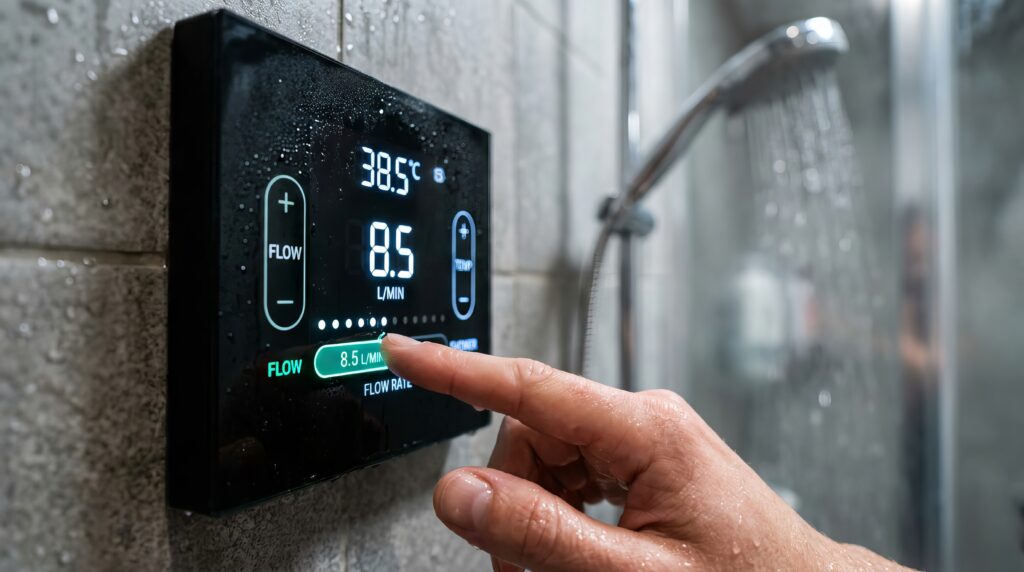
Digital showers: control without the struggle
Scalding is one of the most serious risks in any bathroom, particularly for people with reduced sensation, or anyone who can’t react quickly to a sudden change in temperature.
Thermostatic control keeps the water steady even when someone else runs a tap or flushes a toilet. For reference, the thermostatic valve schemes used in care settings set a maximum of 41°C at showers, and HSE guidance states that water for whole-body immersion should not exceed 44°C where vulnerable people are at risk.
A digital shower adds a smart layer on top of that protection. Many let you lock a maximum temperature, so the shower won’t run hotter than a safe preset. Large, clear buttons replace stiff dials, and the control unit can sit within comfortable reach of a shower seat rather than under the spray. A wireless remote lets a carer start and adjust the water from outside the showering area, and several users can each save their own settings, which helps in a shared family bathroom. Some models can also be started from an app or smart speaker, so the shower is already running at a comfortable temperature before anyone steps in.
What to think about: digital showers vary widely, and not all offer the same safety features. We always recommend a physical control within the user’s reach – it’s handy for warming the shower in advance, but no substitute for a button the user can press.
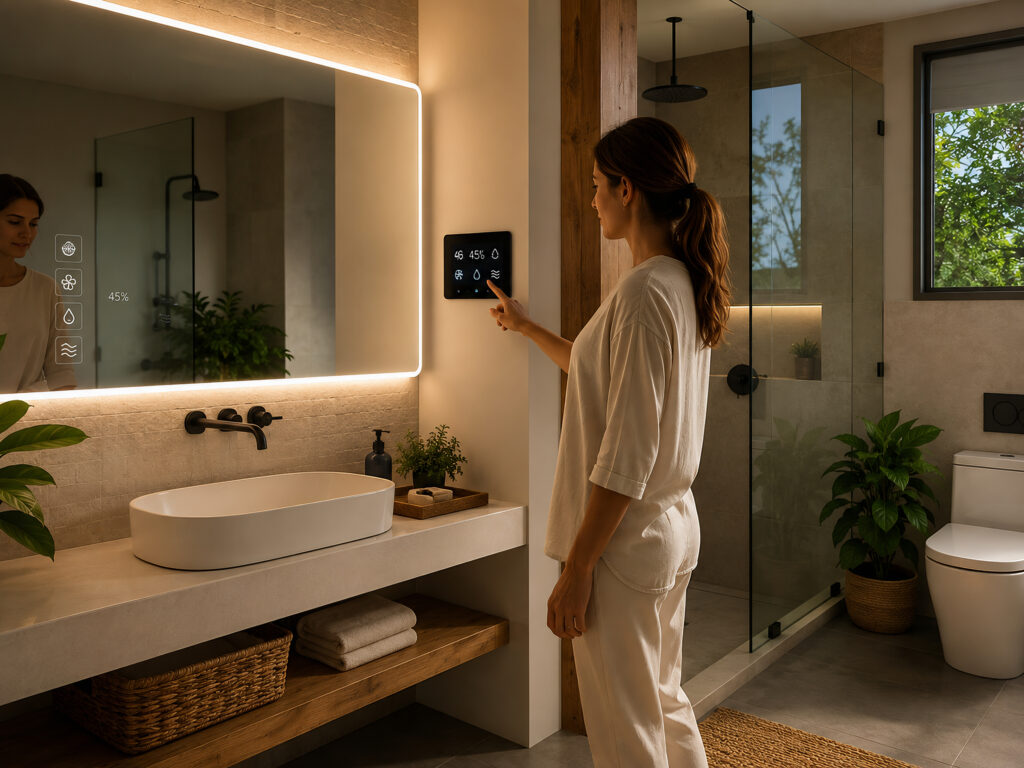
Taps, lighting and sensors: the small things that prevent problems
Sensor-operated taps remove the need to grip or twist, which helps people with arthritis, tremors or limited hand strength. They need careful positioning, though. A sensor placed where an involuntary movement or a wheelchair armrest can set it off soon becomes a nuisance, and the water still needs proper temperature control.
Lighting matters just as much. Night-time trips to the bathroom are a common moment for falls, especially for someone who is drowsy or unsteady on their feet. Low-level, motion-activated night lighting that brightens gradually means no fumbling for a switch with wet hands, and no sudden glare.
Behind the scenes, a humidity-sensing extractor fan can be set to run automatically, reducing condensation, damp and slippery surfaces. Leak sensors with automatic water shut-off are worth considering in any wetroom, and particularly in one on an upper floor (see our guide on installing a wetroom upstairs).
For people living with dementia, simpler is better. Predictable automatic lighting, strong tonal contrast and familiar controls tend to help, while unfamiliar touchscreens and multi-button remotes can add to confusion.
Height-adjustable basins and baths: making the room fit the person
Powered height adjustment is rarely described as smart technology, yet it’s often among the most useful features in the room.
The Matrix height-adjustable basin we fit moves 300mm up and down on electric buttons and slides 500mm sideways. One basin can suit a wheelchair user, someone who steadies themselves standing at the sink, and everyone else in the household. Planning still matters, as knee clearance, flexible pipework, mirror height and the position of the controls all affect how well it works.
For assisted bathing, our TR height-adjustable baths rise to a comfortable working height for a carer, then lower again. The TR 900 adjusts from 610mm to 940mm at the rim using an integrated control panel, with autofill and whirlpool options. The TR Comfortline can include an air spa, LED lighting and Bluetooth music, which many people find calming as part of a sensory bathing routine.
A height-adjustable bath doesn’t make transfers safe on its own, however. The bath, any hoist and sling, and the carers’ routine all need to work together.

Hoists, drying and assisted care
For people with more complex needs, we draw on our sister companies in the CoreCare group. Innova Care Concepts designs and installs ceiling-track hoists that can run from bedroom to bathroom, reducing the number of separate transfers in a day. Its Integralift hoist folds away into a cupboard when not in use, so the room needn’t look clinical. Innova’s Valiryo full-body dryer is a wall-mounted unit with adjustable airflow and temperature, allowing towel-free drying after a shower.
Vivid Care, also part of the group, supplies wheeled shower and commode chairs, as well as the Raizer M lifting device for helping someone up from the floor after a fall.
Powered hoisting always needs a proper assessment, compatible slings, carer training and regular servicing. It also pays to plan early. If a hoist might be needed in future, the ceiling can be checked or strengthened while the bathroom works are under way, rather than afterwards.
Voice, apps and personal alarms
For someone with very limited movement, connected technology can be transformative. Lighting, heating and ventilation can all be controlled by voice, and Geberit’s Home app lets users adjust their toilet settings, read the manual and install updates from a phone.
There are limitations. Voice recognition can struggle with steam, running water, background noise, speech difficulties or fatigue. Apps depend on phones, batteries and Wi-Fi, and plenty of people don’t have, or don’t want, any of these. Privacy is important too. Monitoring sensors and carer access to controls should only be set up with the user’s consent, and with a clear understanding of what information is collected and who can see it.
Personal alarms need particular attention right now. The UK’s analogue telephone network is due to close by the end of January 2027, and older alarms that rely on an analogue landline may not work reliably on a digital line. If you or a relative use a pendant, pull cord or fall detector, contact your landline provider and check that the alarm is digital.
In the bathroom itself, make sure the alarm can be reached from the floor, and that it’s tested regularly. A sensor is only as useful as the response when it goes off.
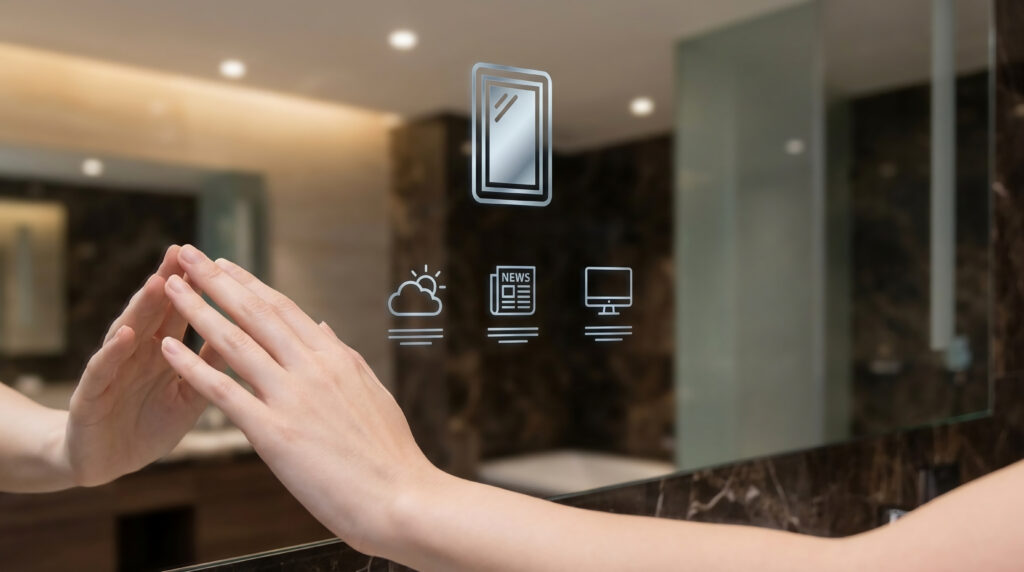
Designing a smart bathroom that works in practice
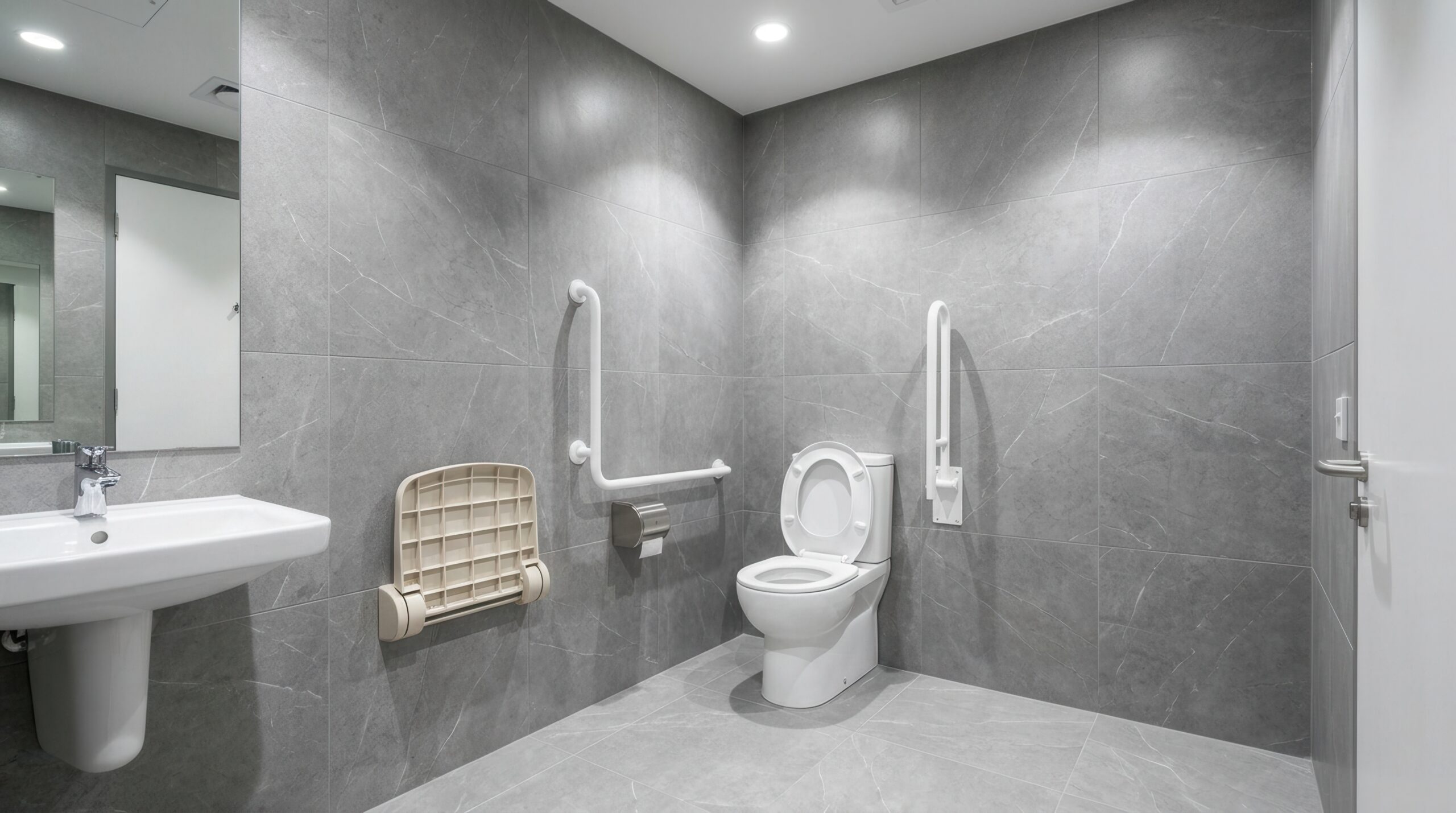
Technology can’t make up for a poorly planned room. A digital shower is little use if a wheelchair can’t turn, and a wash-dry toilet won’t help if there’s no space to transfer onto it. The fundamentals come first: level access, slip-resistant flooring, good drainage, correctly positioned grab rails and room for a carer. Our guide to the top seven problems with disabled wetrooms covers these in detail.
Smart features then need to be planned into that design. During a home survey, we look at where power and isolation points can safely go, whether the water pressure suits a digital valve, how far the user can comfortably reach from a seated position, and whether walls and ceilings should be reinforced for future rails, seats or a hoist. Running spare cable routes while the room is stripped back makes later additions far easier.
We also address key questions: what happens in a power cut, or if the Wi-Fi drops? Most products handle their core functions locally, without an internet connection. Even so, essential equipment should always have a manual fallback, and both the user and their carers should know how to use it.
Electrical work in a bathroom must meet Building Regulations Part P and be carried out by a competent electrician. At Aquadapt, our own team covers the plumbing, electrics, flooring and joinery, so every element is designed to work together, and we take the time to demonstrate the controls at handover.
What does it cost, and is funding available?
Costs vary enormously, from a sensor light to a fully integrated wash-dry toilet, powered bath or ceiling hoist. When comparing options, look beyond the product price to the installation, any structural or electrical work, servicing and expected lifespan.
In England, the Disabled Facilities Grant (DFG) can contribute up to £30,000 towards the adaptations a person needs, and the government has allocated £723 million for 2026 to 2027. The grant is means-tested, and an occupational therapist’s assessment is usually part of the process. Wash-and-dry toilets are specifically mentioned in the government’s guidance to councils, and assistive technology can be included where it meets an assessed need.
However, a smart feature isn’t funded simply because it’s useful, and ongoing costs such as monitoring subscriptions generally fall outside the grant. Don’t start any work before your grant is approved, as this can affect your eligibility. Arrangements also differ in Wales, Scotland and Northern Ireland.
Qualifying adaptations to a disabled person’s bathroom can also be zero-rated for VAT, which can make a considerable difference to the final bill.
Conclusion
The smartest disabled bathroom is the one where each feature has been chosen to make life easier for the person using it: the shower that won’t run too hot, the light that comes on before you reach for a switch, the toilet that lets someone manage on their own again.
Getting there depends less on the latest product and more on careful design, built around the user, their carers, the property and how their needs may change over time.
If you’d like to explore which smart features would suit your home, our accessible bathroom advisors can visit, talk through your circumstances and design a room around them, completely free and without obligation. Book a site survey to get started.
For occupational therapists and case managers, our free Lunch & Learn sessions cover the latest adaptations, smart technology included.
FAQs
Can a Disabled Facilities Grant pay for a smart toilet?
It can, where an occupational therapist’s assessment shows it meets a need. Wash-and-dry toilets are named in the government’s DFG guidance for councils. The grant is means-tested and capped at £30,000 in England.
Do smart bathroom products need Wi-Fi to work?
Most don’t. App and voice features need a connection, but core functions such as washing, drying, flushing and thermostatic control usually run locally. We advise asking for a manual or remote fallback.
Can a shower be voice controlled?
Some digital showers can be started or adjusted through a smart speaker. It’s useful for warming the shower in advance, but we recommend a physical control within reach as well, so the user is never reliant on voice alone.
Can smart technology be added to an existing accessible bathroom?
Often, yes. Sensor lighting, an add-on wash-dry seat, a powered lift seat or a digital shower can usually be fitted without a full refit, provided the power and water supplies are suitable.
Is smart bathroom technology suitable for someone living with dementia?
It can be, if it makes things simpler rather than adding choices. Automatic lighting and fixed temperature limits tend to help, while unfamiliar touchscreens and complicated remotes can confuse.
Do I pay VAT on a smart disabled bathroom?
Qualifying adaptations for a disabled person’s home can be zero-rated under HMRC rules. Your installer will usually ask you to complete a simple eligibility declaration.